
Advent calendars were once simple cardboard boxes with numbered windows and small treats hidden behind them. Their purpose was straightforward: count down the days until Christmas. Today, that concept has expanded far beyond chocolate and paper flaps. Modern advent calendars are increasingly shaped by software, automation, and digital experience design, turning a static physical product into a connected, data-informed seasonal experience. In fact, according to Statista, while traditional calendars often featured simple chocolates or images, a diverse range of content from toys to beauty products has become common in the United Kingdom, reflecting how consumer expectations have broadened alongside product evolution.
It’s part of the wider trend of businesses treating packaging differently to seasonal campaigns. Brands are not only treating packaging as more than just a last-minute detail, they are thinking about it as part of a broader digital ecosystem that also includes design software, supply chain systems and personalization tools, along with online engagement platforms.
Table of contents
- The Evolution of Advent Calendars in a Digital Context
- Design Software as the Foundation
- Automation in Manufacturing and Assembly
- Personalization Through Data and Software
- Connecting Physical Calendars to Digital Experiences
- Inventory and Demand Forecasting
- Sustainability Supported by Technology
- The Future of Software-Driven Advent Calendars
- Conclusion
The Evolution of Advent Calendars in a Digital Context
Traditional Advent calendars were largely handcrafted or mass-produced with minimal variation. Once printed and assembled, their design was fixed. Today’s calendars, however, are planned and optimized using digital tools long before a physical prototype exists, particularly for custom advent calendar boxes that require precise internal layouts and brand-specific structures.
Currently, design groups orient themselves using 3-D modelling and packaging visualization tools to envisage plan views, chamber sizes and aperture mechanisms. These tools enable brands to try, play, and test multiple concepts digitally, hassle-free, cutting down time-to-market. A product that was previously entirely tactile is now shaped by digital processes from the earliest design phases.
This is also transforming the relationship of Advent calendars in the market: No longer confined to largely ad-hoc festive gimmicks, custom calendars have become genuine product journeys that are rolled out over weeks and months — facilitated by software systems orchestrating design, production planning, and user engagement under the hood.
Design Software as the Foundation
An estimated 16 million Advent calendars are sold each year in the UK, a figure that reflects how deeply this tradition is embedded in modern holiday culture. But the concept dates back to 19th-century Europe, and early forms of Advent marking there were rooted in anticipation and ritual rather than in commercial packaging. This cultural staying power is part of the reason advent calendars have endured for so long and why technology is increasingly being incorporated into their design.
The latest innovation in Advent calendar design is technology. Theories of structure, Computer-Aided design (CAD) tools, and packaging-specific software enable teams to plot complex internal structures, allowing multi-drawer layouts or custom-shaped compartments. Such platforms enable the exact dimensions, weight distributio,n and material usage to be controlled.
Not only structure, but also digital design applications aid in brand consistency. Color profiles, font styles, and graphics can be uniform throughout physical packaging and digital applications to help create synergy between the calendar space and online store fronts, apps, or marketing projects. This unification is vital for multi-channel brands.
By relying on software rather than manual mockups, companies gain flexibility and accuracy while reducing development time and waste.
Automation in Manufacturing and Assembly
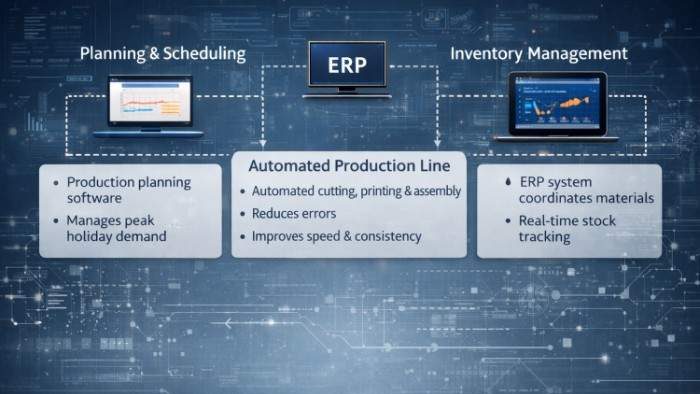
After a design is complete, automation is crucial to translating digital plans into physical items. Production planning software makes it much easier for manufacturers to line up extensive seasonal runs, balance equipment utilization, and predict bottlenecks at the busy times of year.
Often, automated cutting, printing and assembly are directed from the digital design files themselves, reducing errors and guaranteeing consistency among thousands – or even hundreds of thousands – of units. For advent calendars with several compartments as well as a need for precise parallelism, such automation is particularly advantageous.
ERP also assist with these functions by integrating systems to source raw materials, and then track production schedules and shipping. The result is a more seamless journey from digital concept to final product, even at scale.
Personalization Through Data and Software
One of the most significant changes in advent calendars is the move toward personalization. Software enables brands to customize calendars in ways that were impractical or impossible in the past, including configurations designed around an advent calendar box empty structure that allows flexibility in how products or messages are added.
Customer data platforms (CDPs) and CRM systems can sense what products to select, what messages to send and even how the calendar should look. In some embodiments the names, messages, or unique codes can be printed directly on the calendar and/or its compartments using variable data printing. This takes the calendar from generic to customised.
Personalization is not always the same as individual customization. It can also include segment-based seasonality, where differences in calendars exist for separate audiences, territories or buying habits. Software controls the complexity – (while still retaining efficiency) even when it’s necessary to repopulate, reuse or recalibrate calendars.
Connecting Physical Calendars to Digital Experiences
Modern advent calendars increasingly extend beyond the box itself. QR codes, NFC tags, or unique URLs hidden behind daily doors can link users to digital content such as videos, tutorials, product information, or interactive challenges.
This is a mixture in which you combine the physical expectation with the digital engagement. Each day’s reveal becomes less a product than an entry into a larger digital experience. When it comes to software, this means that content management systems and analytics tools need to coordinate with safe tracking solutions.
These links can be a gold mine of insight for brands. Engagement metrics can reveal what days drive the most interaction and in certain cases, whether or not the calendar affects return visits or sales.
Inventory and Demand Forecasting
Seasonal goods in particular present their own set of issues, and Advent calendars are no different. The demand is focused in a tight range, there’s not much flexibility. Software is crucial in controlling this risk.
Demand planning tools scan past sales, market trends and regional demand patterns to assist brands to decide on the quantum of production. Real-time stock monitoring allows inventory management systems to minimize overproduction or shortages.
When these systems are linked with e-commerce platforms and distribution network, companies are better equipped to react to demand fluctuations even at peak holiday seasons.
Sustainability Supported by Technology
Sustainability has become an essential consideration in packaging decisions, and software supports this goal in practical ways. Digital material optimization tools help reduce excess packaging by calculating the most efficient use of board, inserts, and compartments.
Lifecycle assessment software can model environmental impact across production, transportation, and disposal stages. This data helps brands make informed decisions about materials, finishes, and reusable designs.
In the context of advent calendars, technology supports trends such as refillable structures and reusable outer boxes, allowing companies to balance festive appeal with long-term environmental responsibility.
The Future of Software-Driven Advent Calendars
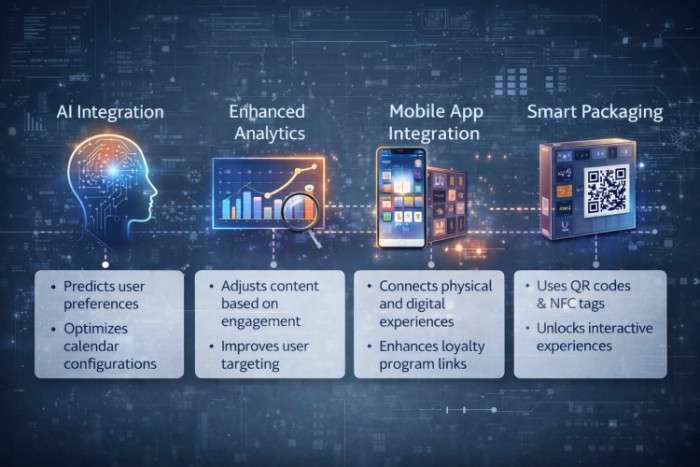
As digital tools continue to evolve, advent calendars are likely to become even more integrated with technology. Artificial intelligence may play a role in predicting user preferences or optimizing calendar configurations. Enhanced analytics could allow real-time adjustments to digital content based on engagement patterns.
There is also potential for deeper integration with mobile applications, loyalty programs, and innovative packaging technologies. While the physical box remains central, its role may increasingly be that of a gateway to a connected ecosystem rather than a standalone product.
Conclusion
How advent calendars went from being static boxes to themed-software experiences is indicative of a wider shift in how products are increasingly designed, manufactured and experienced. What on the surface of it is a straightforward seasonal product now enjoys a technological ecosystem, ranging from design software and automation through to data platforms and digital engagement technology.
And now, brands have made it more personal and scalable with advent calendars using these tools. The end-product is not just a countdown to a holiday, but an experience as carefully choreographed by software as it is by cardboard.