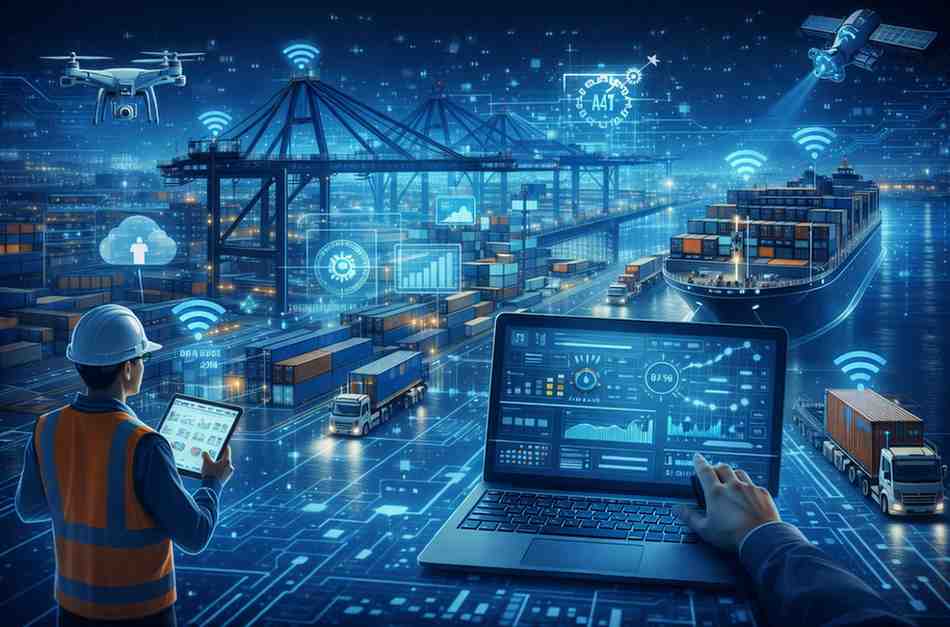
Terminal operations traditionally relied on paper logs, radio communication, spreadsheets, and a manually coordinated schedule to manage the cargo flow. Historically, gate check-ins, trailer assignments, and dock planning were all recorded by hand, then communicated across teams via phone calls or walkie-talkies. Though viable at smaller scales, these disparate processes created operational blind spots that inhibited real-time decision-making and slowed down response times across yard and terminal environments.
Visibility gaps remain one of the most critical operational barriers. Facilities relying on paper documentation and disconnected spreadsheets lack real‑time insight into asset locations, trailer status, and dock availability. Manual data entry alone can result in error rates of 15–20%, directly affecting shipment accuracy, compliance, and turnaround times. As the Port Construction Market is projected to reach US $346.53 billion by 2035, driven by mega‑project expansions and capacity upgrades that accelerate global trade efficiency, the imperative for synchronized, real‑time terminal data becomes even greater. Without synchronized data, delays cascade across gate processing, yard positioning, and loading operations.
As throughput pressure and service expectations rise, terminals are accelerating the shift toward digital execution platforms. Adoption of terminal operations software enables automation, integrated scheduling, and real-time tracking, transforming these capabilities from optional upgrades into essential tools. The transition from manual coordination to connected operational systems is now central to improving accuracy, reducing dwell times, and sustaining terminal performance at scale.
Table of contents
Operational Pain Points in Manual Terminal Environments
Manual terminal environments rely heavily on paper documentation, radio coordination, and retrospective system updates. While workable at lower volumes, these structures create systemic friction as throughput scales. The absence of synchronized, real-time data flows limits operational agility and introduces compounding inefficiencies across gate, yard, and berth operations, highlighting the need for robust terminal operations software.
Gate congestion due to manual check-ins
Driver processing remains one of the most visible bottlenecks. Paper tickets, manual identity verification, and non-automated appointment validation extend transaction times per truck. As queue lengths grow, spillback can impact public roads, increasing detention costs and eroding drayage productivity. For terminals, slower gate turns translate directly into reduced daily truck capacity.
Yard misplacement and asset search delays
Without automated inventory mapping or real-time location systems, container stacking often depends on static yard plans and human judgment. Misplacements trigger re-handles, unproductive equipment moves, and time-intensive container searches. Each additional shuffle consumes crane hours, fuel, and labor while also delaying outbound dispatch and vessel loading sequences.
Dock scheduling conflicts and idle time
Manual berth and crane planning relies on fragmented updates from vessel agents, planners, and operations teams. Arrival changes or cargo surges can outpace planning cycles, leading to berth clashes or underutilized quay windows. The result is a dual cost burden: vessel waiting time on one side and idle crane labor on the other.
Limited real-time visibility for supervisors
Supervisory teams often operate through radio calls, spreadsheets, and delayed system entries. This restricts their ability to dynamically reallocate equipment, rebalance yard zones, or respond to disruptions such as weather or labor shortages. Decision latency increases the risk of localized congestion cascading into terminal-wide slowdowns.
Data silos across the yard, warehouse, and transport teams
The systems are disconnected and fail to orchestrate end-to-end flow. Yard operations often have no visibility into whether a warehouse is ready that day, and gate teams often work in the absence of a berth or inventory live context. These silos lead to planning blind spots, trucks show up before the cargo is ready, containers are stuck in stacked piles that can’t be reached, or shipments release data to transport partners that’s late and incorrect.
All of these structural gaps contribute to inflated operations costs and a depressed throughput. That means terminal velocity is degraded, increasing fuel burn and labor overhead due to excessive re-handles, longer truck turn times, and berth inefficiency. For ocean carriers, downstream impacts include schedule unreliability, extended port stays, and network disruption, as they strain commercial relationships, increasing the risk of service-level penalties for terminals. In fact, predictive, integrated operating models arise to enable overcoming these compounded limitations.
Building the Digital Terminal Core Platform Capabilities
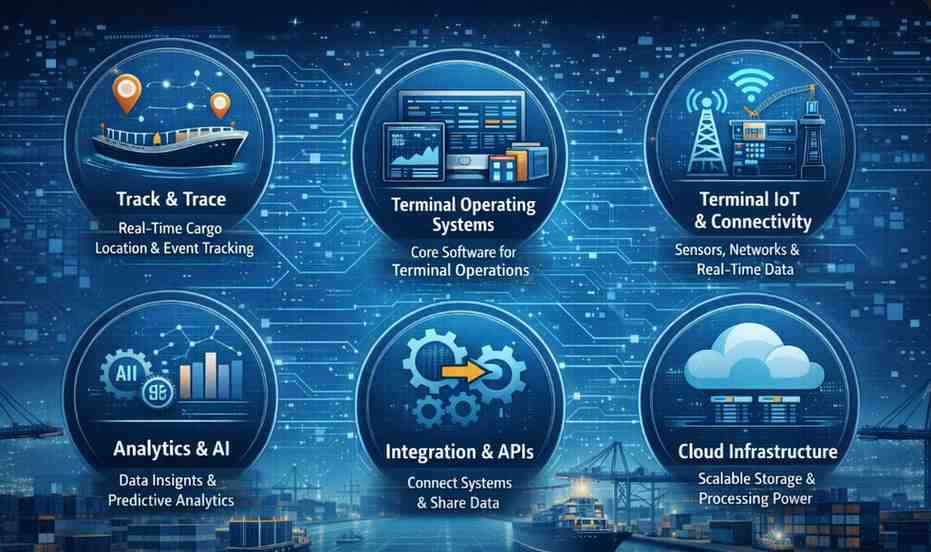
Modern terminal management platforms are engineered as layered digital ecosystems that unify planning, execution, and analytics within a single operational environment. Rather than functioning as passive record-keeping systems, they act as real-time control towers, synchronizing gate flows, yard movements, berth allocations, and documentation streams. This integrated architecture replaces fragmented spreadsheets, radios, and legacy modules with coordinated, data-driven workflows.
Gate automation: kiosks, OCR, RFID
Automated gate complexes streamline truck processing through self-service kiosks, optical character recognition (OCR) for container and license capture, and RFID badge validation. These tools reduce transaction times, enforce appointment compliance, and reduce manual data-entry errors. Faster gate turns increase daily truck capacity while improving driver experience and landside fluidity.
Yard orchestration: slotting, move optimization
Digital yard engines dynamically assign stacking locations based on vessel schedules, dwell time projections, cargo type, and outbound mode. Move optimization algorithms sequence crane and vehicle tasks to minimize re-handling and empty travel distance. This structured orchestration improves stack accessibility, accelerates dispatch, and stabilizes equipment utilization rates.
Dock scheduling and appointment systems
Integrated berth and labor planning modules align vessel ETAs, crane allocation, and cargo readiness within a single scheduling interface. Appointment systems extend this coordination landside, regulating truck arrivals to match yard and quay capacity.
Real-time asset tracking via IoT/GPS
IoT sensors, telematics, and GPS feeds provide continuous visibility into container location, equipment status, and vehicle movement. Supervisors can monitor yard density, identify idle assets, and reroute equipment in response to congestion or disruption. This live telemetry transforms operational awareness from reactive to proactive.
Digital document flows and audit trails
Electronic bills of lading, delivery orders, customs releases, and interchange records move through secure digital workflows rather than paper handoffs. Automated validation rules reduce clearance delays, while time-stamped audit trails strengthen compliance and dispute resolution. Documentation becomes an integrated operational dataset rather than an administrative afterthought.
Analytics dashboards for performance monitoring
Operational analytics layers turn operational data into performance intelligence. Dashboards monitor KPIs such as truck turn time, crane productivity, yard dwell, and berth utilization. Predictive modules extend this visibility further into the future, predicting risks to congestion and labor and equipment demand before they affect throughput.
This consolidated operational control plane is formed by combining all these functional layers. Terminals transform fragmented decision loops into synchronized orchestration across the end-to-end cargo lifecycle by diagramming execution systems, telemetry, and analytics into a single platform, thus increasing flow velocity, cost governance, and service reliability.
Implementation Strategy: From Legacy Processes to Integrated Systems
Digital terminal transformation is about operational reinvention more than it is technology deployment. Legacy environments are formed of workarounds, tribal knowledge, and paper approvals. Implementation thus starts with a detailed process mapping that outlines how transactions in the gate, movements in the yard, berth planning, and documentation really work on the ground.
System-guided execution, and not reactive coordination from gate teams, planners, and operators. This calls for structured onboarding, role-based training, and gradual exposure to automation tools. Process: Workforce adoption guides ROI timelines: terminals that align labor processes with system logic realize productivity gains more quickly than those that treat the software as an overlay parallel to existing manual habits.
Integration architecture forms the backbone of scalability. Terminal platforms must exchange data seamlessly with Transportation Management Systems (TMS), Warehouse Management Systems (WMS), and enterprise ERP environments. These integrations synchronize cargo readiness, dispatch planning, billing events, and documentation status, preventing the data silos that traditionally fragment landside and quayside operations.
Deployment models differ depending on the risk appetite and complexity of terminals. Phased rollouts, for example, digitizing gate operations first, followed by yard orchestration and berth planning, enable operators to stabilize workflows across gradually larger segments of the operation. Full deployment approaches are faster at achieving system unity on the ground, but require greater upfront coordination and are more intensive in training. The right balance is to maintain business continuity while delivering a rapid transformation.
Terminal operators throughout this journey rely on providers like COAX Software that combine system design, custom platform development, and integration planning specific to complex logistics environments. Implementation is no longer a ground-up event; its transformation follows the path of existing, working terminal workflows in the real world into the software architecture.
Turning Terminals into Intelligent Flow Hubs
Moving away from paper-based coordination to platform-driven execution turns terminals into proactive, data‑driven environments. The real-time visibility across operator gates, yards, and berths allows operators to synchronize container movements themselves, minimizing idle time and responding promptly to disruptions. Automated workflows minimize manual errors and deliver actionable insights to managers while transforming piecemeal operations into a unified intelligence system.
Digital terminals do far more than drive efficiencies; they foster scalability and predictive planning. AI-powered forecasting predicts congestion, equipment requirements, and labor allocation, enabling terminal operations to adjust resources before bottlenecks develop. This predictive feature boosts throughput reliability, reduces vessel dwell times, and improves service consistency for carriers.
“Digital terminals are the backbone of operational resilience. Integrated platforms consolidate information flows among yard, warehouse, and transport systems, reducing reliance on individual operators. Merging automation, analytics, and connectivity allows terminals to transform from static handling nodes into smart flow hubs.