
Animation has moved far beyond simple children’s cartoons and entertainment. Today, it’s used by organizations in finance, healthcare, education, property, retail, and technology. The reason is because animation helps explain ideas clearly, keeps attention for longer, and adapts well to different platforms. Businesses are increasingly investing in animation content to simplify complex messaging, strengthen brand identity, and drive higher engagement across digital channels.
For brands trying to communicate more effectively, animation content production offers a flexible and reliable format that suits many goals. Read our insightful article in its entirety to see why it continues to work so well across industries.
Key Takeaways
- Animation content plays a vital role in simplifying complex ideas across various industries, enhancing clarity and engagement.
- It adapts effectively for marketing, training, and education, reaching diverse audiences and maintaining viewer interest.
- Animation ensures consistent messaging across different platforms, tailoring communication for customers, partners, and stakeholders.
- Businesses benefit from cost control and creative freedom with animation, allowing for changes and scaling without major budget increases.
- Overall, animation content offers long-term value, making it a practical choice for brands looking to communicate effectively.
Table of contents
Clear Communication for Complex Ideas
Many industries deal with products or services that aren’t easy to explain. Finance, insurance, software, and healthcare often involve processes, systems, or concepts that feel abstract to the average person. Animation allows these ideas to be broken down visually, step by step, using simple language and relatable examples.
For example, just think of how many animated visuals you saw in 2020, as COVID-19 spread around the globe. Health organizations used animation effectively to educate people of all ages, backgrounds, and education levels.
Instead of relying on dense text or lengthy explanations, animation shows how something works. Charts, icons, characters, and motion help guide the viewer through information at a comfortable pace. As a result, audiences are more likely to understand and remember what they’ve seen. For businesses that rely on clarity and trust, that’s a major advantage.
Animation Content Adaptable for Marketing, Training, and Education
One of animation’s strongest qualities is how easily it adapts to different uses. The same approach can support advertising campaigns, onboarding videos, safety training, or educational content. That flexibility explains why animation content production is widely used across sectors like education, construction, healthcare, and professional services.
Organizations increasingly rely on video for staff learning and public information. Online video use continues to grow across all age groups, making animation a practical choice for reaching both younger and older audiences. Its visual nature helps viewers stay engaged, even when the topic isn’t exciting on the surface.
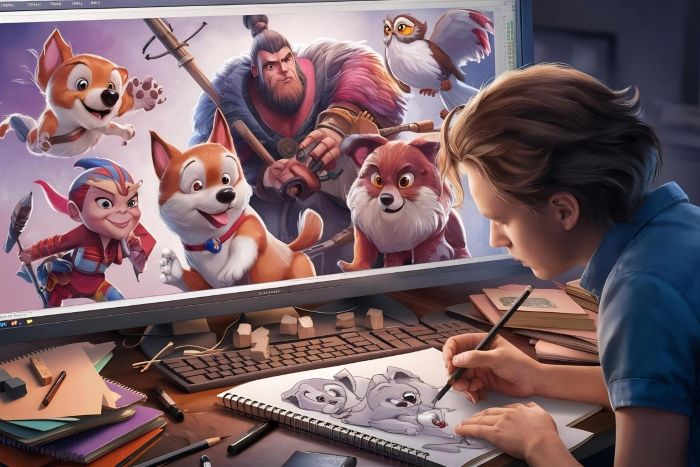
Consistent Messaging for Different Audiences
Brands often speak to more than one audience. A single organization might need to communicate with customers, partners, staff, and stakeholders. Animation makes this easier by offering a consistent visual style that works across sectors and demographics.
Unlike live action, animation content doesn’t depend on locations, actors, or changing environments. Colors, tone, and characters stay the same wherever the video’s shown. This consistency helps reinforce brand identity while still allowing messages to be tailored for different groups. Whether it’s internal training or external marketing, animation keeps communication aligned.
Cost Control and Creative Freedom
Animation gives businesses greater control over costs and timelines. There’s no need to hire locations, manage travel, or coordinate large crews. Changes can also be made without reshoots. Updating a line of text or adjusting visuals is often quicker and more efficient. Well-planned animation content also allows teams to scale production without dramatically increasing budgets. This flexibility makes it easier to test different versions of a message before committing to a wider rollout.
Creative freedom is another key benefit. Animation isn’t limited by real-world constraints, so abstract ideas, future concepts, or internal processes can be shown clearly. For industries focused on innovation or long-term planning, that freedom makes animation especially useful.
Strong Performance for Multi-Channel Campaigns
Digital platforms favor short, engaging content, and animation fits naturally in that space. Animated videos perform well on websites, social media, presentations, and email campaigns. They load quickly, can work with or without sound, and hold attention in busy feeds.
Marketing teams often use animation to maintain visual interest while keeping messaging controlled and professional. Subtle motion, clear pacing, and focused visuals help convey meaning without overwhelming the viewer. This balance makes for better engagement across multiple channels.
Conclusion
Animation works across multiple industries because it solves common communication challenges. It explains, adapts, and engages without relying on trends or short-term tactics. For brands looking to communicate clearly and consistently, it’s a practical choice. Strong animation content also provides long-term value, as it can be repurposed across campaigns, presentations, websites, and social platforms. If you’re considering how animation could support your message, exploring the right approach is a strong place to start.