By 2030, the global automotive software and electronics market is projected to reach $462 billion, driven by the rise of software-defined vehicles (SDVs). McKinsey estimates that software content in cars is growing at 11% annually, making code, not hardware, the primary source of innovation.
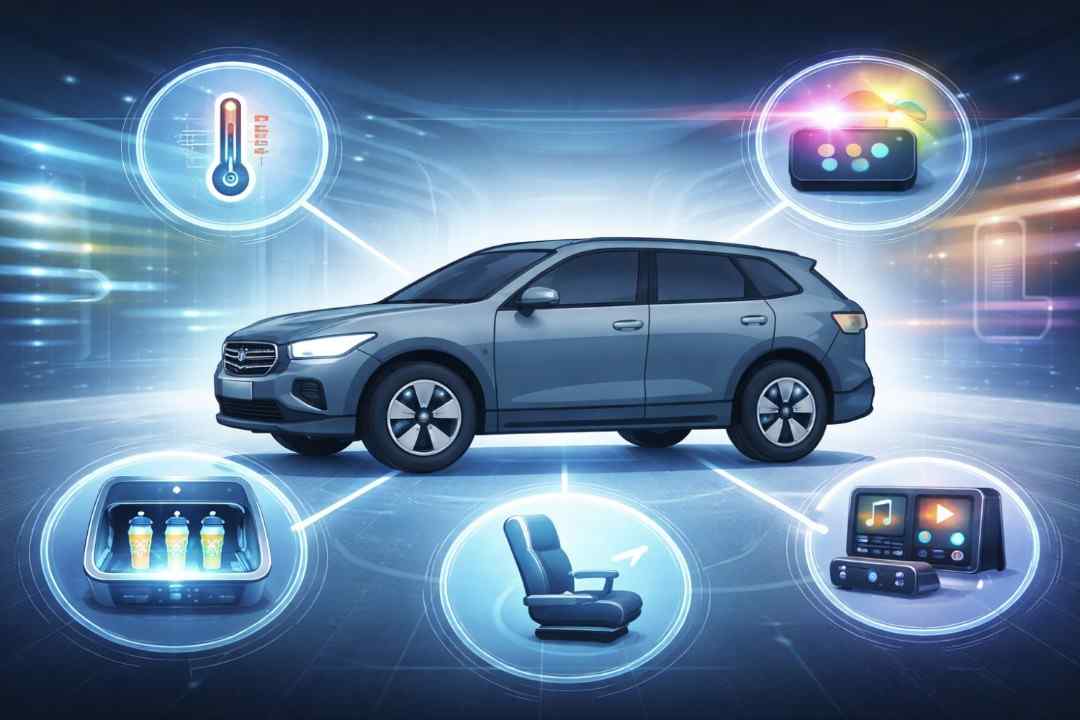
Modern crossovers are no longer defined by engines or body design. They operate as software platforms on wheels, powered by embedded operating systems, sensor-driven automation, and evolving user interfaces. Instead of relying solely on mechanical engineering, today’s vehicles depend on millions of lines of code to coordinate everything from climate control to infotainment logic. Below are five unexpected software-driven systems transforming the driving experience and redefining what a “car” really is in the digital era.
Table of contents

1. Automated Cabin Climate for Safety
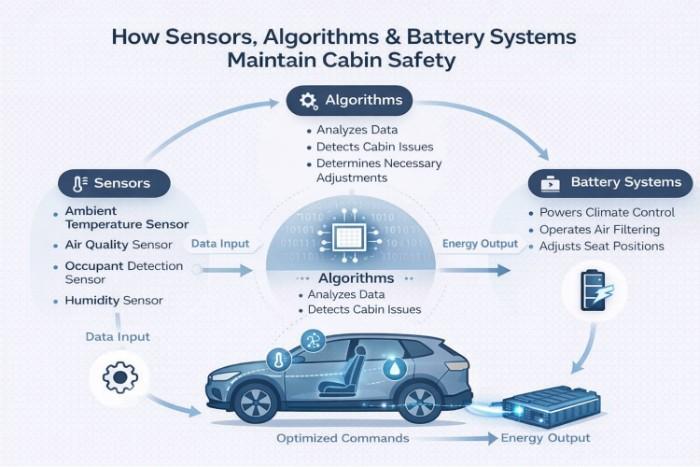
Pet and occupant safety features rely on embedded climate-control algorithms, not just HVAC hardware. These systems combine temperature sensors, occupancy detection, and battery management software to maintain safe conditions even when the vehicle is unattended.
Modern crossovers use distributed sensor networks to monitor cabin temperature, humidity, and air quality continuously. These data points are processed by onboard controllers that determine when cooling or ventilation should activate. If internal temperatures rise beyond safe thresholds, the system can automatically engage climate functions, display alerts on the infotainment screen, or send notifications to the driver’s mobile app.
Advanced implementations integrate AI-based decision logic that considers battery charge levels, outside weather conditions, and vehicle state before activating climate responses. This prevents unnecessary energy drain while still prioritizing safety. Some systems also log temperature events and adjust thresholds over time, improving accuracy through usage patterns.
From a software architecture perspective, these safety features rely on real-time operating systems (RTOS), sensor-fusion modules, and fail-safe routines. They demonstrate how even traditionally mechanical comfort features are now governed by software logic designed to reduce risk and improve reliability.
2. Thermal Management Software for Smart Storage
Cooling compartments in modern crossovers are governed by thermal management software that regulates temperature independently of the cabin. Using digital controllers, these systems balance power use, cooling cycles, and insulation efficiency.
Unlike older passive cooling designs, modern thermal management systems rely on predictive algorithms that dynamically adjust cooling behavior. Software continuously analyzes internal compartment temperature, ambient conditions, and vehicle energy availability to maintain stable cooling levels. This allows precise thermal regulation for food, beverages, or temperature-sensitive items.
These systems are deeply integrated with the vehicle’s energy management stack. When battery load is high, software can temporarily reduce cooling intensity or schedule cooling cycles more efficiently. Conversely, during idle or charging states, cooling algorithms can operate more aggressively without impacting performance.
From a development standpoint, these systems rely on embedded controllers running firmware capable of real-time monitoring, adaptive control loops, and error detection. Updates delivered over the air can fine-tune thermal logic, optimize energy efficiency, or add new operating modes without physical modification.
Comparison of Traditional vs. Software-Driven Cooling Systems
| Feature | Traditional Cooling System | Software-Driven Cooling System |
| Energy Efficiency | Low: Continuous power draw | High: Optimized via algorithms and sensor feedback |
| Response Time | Slow: Manual adjustment needed | Fast: Real-time automated adjustments |
| Automation Level | Minimal: Requires driver input | Full: Autonomous control based on temperature and occupancy |
| Temperature Accuracy | Approximate Limited control | Precise: Maintains exact setpoints |
| Integration | Standalone hardware | Integrated with the vehicle software ecosystem |
| User Interaction | Manual knobs/switches | Touchscreen or app-based control |
3. Ambient Lighting Engines Powered by Code
Ambient lighting systems are controlled by lighting orchestration software that manages color, intensity, timing, and synchronization with vehicle modes. These engines integrate data such as driving conditions, time of day, and user preferences to generate dynamic lighting behavior.
Rather than static LEDs, modern crossovers use programmable lighting controllers that operate through layered software logic. Lighting profiles can automatically shift based on drive mode, such as sport, comfort, or night mode. For example, colors may subtly change during acceleration, navigation alerts, or system notifications.
From a technical perspective, these systems use microcontrollers paired with software-defined lighting APIs. The lighting engine interprets inputs from the infotainment system, driver profiles, and environmental sensors. Developers can update or expand lighting behavior through firmware updates, allowing manufacturers to introduce new visual experiences long after the vehicle is sold.
In some platforms, lighting even becomes part of human-machine interaction. Subtle color changes can signal warnings, confirmations, or navigation prompts, reducing the need for audible alerts. This reflects a broader shift toward software-driven UX design inside vehicles.
4. Digital Seat Control and Passenger Experience
Rear-seat comfort is now managed by seat-control software instead of mechanical switches. Embedded firmware coordinates motor control, position memory, and safety constraints, with passengers using touch or infotainment interfaces.
Each powered seat operates as a small embedded system with microcontrollers that interpret digital commands. These controllers regulate motor movement, limit travel ranges, and ensure safe operation under varying loads. Position memory is stored digitally, allowing multiple user profiles to automatically recall preferred seating arrangements.
Modern seat software also integrates with broader vehicle systems. For example, seat position may adjust automatically based on driver identification, entry mode, or collision-prevention logic. In specific scenarios, seats may reposition slightly to improve airbag effectiveness or optimize posture during long drives.
Software also enables synchronized comfort features such as heating, ventilation, and massage timing. These systems rely on closed-loop control algorithms that monitor temperature, pressure, and usage patterns to fine-tune comfort without user intervention.
From a systems perspective, digital seat control illustrates how even physical motion components are now abstracted into software layers, allowing personalization, automation, and continuous improvement via updates.
5. In-Car Media and Audio Processing Platforms
Modern infotainment stacks process audio routing, microphone input, real-time signal processing, and screen synchronization. These systems are part of a broader media software ecosystem that supports voice commands, streaming, and interactive content.
At their core, infotainment platforms function like embedded computers running specialized operating systems. They manage multimedia pipelines that handle audio decoding, video rendering, Bluetooth communication, and voice recognition simultaneously. Software determines how audio is routed between speakers, microphones, and external devices in real time.
Advanced digital signal processing (DSP) algorithms enhance sound clarity, reduce noise, and adapt the audio output to cabin acoustics. Microphone arrays feed data into noise-cancellation and voice-assistant systems, allowing reliable voice interaction even at highway speeds.
These platforms also support app frameworks, enabling third-party integrations for navigation, streaming, and communication. Over-the-air updates allow manufacturers to improve interface responsiveness, introduce new features, or refine audio tuning long after purchase.
From a software architecture standpoint, infotainment systems often represent the most complex subsystem in modern vehicles, combining UI frameworks, middleware, networking stacks, and security layers into a unified experience.
Vehicles as Software-Defined Experiences
Unlike hardware, software can be continuously updated, refined, and expanded. This flexibility enables manufacturers to improve safety logic, enhance personalization, and optimize energy efficiency without replacing physical components.
Software-defined vehicles rely on centralized computing architectures, service-oriented software layers, and modular update systems. These allow automakers to deploy new features remotely, fix bugs, and adjust system behavior based on real-world usage data.
As vehicles become increasingly connected, software also enables integration with cloud platforms, mobile apps, and data analytics tools. This connectivity transforms vehicles into evolving digital products rather than static machines.
Industry Perspective
Experts, including analysts at Indy Auto Man, note that software-driven features now significantly influence consumer decisions, marking a shift where code defines the driving experience as much as horsepower once did.
Buyers increasingly compare vehicles based on interface responsiveness, update frequency, automation features, and digital ecosystems. In many cases, software maturity outweighs traditional metrics such as engine displacement or mechanical complexity.
This trend reflects a broader convergence in automotive technology, where cars increasingly resemble mobile computing platforms rather than purely mechanical products.
Conclusion
Modern crossovers reflect a fundamental shift: vehicles have become software-first platforms. Physical components now execute commands generated by layered digital systems that manage comfort, safety, efficiency, and entertainment.
As mechanical complexity gives way to software orchestration, innovation increasingly depends on code quality, system architecture, and user experience design. The future of mobility will be shaped less by metal and more by algorithms, interfaces, and continuous updates.
In this new era, understanding vehicles as software platforms is essential for consumers, engineers, and industry observers alike. The road ahead is not just paved it is programmed.