The secret of higher workplace productivity is working longer, right? Wrong! It’s working smarter.
In the past few years, work has transformed a lot. The office is no longer the only place where work gets done. These days, it is done from homes, cafes, or malls. People now work together from across cities, countries, and time zones.
Remote workers are 13% more productive than their counterparts in the office. This happens because of fewer distractions and more focus on the work.
That said, productivity doesn’t improve automatically just because employees work from home. You realize the real advantage when you combine AI and remote work intentionally.
So, how can you achieve it?
This article explores the rise of remote work in modern workplaces, the role of AI in improving workplace productivity, the benefits of combining remote and AI work, and how to boost workplace productivity with AI and remote work.
Key Takeaways
- Remote work boosts productivity through fewer distractions but still faces challenges, like communication gaps.
- Combining AI with remote work enhances productivity by automating repetitive tasks and improving decision-making.
- AI tools facilitate smarter communication, better task management, and seamless collaboration across time zones.
- To effectively increase workplace productivity, automate tasks, build an AI-enabled workspace, and encourage asynchronous work.
- The future of productivity relies on integrating human intelligence with AI technology to create smarter work systems.
Table of contents
The Rise of Remote Work in Modern Workplaces
Ten years back, remote work was considered a perk. But today it has become a standard operating model for many organizations.
The shift didn’t happen overnight. It happened over time. The major transformation occurred during global disruptions. But the real reason why people still follow is that it works.
Companies discovered that employees working remotely often:
- Experience fewer interruptions
- Have more control over their work environment
- Spend less time commuting
- Gain flexibility to manage their energy and focus
Take the example of a software developer who used to spend two hours commuting daily. Now, with remote work, he can invest those two hours in deep work, learning new tools, or simply starting the day energetically.
This was for one employee. When you multiply this by all the employees, you see a compounding effect where productivity is increased.
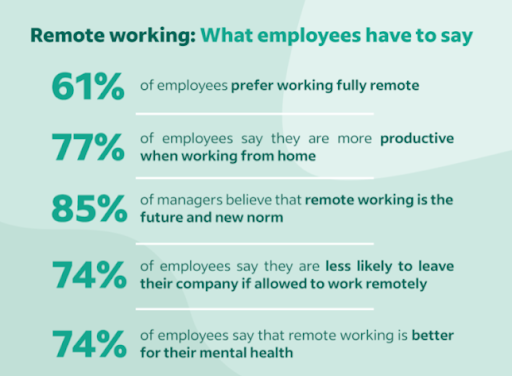
But remote work also introduced new challenges:
- Communication gaps
- Difficulty tracking progress
- Collaboration across time zones
- Managing distributed teams
- This is where AI becomes helpful.
Remote work created the need for smarter digital infrastructure, and artificial intelligence is fulfilling that need by becoming an important element of that infrastructure.
How AI Improves Workplace Productivity
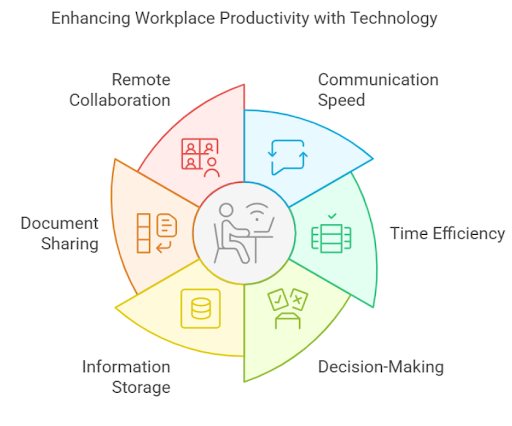
You may be knowing that there’s a huge debate about whether AI will replace humans or not. Here’s something you should note. AI is often misunderstood as a human replacement. But in reality, the most impactful AI tools help in increasing productivity. In other words, they remove friction from everyday tasks that erodes your productivity.
Consider the following small tasks that take up most of the time every day:
- Scheduling meetings
- Summarizing discussions
- Searching for information
- Writing reports
- Organizing project updates
AI can automatically handle these tasks in a few minutes. For example, an AI collaboration tool can automatically summarize meetings, find the next action that needs to be taken, generate task and goal lists, and provide timely reminders so you don’t miss the deadlines.
Instead of spending an hour writing meeting notes, a team member can start working immediately after the meeting. This tool gives clarity to everyone on what was discussed in a meeting, what the progress is, and what needs to be done.
Another powerful area where AI improves productivity is decision support.
Modern AI systems analyze large volumes of data and find the patterns that humans might miss. This helps managers make faster and better decisions without the need to analyze multiple spreadsheets.
Companies that invest in AI-driven digital transformation are increasingly using AI for:
- workflow automation
- predictive analytics
- smart scheduling
- document processing
- employee productivity insights
AI removes repetitive work so people can focus on creative thinking, problem-solving, and strategic decision-making.
And when teams are distributed across locations, that advantage becomes even more valuable.
Benefits of Combining AI With Remote Work
AI and remote work are powerful individually, but together they create a productivity system that traditional offices simply can’t match.
Here’s how.
1. Smarter Communication
Remote teams are dependent on digital communication. But as everyone sends messages, some of them might get ignored. AI tools can help filter information overload.
For example:
- AI summarizing long Slack threads
- Smart email prioritization
- Meeting transcription and highlights
Instead of reading 200 messages, employees get clear summaries and actionable insights for all messages. This helps in reducing cognitive load.
2. Better Task Management
Proper visibility of tasks and updates matters a lot in remote teams. AI-powered project management tools automatically track tasks, deadlines, and dependencies.
Managers can see:
- Which tasks are delayed
- Where bottlenecks exist
- Which teams need support
Employees also benefit because they always know what to focus on next.
At the same time, organizations are increasingly adopting workforce productivity tracking tools that provide insight into workflows and team performance. With these tools, there’s no need to micromanage employees. These systems identify productivity patterns, optimize workloads, and improve team efficiency across distributed environments.
Here, the goal is not to monitor everyone but to ensure clarity. When everyone understands what the priorities are and what goals to achieve, productivity improves naturally.
3. Enhanced Collaboration Across Time Zones
Remote teams often work across continents. Without AI, collaboration across different time zones can be slow and frustrating.
But AI tools help by:
- organizing shared knowledge bases
- recommending relevant documents
- translating conversations instantly
- enabling asynchronous workflows
Teams do not have to keep waiting for the next meetings. They can start working and completing their tasks independently. This is a crucial factor for the global organizations that operate continuously.
Organizations that are open to embracing the new technology and are exploring AI in business strategy are increasingly adopting these tools. Their goal is to create a seamless collaborative environment for everyone.
How to Increase Workplace Productivity With AI and Remote Work
Understanding the benefits of AI and remote work is one thing. Implementing them effectively is another. Take the following steps to see them in action.
Step 1: Automate Repetitive Work
Identify the tasks that take the largest chunk of your time. Also, ensure that these are repetitive tasks and require less creativity in completing them.
Examples include:
- data entry
- report formatting
- scheduling
- document organization
- meeting notes
AI tools can automate many of these processes. Let us suppose that by using AI tools, an employee is saving 20 minutes a day. But if you take the broad picture, it translates into saving hundreds of productivity hours per month across a company.
Step 2: Build an AI-Enabled Digital Workspace
Remote productivity is, to a large extent, a function of having the right digital infrastructure.
Your workspace should integrate:
- project management tools
- communication platforms
- AI assistants
- shared documentation systems
Earlier, you needed to keep switching between different tools to complete certain tasks. But now, AI-powered platforms can connect workflows into one ecosystem.
The smoother the system, the less energy employees spend navigating tools.
Step 3: Encourage Asynchronous Work
One of the biggest productivity killers is long-running meetings daily. Remote teams perform better when they adopt asynchronous collaboration.
This means:
- recording meetings instead of repeating them
- documenting decisions clearly
- allowing team members to respond when they are most focused
AI tools help in summarizing meeting discussions and capturing decisions that were taken.
As a result, employees spend less time in meetings and more time producing meaningful work.
Step 4: Use Data to Improve Workflows
AI can analyze productivity patterns and highlight inefficiencies.
For example, it can reveal:
- teams overloaded with meetings
- projects with repeated delays
- workflows that waste time
Leaders can then adjust processes based on real insights rather than assumptions. To communicate these insights and action plans to the team, prepare a clear progress report presentation. It will help to communicate key metrics, delays, and bottlenecks so everyone understands priorities and next steps.
Small changes in workflow design often lead to major improvements in output and employee satisfaction.
Step 5: Focus on Human Strengths
The most productive organizations understand something simple and that is AI handles automation while humans handle innovation.
Encourage employees to spend more time on:
- strategic thinking
- relationship building
- creative problem-solving
- learning new skills
When technology handles repetitive work, people can focus on what they do best. And that’s where real productivity gains happen.
The Future of Productivity Is Hybrid Intelligence
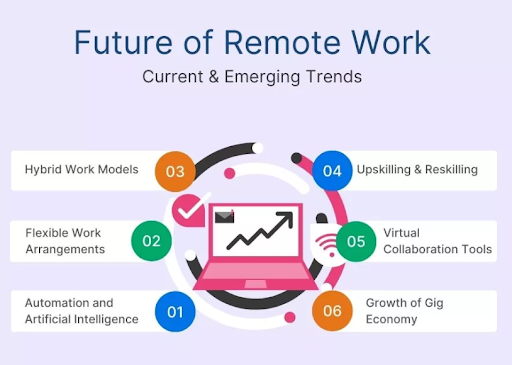
The workplace is evolving from a traditional office model to something far more dynamic.
We are entering an era where human intelligence and artificial intelligence work together.
In this environment:
- AI handles repetitive tasks
- remote work enables flexibility
- digital tools connect global teams
- Employees focus on creative and strategic work
Organizations that embrace this model will move faster, innovate more, and attract top talent from anywhere in the world.
On the other hand, the companies that resist change may struggle to keep up. This is because productivity today isn’t about working harder. It’s about designing smart work systems.
Build a Smarter Workplace for the Future
Workplace productivity is not necessarily about spending long hours in the office. Rather, it’s about how organizations use technology, flexibility, and people to design smarter workflows. Remote work allows teams from different countries to collaborate easily, while artificial intelligence helps automate tasks and generate valuable insights.
In industries like hospitality, restaurant management software further enhances efficiency by streamlining operations such as order processing, inventory tracking, and staff coordination, enabling businesses to deliver better service with less manual effort.
The future of work isn’t about choosing between people and technology; it’s about using both together.