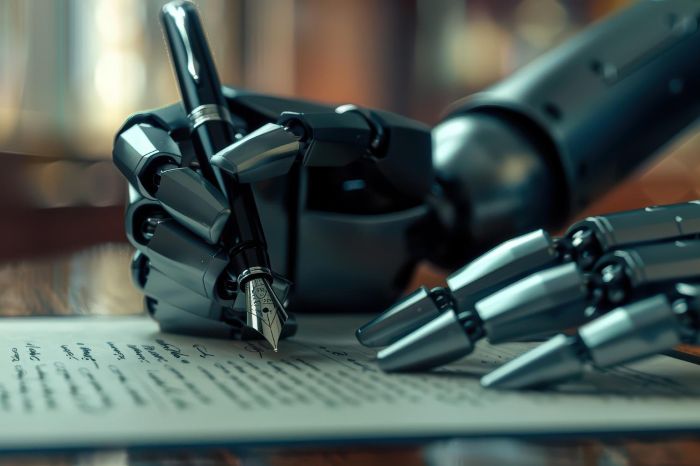
AI-generated content has become a powerful part of modern communication. From students preparing essays to marketers creating campaign copy, from bloggers publishing long-form articles to professionals drafting reports, AI tools are helping people work faster than ever. But while speed is valuable, it does not always create quality. One of the biggest challenges with AI-generated writing is that it often sounds robotic, repetitive, and too polished. This is where Humaniser plays an important role in modern content workflows. Instead of relying on raw AI drafts, users can transform machine-like writing into smooth, authentic, and engaging text that feels natural to readers. With a strong Free AI Humanizer, anyone can quickly improve content quality without adding hours of manual editing.
Key Takeaways
- AI-generated content often sounds robotic and repetitive; Humaniser improves this by making text more authentic and engaging.
- Humaniser enhances readability and flow, boosting reader trust and SEO performance across various writing formats.
- The software addresses common problems in AI writing, such as predictable transitions and uniform paragraph sizes.
- Users can follow a structured workflow with Humaniser to balance speed and quality in content creation.
- Humanized writing leads to higher engagement rates, better SEO dwell time, and enhanced professional communication.
Table of contents
Why AI Content Still Needs Humanization
AI can generate words fast, but writing is more than just putting sentences together. The real value of content lies in how it feels to the reader. If the structure is too repetitive or the tone feels overly balanced, the content may lose trust and engagement.
Humanized writing improves:
- Reader trust by sounding authentic
- Clarity through better sentence variation
- SEO performance with stronger dwell time
- Professional communication in reports and proposals
- Academic readability in essays and summaries
- Marketing impact through better audience connection
Humaniser helps users move from “fast drafts” to “effective communication.”
Common Problems in Raw AI Writing
Most AI writing tools leave behind structural patterns that make content easy to recognize as machine-generated.
Some of the most common issues include:
- Repeated sentence openings
- Overuse of phrases like “in today’s world”
- Uniform paragraph sizes
- Predictable transitions
- Flat emotional tone
- Limited sentence rhythm changes
Even useful information can feel less engaging when these patterns repeat throughout an article.
This is why Humaniser focuses on improving readability and natural flow rather than simple synonym replacement.

How Humaniser Improves Writing Quality
Humaniser works as a refinement layer that upgrades the natural feel of text. Instead of just changing words, it improves how ideas connect, how sentences flow, and how realistic the tone feels.
Key strengths of Humaniser
- Sentence diversity: Adds variation in length and rhythm
- Natural tone shifts: Makes the voice feel less robotic
- Improved flow: Smooths transitions between ideas
- Meaning preservation: Keeps the original message intact
- Faster editing workflow: Reduces manual rewriting time
This makes it useful for both short-form and long-form content.
Use Cases Across Multiple Writing Needs
One of the biggest advantages of Humaniser is that it is not limited to one specific industry.
Popular use cases
- Students: assignments, notes, essays, research summaries
- Marketers: ad copy, landing pages, email campaigns
- Businesses: client communication, reports, proposals
- Bloggers: tutorials, listicles, long-form guides
- Freelancers: ghostwriting, SEO content, client drafts
This flexibility makes it ideal for a wide range of modern writing needs.
What Defines the Best AI Humanizer
Not every humanizer delivers the same level of quality. Some tools only replace a few words, which often makes the text feel awkward. A true Best AI Humanizer should improve deeper writing signals.
The best humanizers improve:
- Natural sentence rhythm
- Human-like imperfections
- Better paragraph pacing
- More realistic transitions
- Audience-focused readability
- Tone consistency
Humaniser focuses on these deeper refinements, which is why the final content feels more believable and engaging.
A Smarter Workflow for Better Results
To get the most value, Humaniser should be part of a structured writing workflow.
Step 1: Create the first AI draft
Generate the base content quickly.
Step 2: Humanize the structure
Use Humaniser to improve tone, rhythm, and readability.
Step 3: Optimize for purpose
Adjust examples, CTAs, or academic depth depending on the audience.
Step 4: Final review
Proofread for clarity and consistency.
This process allows creators to maintain speed without sacrificing quality.
Why Humanized Writing Performs Better
Content that feels natural almost always performs better than robotic text.
Key benefits
- Higher engagement rates
- Better SEO dwell time
- Improved conversion potential
- Stronger academic readability
- Better trust in professional communication
When readers feel the content flows like a real human wrote it, they are more likely to stay engaged and trust the message.
That is why Humaniser is more than an editing tool. It is a performance optimization system for modern writing.
Final Thoughts
AI has solved the problem of speed, but it has not fully solved the challenge of authenticity. Readers today still expect writing that feels natural, trustworthy, and emotionally believable.
Humaniser helps bridge that gap by transforming raw AI drafts into polished, readable, and audience-ready content. Whether the goal is SEO, education, business, or digital publishing, it provides the balance of speed and authenticity that modern writers need.
This is what makes Humaniser such a practical choice for anyone who wants both a free starting point and the quality of the best AI humanization available.