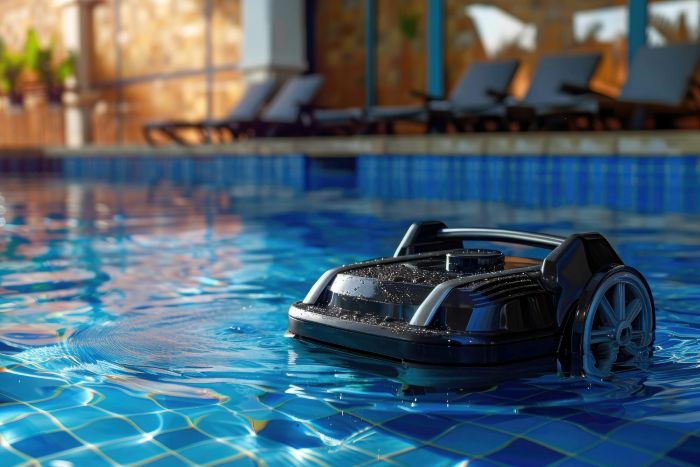
For most homeowners, robotics has always meant convenience — not intelligence. A vacuum that follows a pattern. A device that repeats the same route every day. It works — until something changes and you need enterprise grade AI.
For years, consumer robotics has operated on this simplified model. Devices were designed to perform repetitive tasks within controlled environments, relying on predictable conditions and limited sensing.
That gap is now closing.
What we are beginning to see is the migration of enterprise-grade AI principles into consumer hardware, transforming how machines perceive, decide, and act in real-world environments.
Table of contents
From Scripted Behavior to Adaptive Intelligence
Traditional consumer robots were built around predictable logic.
They executed fixed routines, repeated movement patterns, and depended on trial-and-error navigation. When conditions changed—whether due to obstacles, environmental variability, or increased task complexity—the system struggled to adapt.
Enterprise AI, by contrast, is built for uncertainty.
In business environments, AI systems continuously process incoming data, adjust decisions in real time, and optimize outcomes based on changing conditions. This shift from static programming to adaptive intelligence is now being embedded into consumer robotics.
Instead of following instructions, devices are beginning to interpret environments.
This distinction marks a fundamental turning point.
In real-world environments, this shift becomes obvious very quickly. A pool that was clean yesterday may accumulate debris unevenly overnight due to wind, usage, or temperature shifts. Systems that rely on fixed patterns often miss these changes entirely.

The Role of Data Processing at the Edge
One of the defining characteristics of enterprise AI systems is their ability to process data at the edge.
Rather than relying entirely on centralized computing, edge-based systems perform real-time analysis locally. This reduces latency, increases responsiveness, and enables systems to operate independently even when conditions shift rapidly.
In consumer robotics, this capability is critical.
Environments such as homes—and particularly outdoor spaces—are dynamic and unpredictable. Surfaces vary. Obstacles appear without warning. Conditions such as water flow, debris density, or lighting can change continuously.
A modern pool cleaning robot must therefore operate not as a passive tool, but as a localized decision-making system.
In practice, this is where an ai pool cleaner begins to differentiate itself from traditional robotic pool cleaner systems that rely on fixed movement patterns.
By processing environmental inputs in real time, these systems can adapt movement, adjust cleaning intensity, and prioritize areas that require immediate attention.
This is not incremental improvement. It is architectural evolution.
Layered Intelligence and System Coordination
Enterprise systems are rarely built around a single function. They operate through coordinated layers—data collection, analysis, decision-making, and execution.
This same layered approach is now being applied to consumer robotics.
At the base level, sensors gather environmental data. Above that, AI models interpret the data and generate a working understanding of the space. Decision layers then determine optimal actions, while execution systems translate those decisions into movement and task completion.
What makes this structure powerful is coordination.
Rather than treating each function independently, the system operates as a unified whole. Movement is informed by perception. Cleaning intensity is adjusted based on detected conditions. Pathing evolves as the environment changes.
This integrated architecture is what allows modern systems to move beyond automation into autonomy.
Translating Enterprise Logic Into Everyday Use
The impact of enterprise-grade AI becomes most visible when applied to complex, real-world tasks.
Take pool maintenance as an example.
In real households, this isn’t theoretical. A single afternoon of use can redistribute debris unevenly across the pool, creating zones that require immediate attention while others remain untouched.
Unlike controlled indoor environments, pools present constantly shifting conditions. Water resistance affects movement. Debris distribution changes throughout the day. Surfaces vary in texture and angle.
Applying enterprise logic to this environment requires more than basic automation—it requires adaptive systems that can respond dynamically.
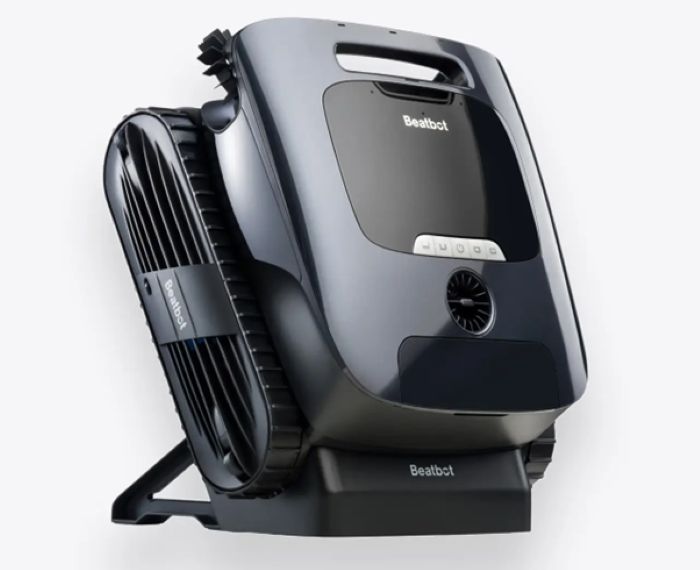
In practical applications, advanced robotic pool cleaner systems such as the Beatbot AquaSense 2 Ultra demonstrate how enterprise-grade AI translates into real-world reliability. By continuously adjusting navigation, suction, and coverage based on live environmental feedback, the system maintains consistent performance without requiring manual correction — even when debris distribution shifts or visibility drops after heavy use.
The key difference is not just capability, but independence.
The system operates continuously without needing correction, supervision, or repeated intervention.
Reducing Operational Friction for the End User
One of the primary goals of enterprise AI is to reduce operational friction.
In business, this means fewer manual processes, less oversight, and more reliable outcomes. In consumer environments, the same principle applies—just at a different scale.
For homeowners, friction often appears as small, repeated interruptions:
- Checking whether a device has stalled
- Adjusting settings mid-cycle
- Repeating tasks due to incomplete coverage
When enterprise-grade intelligence is introduced, these interruptions begin to disappear.
Systems anticipate issues rather than react to them. They maintain consistent performance even under variable conditions. Most importantly, they remove the user from the operational loop.
This shift is subtle, but its impact is cumulative.
For most users, the difference is not technical — it’s experiential. The system doesn’t feel smarter because of specifications. It feels different because nothing interrupts it.
Scaling Intelligence Without Increasing Complexity
A key challenge in bringing enterprise-grade AI to consumer devices is maintaining usability.
Enterprise systems are inherently complex, but consumer products must remain intuitive. The success of this transition depends on hiding complexity behind seamless interaction.
This is where modern design principles intersect with advanced technology.
In systems like the Beatbot AquaSense 2 Ultra robotic pool cleaner, complexity is managed internally while the user experience remains straightforward. Setup is minimal. Operation is automated. Maintenance requirements are reduced.
From the user’s perspective, the system simply works.
Behind the scenes, however, it is executing layered decision-making processes that mirror enterprise-level architecture.
This balance between sophistication and simplicity is what defines next-generation consumer robotics.