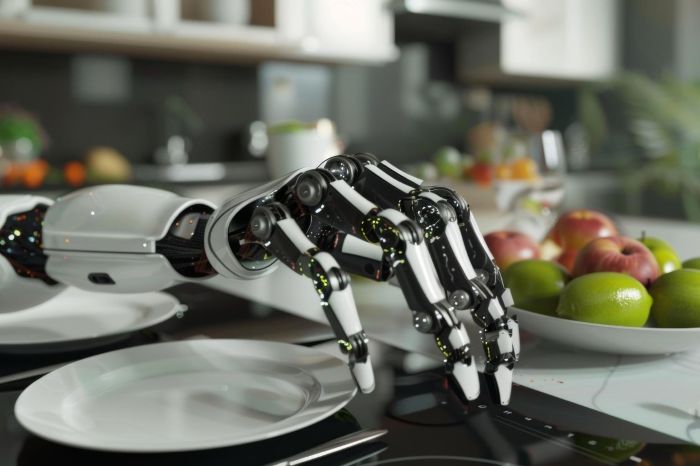
The domestic robotics industry has undergone a quiet but radical transformation over the last decade. What began as a novelty—small, disc-shaped machines bouncing aimlessly off baseboards—has matured into one of the most widespread, commercially successful deployments of edge computing and machine vision in the world. Today’s domestic cleaning robots are no longer just automated appliances equipped with simple motors; they are highly sophisticated spatial intelligence agents navigating complex, dynamic environments.
To understand how floor care became a frontier for artificial intelligence, we must examine the engineering evolution from basic kinematic algorithms to advanced sensor fusion, and how miniaturized hardware is reshaping the modern smart home ecosystem.
Key Takeaways
- The domestic robotics industry has transformed from simple devices to advanced, autonomous cleaning robots using edge computing and machine vision.
- Early navigation systems relied on ineffective ‘bump and redirect’ algorithms, leading to incomplete cleaning.
- SLAM technology revolutionized floor mapping, enabling robots to create detailed real-time maps of their environment.
- Modern robots use edge AI to recognize and avoid obstacles, enhancing efficiency and privacy by processing data locally.
- Future consumer cleaning devices will integrate seamlessly into smart home networks, moving toward true autonomous functionality.
Table of contents
- The Limitations of Reactive Navigation: Why “Bump and Redirect” Algorithms Failed
- Sensor Fusion and SLAM Technology: Enabling Real-Time 3D Spatial Mapping
- Edge Computing and Local AI: Advancing Semantic Object Recognition for Obstacle Avoidance
- High-RPM Fluid Dynamics: The Mechanical Engineering Behind Advanced Liquid Extraction
- The Future of IoT Integration: Transforming Consumer Hardware into Autonomous Smart Home Nodes
The Limitations of Reactive Navigation: Why “Bump and Redirect” Algorithms Failed
Early autonomous navigation in consumer hardware relied heavily on reactive kinematics. The first generation of domestic robotics cleaners utilized basic tactile bump sensors, drop-off sensors, and rudimentary infrared arrays. The algorithms governing their behavior were essentially randomized: drive forward until an obstacle is encountered, rotate a predetermined or random number of degrees, and proceed.
This “bump and redirect” methodology was computationally cheap and required very little processing power or memory. However, it was also highly inefficient. Devices lacked any concept of global positioning within a home. They could not track where they had been or where they needed to go, leading to incomplete coverage, redundant pathing, and frequent hardware entrapment in tight corners or under furniture. The hardware was strictly reactionary; the environment acted upon the robot, rather than the robot understanding its environment.
Sensor Fusion and SLAM Technology: Enabling Real-Time 3D Spatial Mapping
The true inflection point in domestic robotics occurred with the commercial miniaturization of Simultaneous Localization and Mapping (SLAM) technologies. Originally developed for autonomous vehicles and aerospace applications, SLAM allowed consumer robotics to transition from reactive navigation to active spatial mapping.
By integrating LiDAR (Light Detection and Ranging) arrays and visual SLAM (vSLAM) optical sensors, robots gained the ability to generate precise, two-dimensional and three-dimensional floor plans in real-time. A spinning LiDAR sensor emits laser pulses thousands of times per second, measuring the time of flight for the light to bounce back from surrounding walls and furniture. This continuous stream of telemetry data is processed to construct a persistent digital map of the home, allowing the onboard processor to calculate the most efficient, serpentine coverage routes.
Edge Computing and Local AI: Advancing Semantic Object Recognition for Obstacle Avoidance
However, topological mapping alone does not equate to spatial understanding. A LiDAR beam can accurately plot the location of a solid object, but it cannot differentiate between a dropped smartphone charging cable, a stray sock, or a permanent architectural feature.
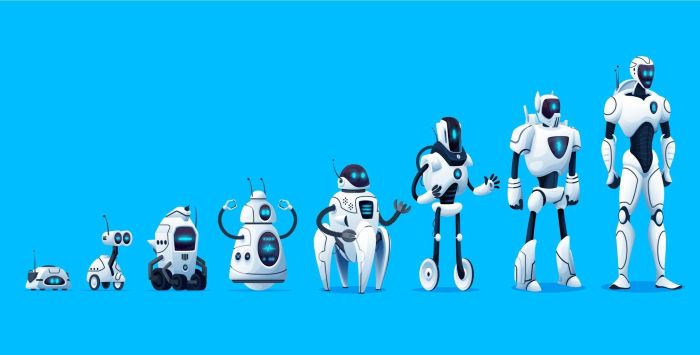
To bridge this gap, engineers integrated 3D structured light sensors and high-definition RGB cameras, backed by localized Neural Processing Units (NPUs). This means a modern vacuum and mop robot does not just map a room; it semantically analyzes it. By running advanced machine vision and image classification models directly on the edge, the device can identify specific obstacles in milliseconds.
Processing this data on the edge—rather than sending it to a cloud server—is a critical engineering choice. It drastically reduces latency, allowing the robot to adjust its trajectory at full speed. More importantly, it addresses strict consumer privacy concerns by ensuring that visual data of a home’s interior never leaves the local hardware. Today’s AI-driven domestic robotics models are trained on millions of images to instantly recognize and avoid high-risk obstacles like pet waste, delicate cables, or shoes, achieving a level of autonomous reliability that was impossible just five years ago.
High-RPM Fluid Dynamics: The Mechanical Engineering Behind Advanced Liquid Extraction
While autonomous spatial intelligence represents the software and AI zenith of modern floor care, the physical hardware engineering side has seen equally impressive innovations, particularly in the realm of fluid dynamics. Autonomous robots efficiently handle the unstructured, continuous navigation of a home, but high-entropy, heavy-duty messes require a different class of engineering altogether.
In scenarios where massive spills or heavily ground-in debris occur, human-guided physics take over. Consider the internal mechanics of a high-performance wet dry vac. These devices must perfectly balance continuous liquid deployment, high-RPM mechanical scrubbing, and immense suction power to extract a contaminated slurry before it can spread across a floor.
Achieving this requires precise micro-fluidic engineering and custom-built brushless digital motors capable of spinning at over 100,000 RPM. Engineers have developed highly efficient dual-tank architectures that utilize a Venturi effect to create massive suction, lifting heavy liquids while maintaining a strict, physical separation between the clean washing solution and the extracted waste. This miniaturization of industrial-grade fluid extraction into a lightweight, battery-powered, cordless form factor is a significant triumph of modern domestic robotics mechanical design.
The Future of IoT Integration: Transforming Consumer Hardware into Autonomous Smart Home Nodes
The evolution of domestic cleaning hardware serves as a masterclass in the commercialization of advanced technology. By combining edge AI, real-time machine vision, SLAM navigation, and precise fluid dynamics, engineers have transformed household chores into a showcase of applied robotics.
As sensor fusion becomes even more sophisticated in domestic robotics and protocols like Matter unify the IoT landscape, the next generation of these devices will likely shift from isolated hardware to proactive, spatially aware nodes. They will not only maintain our physical spaces but interact seamlessly with the broader smart home ecosystem, marking the final transition from mechanical appliances to true autonomous infrastructure.