
Language learning has changed dramatically over the past few years. Students no longer depend solely on classrooms, printed workbooks, or fixed schedules to improve student language skills. The AI-driven tools today provide versatile responsive support that modifies to suit individual requirements. Such systems analyze answers, spot patterns, and give an immediate response, thereby assisting the learners to move ahead rather without long delays or confusion. To most students, such a change will translate to increased practice time, more transparent feedback, and reduced barriers between effort and improvement.
This article explores the best AI language tutors designed to support reading, writing, listening, and speaking at multiple proficiency levels. Each tool is assessed based on how well it adapts lessons, how clearly it explains mistakes, and how effectively it supports consistent practice. The purpose is not to crown a single winner, but to help learners find solutions that fit their goals and habits. With the right choice, AI-based support can turn practice into progress and make language learning more efficient and engaging.
Key Takeaways
- AI-driven tools have revolutionized language learning by providing personalized feedback and support, enhancing student language skills.
- This article evaluates top AI language tutors based on their adaptability, clarity, and effectiveness in supporting reading, writing, listening, and speaking.
- Asktutor.ai stands out for its focus on clear explanations and real-life conversational practice.
- Other notable tools include GoMigo for structured learning, Talkpal AI for spoken communication, and Loora AI for professional language use.
- These AI tutors enhance traditional learning methods, making language practice more flexible, engaging, and effective.
Table of contents
Asktutor.ai
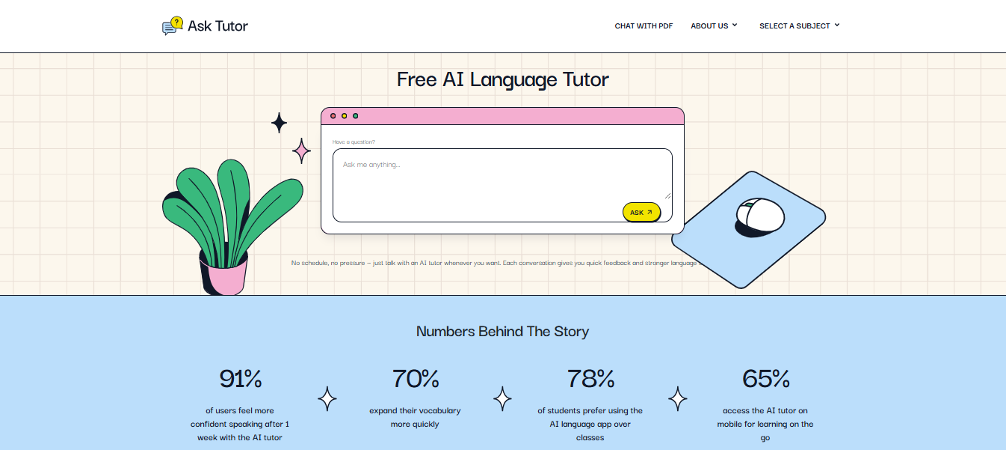
Asktutor.ai leads this list because of its strong focus on adaptation and clarity. It functions as an AI language tutor that responds to how a student actually performs, not to a predefined learning path. This platform gives quick feedback that shows where you went wrong and how to fix it. Conversations help users build real skills and understand meanings clearly. The system supports speaking and vocabulary in everyday scenarios. It also adjusts to what you need next so you get personalized language practice that fits your current level.
Key qualities of Asktutor.ai include:
- The tool shows clear explanations after each response.
- Opportunity to practice real-life conversations that feel useful and natural.
- The platform helps learn new words and phrases at your own pace.
- It works on any device and fits learning into your life.
- Opportunity to store new vocabulary and review it later.
- Download materials or PDFs to study offline.
AskTutor.ai lets learners try again and again without judgment. It adapts to your pace and helps you build confidence in real conversations.
GoMigo
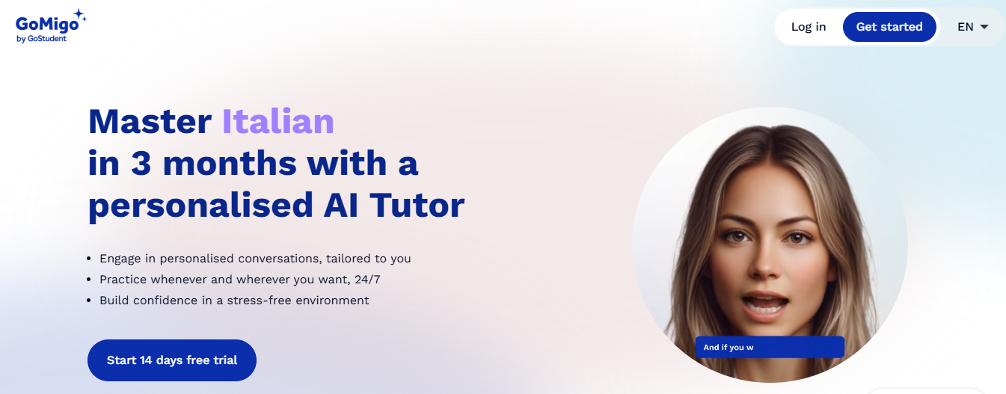
GoMigo offers a structured learning environment that still leaves room for flexibility. It organizes lessons into clear paths, which helps students understand where they are and what comes next. At the same time, it allows learners to revisit topics and adjust their pace.
Notable strengths of GoMigo include:
- Organized lesson progression with clear goals
- Regular feedback paired with brief explanations
- Progress tracking that highlights development over time
- A balanced focus on comprehension and conversation
This platform works well for learners who appreciate structure but dislike rigid systems. It provides direction while respecting individual learning speed.
Talkpal AI
Talkpal AI centers on spoken communication and listening accuracy. Learners engage in voice-based exchanges that feel natural and unscripted. This helps build comfort with real conversations rather than rehearsed responses.
Key aspects of Talkpal AI include:
- Real-time pronunciation and fluency feedback
- Topic-based speaking sessions
- Listening practice through interactive dialogue
- Encouragement of spontaneous responses
This tool fits students who want to sound more natural and react quickly in conversations. It emphasizes use over theory, which helps build confidence.
Loora AI
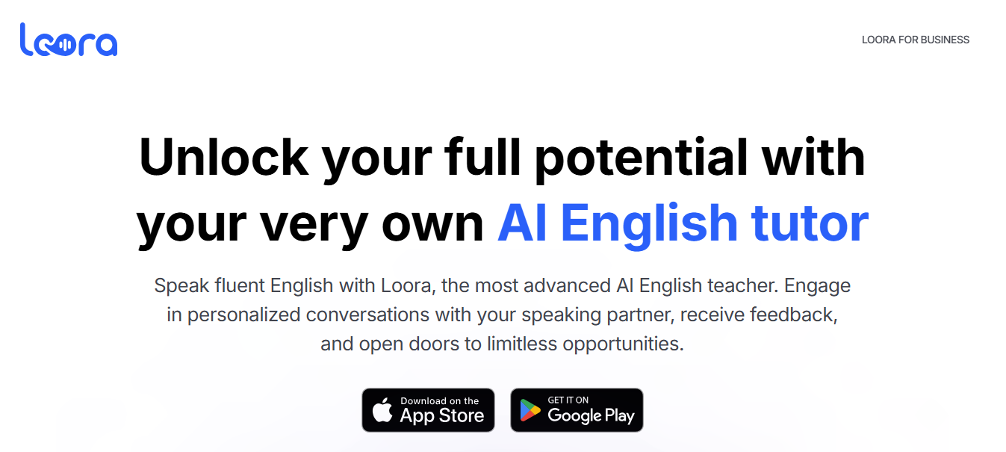
Loora AI targets professional language use. It helps learners navigate workplace communication with clarity and precision. Lessons focus on tone, structure, and vocabulary appropriate for formal settings.
Key strengths of Loora AI include:
- Practice with business and career-related scenarios
- Focus on professional vocabulary and phrasing
- Contextual explanations for corrections
- Support for presentations, meetings, and written communication
This platform suits students who need language skills for career development rather than casual conversation. It addresses nuances often missing from general courses.
Speak
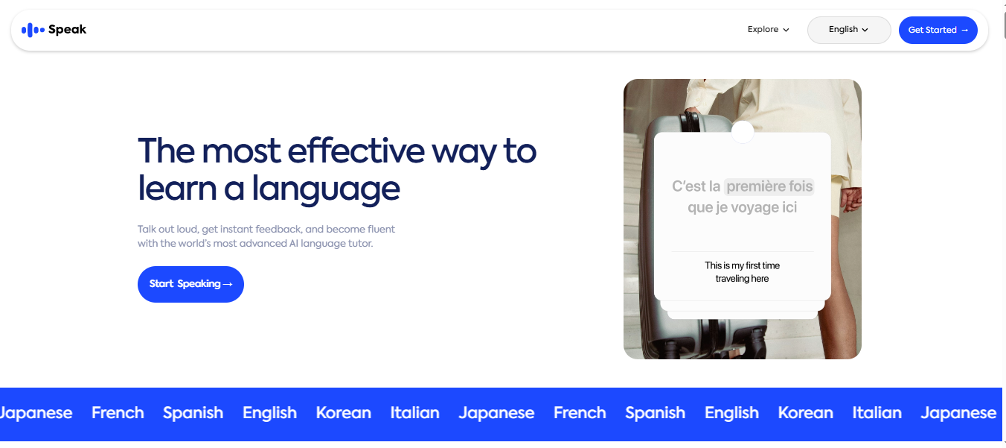
Speak concentrates on pronunciation, rhythm, and spoken clarity. It encourages learners to repeat phrases, refine stress patterns, and adjust intonation. Feedback focuses on sound rather than grammar alone.
Notable features of Speak include:
- Detailed pronunciation analysis
- Attention to rhythm and intonation
- Guided repetition for accuracy
- Confidence-building through spoken practice
Speak benefits learners who understand grammar but struggle with delivery. It works well alongside tools that focus on structure or writing.
Jumpspeak
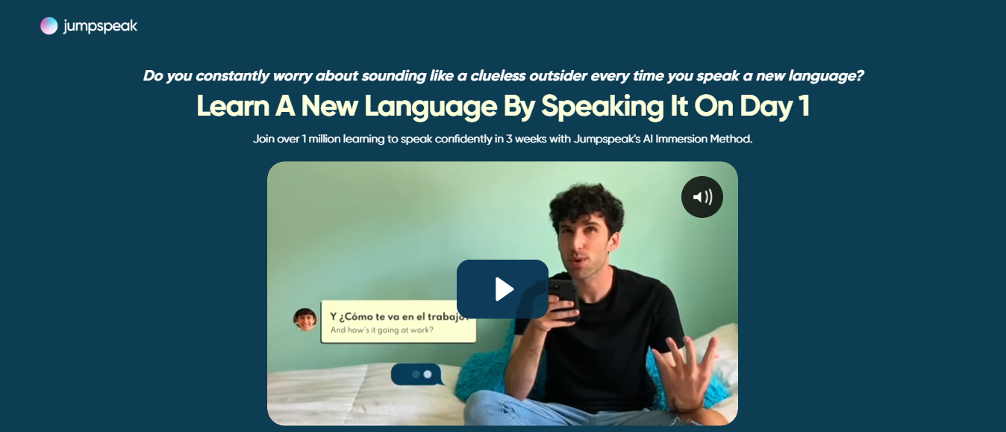
Jumpspeak takes a concise approach to language practice. Sessions remain short, which supports daily use and habit formation. Instead of long lessons, learners complete focused speaking tasks that reinforce consistency.
Important features of Jumpspeak include:
- Short, daily speaking exercises
- Immediate pronunciation feedback
- Simple goals that encourage regular use
- Straightforward progress tracking
Jumpspeak works best for learners with limited time who still want steady improvement. It supports routine rather than intensive study.
Langua
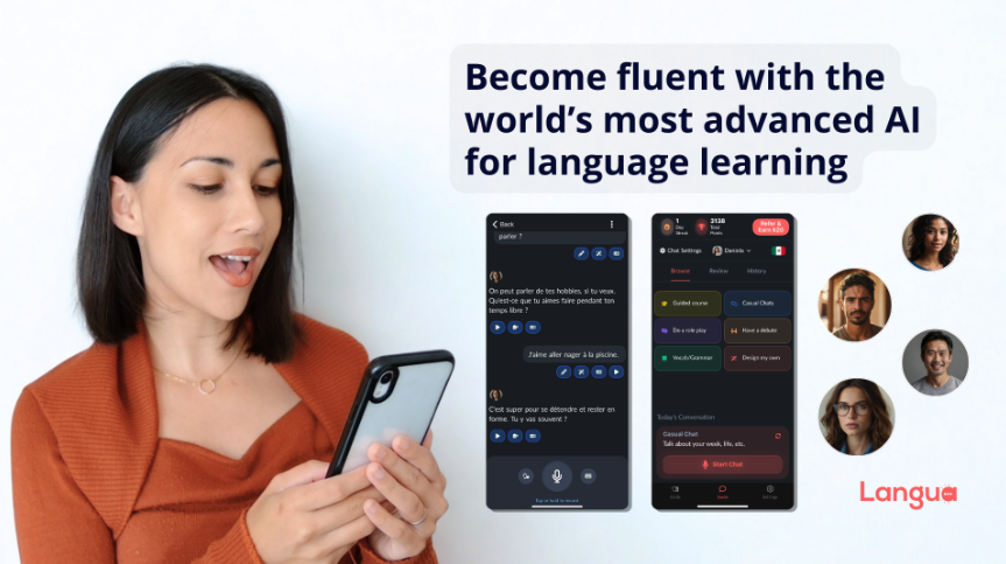
Langua emphasizes written accuracy and grammatical depth. Learners submit sentences or longer texts and receive corrections that explain not only what is wrong, but why.
Core advantages of Langua include:
- Detailed grammar explanations
- Difficulty that adjusts as skills improve
- Support for short exercises and extended writing
- Clear focus on structure and precision
This platform appeals to students who enjoy writing and want thorough feedback. It helps refine language use beyond surface-level corrections.
Pingo AI
Pingo AI combines language support with help across other academic subjects. This integrated design allows application of student language skills in different contexts, which reinforces understanding.
Key characteristics of Pingo AI include:
- Multi-subject support within one platform
- Adaptive responses based on student input
- Encouragement of analytical thinking
- Flexible use across study needs
Pingo AI suits learners who prefer a single tool for multiple goals. It supports language development without isolating it from broader learning.
Praktika
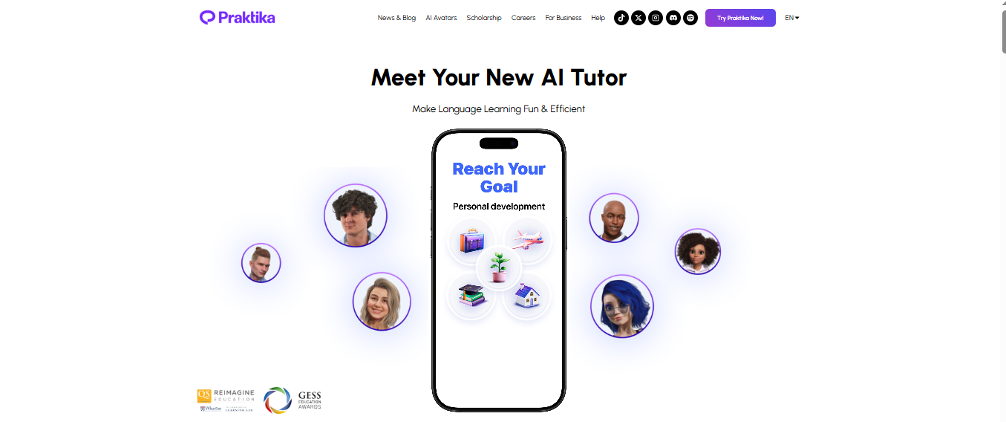
Praktika uses animated avatars to create immersive conversation practice. Learners interact with characters in everyday situations, which adds visual context to language use.
Key elements of Praktika include:
- Role-based dialogue scenarios
- Visual cues that support comprehension
- Feedback focused on relevance and clarity
- Practice drawn from common daily interactions
Praktika suits learners who benefit from visual engagement and interactive scenarios. It helps bridge the gap between study and real-world use.
Giglish
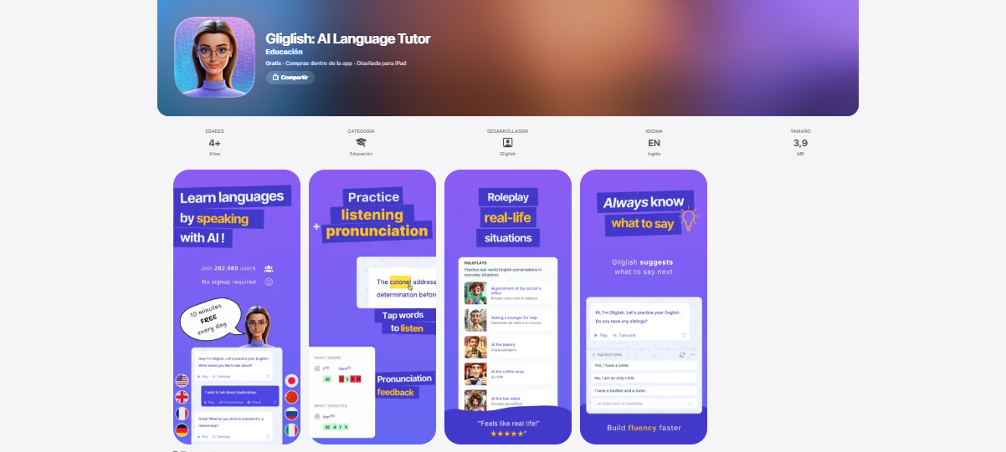
Giglish focuses on practical communication rather than isolated language rules. It places learners in realistic scenarios where they respond as they would in everyday life. This context helps vocabulary and grammar stick more naturally.
Core features of Giglish include:
- Dialogue-based lessons drawn from real situations
- Vocabulary introduced within meaningful context
- Instant corrections focused on clarity and intent
- Emphasis on spoken interaction and responsiveness
Giglish suits learners who already understand basic grammar but need confidence and fluency. Its scenario-driven design keeps practice relevant and engaging.
Compare Strengths Across Platforms
Each AI tutor serves a different purpose. Some emphasize speaking confidence, others prioritize writing accuracy or professional language. No single platform covers every need equally well.
When choosing a tool, learners should consider:
- Which skill needs the most attention
- How much structure feels comfortable
- How often practice fits into daily life
Many students combine tools to balance strengths. For example, pairing a writing-focused platform with a speaking tutor often leads to more rounded improvement.
The Role of AI in Modern Language Study
The AI-based tutors are not a substitute for teachers, but they enhance classroom-based learning. They provide real time feedback, create flexibility in time schedules and are able to deliver personal feedback which cannot always be offered in a traditional setting. These tools have a beneficial effect when used wisely to eliminate frustration and assist with steady development.
With careful selection, language learning AI becomes a practical companion rather than a shortcut. It promotes day to day diligence and assists the learners to remain engaged even when the motivation is low.
Conclusion
The rise of AI language tutors has reshaped how students approach language study. These platforms adapt quickly, explain clearly, and allow learners to practice without limits of time or location. They help transform mistakes into learning moments and effort into visible improvement. Choosing the right tool depends on goals, habits, and preferences. Some learners need conversation practice, others want writing precision or professional fluency. With the right match, an AI language assistant can guide practice, clarify errors, and support long-term growth for student language skills. When used consistently, these tools make progress feel achievable and language mastery less distant.