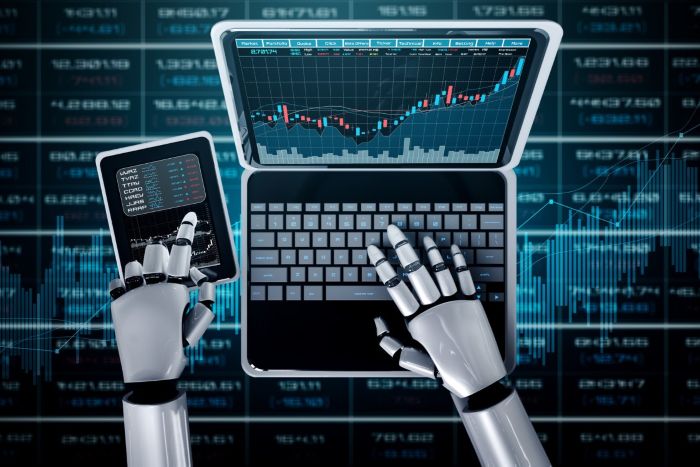
Automation and AI get talked about a lot in trading, usually with big promises attached. Faster decisions, better timing, less emotion. In reality, the impact of these smart tools on platforms depends more on where they live in the trading setup and whether they follow a future-ready, human-enhanced framework that balances efficiency with thoughtful, user-centric design.
Some tools sit directly on trading platforms. Others are shaped, limited, or expanded by the broker behind them. Understanding that difference matters more than most people realize.
Key Takeaways
- Smart tools on platforms can streamline trading but differ in effectiveness based on integration and broker support.
- Automation features range from alerts to risk controls, enhancing decision-making rather than replacing it.
- Broker infrastructure significantly affects automation, influencing data quality and execution speed.
- Traders often use limited automation, balancing efficiency with manual decision-making to avoid overreliance on tools.
- Understanding the role of limitations and integration can improve the use of smart tools on platforms.
Table of Contents
- What People Mean When They Say “AI Trading Smart Tools on Platforms”
- Smart Tools on Platforms Tend to Lead the Innovation
- Where Brokers Start to Matter
- Integration Is the Quiet Dealbreaker
- The Gap Between What’s Possible and What’s Practical
- Why Limitations Aren’t Always Bad
- Automation Is a Workflow Choice, Not a Shortcut
What People Mean When They Say “AI Trading Smart Tools on Platforms”
Not every automated feature is artificial intelligence, even if it gets described that way. In most cases, these tools fall into a few practical categories:
- Alerts that trigger when the price hits certain levels
- Scripts that manage orders automatically
- Pattern recognition tools that highlight chart structures
- Risk controls that adjust position size or stops
None of these replaces decision-making. They support it. The real value comes from how smoothly they integrate into the workflow.
Smart Tools on Platforms Tend to Lead the Innovation
Most automation features start at the platform level. Charting software, analytics dashboards, and execution interfaces are where new ideas usually appear first.
A well-designed platform for stock trading allows traders to:
- Analyse multiple assets at once
- Set rules before emotions kick in
- Monitor positions without constant screen time
- React faster when markets move
Platforms shape how information is seen and processed. That alone can change behavior, even before automation is added.

Where Brokers Start to Matter
Even the smartest platform still depends on the broker underneath it. Data quality, execution speed, and access to certain tools are all influenced by broker infrastructure.
A stock trading broker can support automation by offering stable pricing, consistent data feeds, and reliable order handling. Or it can quietly limit what’s possible through restrictions, delays, or lack of integration.
This is where expectations often clash with reality. A tool might exist, but how well it works depends on what the broker allows behind the scenes.
Integration Is the Quiet Dealbreaker
Automation only works as well as the connection between tools. Even strong features lose value if they feel bolted on rather than built in.
- Data syncing: Delays or mismatches reduce trust in signals
- Order handling: Clunky execution breaks automation confidence
- Interface consistency: Switching tools mid-trade increases errors
- Update reliability: Outdated systems limit adaptive features
When integration is smooth, automation feels natural. That’s why so much N8N news about workflow automation focuses on reducing friction behind the scenes. When it isn’t smooth, traders hesitate, override systems, or abandon tools entirely. This is often why two people using similar features report completely different experiences. The difference isn’t the tool itself. It’s how seamlessly everything works together when the pressure is on.
The Gap Between What’s Possible and What’s Practical
Automation and smart tools on platforms look impressive in theory. In practice, traders often use only a small part of what’s available.
Why?
- Too many tools create noise
- Over-automation removes awareness
- Poor integration causes hesitation
- Unclear limits increase risk
Most traders settle into a middle ground. They automate the parts that cause friction, like alerts or exits, and keep decision-making manual. That balance tends to last longer than fully hands-off systems.
A Simple Comparison
| Area | Platform Tools | Broker Influence |
|---|---|---|
| Charting & analysis | High control | Minimal |
| Automation features | Built-in or add-ons | May restrict |
| Data accuracy | Visualised on the platform | Supplied by the broker |
| Execution speed | Interface-based | Infrastructure-based |
| Risk controls | Configurable | Policy-dependent |
Seeing it laid out this way helps explain why automation feels powerful in some setups and frustrating in others.
Why Limitations Aren’t Always Bad
Restrictions get a bad reputation, but they’re not always negative. Some limits exist to reduce risk, protect accounts, or comply with regulations.
The issue isn’t that limits exist. It’s whether traders understand them. Confusion usually causes more problems than the limits themselves.
Clear boundaries make automation safer to use, especially for people still learning how these tools behave under pressure.
Automation Is a Workflow Choice, Not a Shortcut
AI and automation are better at consistency than creativity. They don’t read context or understand sentiment. They follow rules.
Used well, they remove friction as smart tools on platforms. Used poorly, they amplify mistakes. The difference lies in how thoughtfully they’re applied.
FAQs
Not necessarily. Many tools are simple, like alerts or automated exits.
Platforms still rely on brokers for data and execution, so alignment matters.
Usually not. Most traders benefit from selective automation, not full control removal.
Unlikely. It’s more about support than substitution.