From 2025 to 2026, one AI video tool after another claimed to transform video creation. Seedance 2.0 launched. Sora got an upgrade. Veo pushed a new version. Kling joined the party. It’s a fast-moving space, and keeping track can feel like a full-time job.
AI adoption in marketing is surging, with about 94% of marketers planning to use AI in their content creation by 2026. This shows how essential AI-powered tools are becoming for modern marketing, including video content. But the real question is: which platform delivers quality output without unnecessary friction or headaches?
Seedance 2.0 caught serious attention when it dropped. Created by ByteDance, it offers a multimodal approach that allows creators to use multiple reference images, video clips, and audio to guide output. While it is promising, real-world performance can vary, and geographic availability may limit access in some regions.
Table of contents
Best AI Video Models 2026
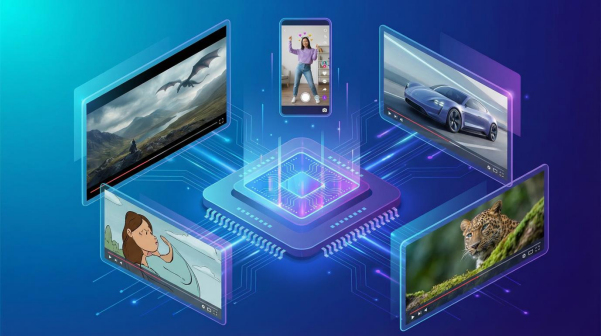
Five models have stood out in early 2026, each with strengths suited to different tasks.
Seedance 2.0: The Director’s Choice
- Strengths: Multimodal Reference System allows up to nine images, three video clips, and three audio files simultaneously. Motion conditioning lets you set key poses and movement paths.
- Note: While Seedance aims for consistent motion and correct physics, AI video tools still have occasional glitches in longer clips or complex scenes. Results may vary depending on content and settings.
Kling 3.0: Multi-Shot Focus
- Strengths: Kling 3.0 emphasizes consistency across multiple shots, helping characters and props appear more stable across sequences. Good for creators producing multiple clips.
- Note: Multi-shot consistency has improved, but some minor inconsistencies may still occur depending on complexity.
Sora 2: Long-Form Leader
- Strengths: Designed for longer sequences and layered actions, expanding narrative possibilities. Physics simulation has improved compared to previous versions.
- Note: Complex interactions may still present challenges, and output quality can vary with scene complexity.
Veo 3.1: Cinematic Ambitions
- Strengths: Focuses on broadcast-style output, with smoother transitions and more realistic lighting. Suitable for commercial and professional-looking projects.
- Note: While visuals can be impressive, AI-generated footage may still show subtle artifacts, especially in highly complex or long scenes.
Wan 2.5: Open Alternative
- Strengths: Community-driven platform with flexible development and lower cost. Technical users can customize workflows.
- Note: Open platforms may not always match proprietary options in all performance metrics.
How to Access Multiple AI Video Models
Each model has its own signup, subscription, and billing, which can be cumbersome for creators. Seedance 2.0 also has geographic restrictions in some markets, requiring workarounds for access.
A practical solution is a platform that aggregates multiple models into a single subscription, streamlining workflows while maintaining access to different tools.
LumeFlow AI: One Platform, Multiple Models
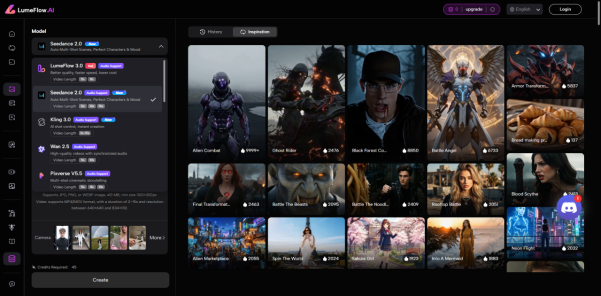
LumeFlow AI provides access to Seedance 2.0, Kling 3.0, Sora 2, Veo 3.1, Wan 2.5, and others, all in one subscription.
- Batch creation: Users report faster generation, though actual times depend on clip length and resolution.
- Watermarks: LumeFlow removes watermarks on generated content. This may simplify client or brand deliverables.
- Motion imitation: Upload reference footage, and AI attempts to follow movement patterns. Results are generally strong, but complex sequences may still vary.
- Free credits: New users can test multiple models without an upfront payment. Credits may allow partial testing, but larger projects may require a subscription.
Beyond Video
LumeFlow AI goes beyond just video. The platform also handles image generation, video effects, motion imitation, lip sync, and longer storytelling features.
Most of your AI creation needs to live in one place. You don’t need a separate tool for each task. The service keeps pace with new AI developments. New features emerge regularly as technology evolves.
Looking Ahead
AI video generation is moving toward control and predictability rather than just creating content. Seedance 2.0 demonstrates this by enabling creators to guide output more precisely. Longer clips are becoming a priority, but hours-long videos are still a future development. Platforms that bundle multiple tools will likely serve creators more efficiently than single-purpose services.