Many of us face a common dilemma: having a wardrobe filled with clothes yet struggling to create outfits that truly work. Studies suggest that up to 70% of our wardrobes often go unworn or underutilized. The core problem isn’t necessarily the quantity but the ability to put together coordinated, appealing looks from what we already own. This disconnect frequently stems from a lack of understanding of color combinations and personal styling guidelines. Fortunately, advances in artificial intelligence have paved the way for practical solutions to this long-standing challenge. Using AI-based color analysis tools, people are now able to transform the usability of their closets significantly.
Key Takeaways
- Many people struggle to create outfits from their wardrobes, often underutilizing their clothes due to a lack of understanding of color combinations.
- AI color analysis tools help users generate personalized palettes for better outfit coordination by analyzing skin tone and existing clothing colors.
- User stories showcase transformations where AI color analysis has led to clearer wardrobes and significant cost savings, like Emma saving over $600 annually.
- A practical 10-step checklist offers guidance on how to edit wardrobes using AI insights, maintaining a functional and appealing closet.
- Integrating AI color analysis promotes sustainability and empowers individuals to make mindful fashion choices while maximizing their existing garments.
Table of contents
Why AI-Assisted Color Analysis Makes All the Difference
Traditional color coordination techniques rely on subjective judgments that can be inconsistent and overwhelming for the average person. Even those with a good eye for color can struggle to identify palettes that complement their skin tone, hair color, and seasonal variations. This is where AI Color Analysis comes into play, revolutionizing outfit planning through data-driven insight.
By harnessing machine learning and color science, AI tools analyze individual complexion details and existing clothing colors to generate personalized palettes. These palettes serve as reliable guides for mixing and matching attire, eliminating guesswork. Compared to manual methods, AI color analysis offers greater precision and accessibility—available anytime online as “AI color analysis free online” options, empowering users to explore without barriers. Moreover, sophisticated AI solutions incorporate elements like seasonal color analysis and skin color palette matching, tailoring advice to unique undertones and features.
Real-Life Transformations: How AI Color Analysis Revamps Wardrobes
To better understand the impact of AI-powered color collating, consider these user stories where in-depthAI color analysis online reshaped wardrobes completely.
User 1: Emma’s Journey from Overwhelm to Clarity
Emma, a marketing executive, always felt frustrated by an overcrowded closet filled with garments she rarely wore. Her problem was simple: she didn’t know how to combine her pieces effectively. After engaging with a popular AI personal color analysis platform, Emma generated a customized color analysis palette highlighting her best colors—particularly those falling within the autumn color analysis profile.
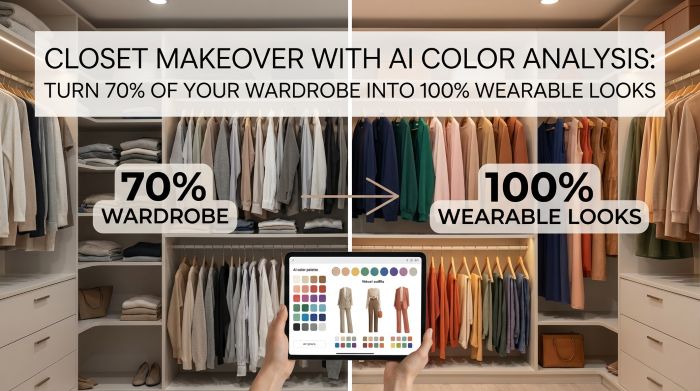
Using the palette, Emma pared down her closet, retaining just 70% of the original items that matched her personalized color range. This edit facilitated the creation of over 30 mix-and-match outfits, covering casual to business wear, slashing needless duplicates, and reducing impulse purchases. She estimates saving over $600 annually by leveraging smarter outfit choices.
User 2: David’s Discovery Through AI Seasonal Color Analysis
David, a graphic designer, struggled with choosing hair and clothing colors that complemented his fair complexion and winter undertones. Employing an AI hair color analysis combined with winter color analysis, David identified shades that enhanced his natural features. The AI tool’s color palette generator suggested new harmonic combinations, prompting David to reconfigure his wardrobe around his newfound confidence in colors.
Consequently, David’s closet became more functional; he could assemble multiple professional and casual outfits effortlessly. The hands-on color picker tool helped him visualize before making any purchase decisions, effectively preventing unnecessary spending while expanding his style.
User 3: Sophia’s Sustainable Style Reset
Sophia aimed to maintain a more sustainable lifestyle and wanted to optimize the usability of her clothes without buying excessive new items. Through an online color analysis test free of charge, she obtained insights into her personal color analysis results. The AI-driven 16 season color analysis deep dive enabled her to focus on pieces that aligned closely with her spring color profile. This led to a strategic closet edit where she redistributed or donated more than a quarter of her clothing that no longer suited her palette. The outcome was a closet she found exciting and easier to navigate daily, aligning perfectly with sustainable fashion principles.
A 10-Step Closet Edit Checklist with AI Color Analysis Insight
Transforming your wardrobe into a collection of 100% wearable looks is a manageable process with structured steps—here is a practical checklist integrating AI color insights:
- Evaluate Your Current Wardrobe: Start by taking inventory and photographing your clothing. Assess frequency of wear objectively.
- Take an AI Color Analysis Test: Use a reliable online AI color analysis free tool to define your personal color profile, including skin tone and seasonal type.
- Create Your Color Palette: Utilize a color palette generator based on AI results to visualize your harmonious color groupings.
- Sort Clothing by Color Compatibility: Group garments that align with your AI-derived palette and separate those that don’t.
- Assess Fit and Condition: Keep items that fit well and are in good condition within your wearable wardrobe subset.
- Plan Outfit Combinations: Using your new arrangement, experiment with creating outfits that mix pieces within the same palette zone.
- Consider Seasonal Variations: Use seasonal color analysis results to determine which clothes suit different times of the year, e.g., autumn color analysis or spring color analysis.
- Use a Digital Color Picker: For new additions, employ an AI-enabled color picker to choose complementary shades that fill gaps.
- Purge or Donate Outliers: Responsibly offload garments that consistently don’t coordinate with your personal palette or style needs.
- Maintain and Reassess Periodically
Revisit your wardrobe regularly with the help of ongoing AI analysis to ensure freshness and use optimization.
Closing Thoughts
The integration of AI color analysis into wardrobe management marks a meaningful shift toward practical, sustainable fashion. By leveraging precise color science and technology, users can unlock the potential of their existing clothes, turning a large portion of their wardrobe from unused clutter into cohesive, wearable looks. This not only results in cost savings but also fosters a more mindful, confident personal style. As technology continues to develop, the blending of AI expertise with personal fashion promises a future where dressing well is both effortless and empowering.