Introduction
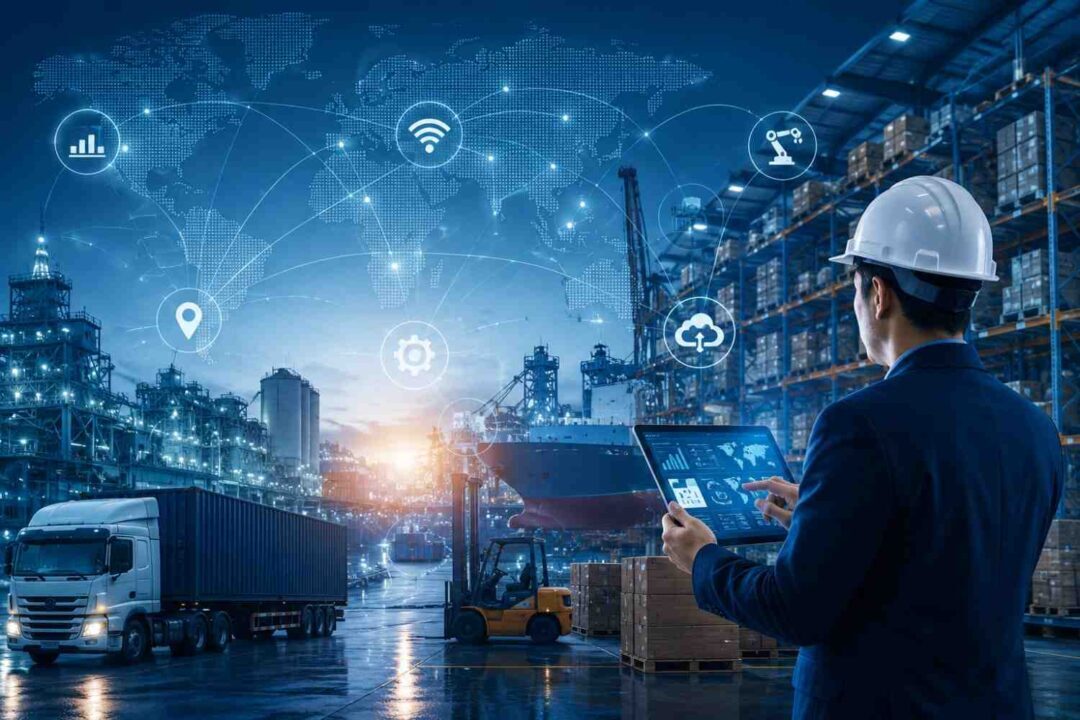
In the modern global economy, traditional trade and distribution systems are undergoing a rapid shift driven by technology. Businesses that once depended heavily on manual processes, paper-based documentation, and fragmented communication are now evolving into highly connected digital ecosystems. This shift, known as digital transformation, is reshaping how goods are sourced, stored, moved, and delivered across industries.
Industrial distribution networks, including sectors such as manufacturing supply chains, bulk material trading, and even chemical wholesalers, are among the most impacted. These businesses operate at large scale, dealing with complex logistics, regulatory requirements, and sensitive inventory management. As a result, software technologies have become essential for improving efficiency, transparency, and decision-making.
The growing role of artificial intelligence is also accelerating this transformation. According to Gartner, 72% of supply chain organizations are already deploying Generative AI technologies to improve productivity and operational efficiency. From predictive demand forecasting to automated inventory tracking and intelligent logistics planning, AI-driven systems are helping industrial distributors reduce costs, improve accuracy, and respond faster to market changes.
Table of contents
The Evolution of Industrial Distribution Systems
Traditionally, industrial distribution relied on manual coordination between suppliers, warehouses, and buyers. Communication often happened through phone calls, emails, and physical paperwork. This created delays, inefficiencies, and frequent errors in inventory tracking and order fulfillment.
With the rise of digital tools, these systems have shifted toward integrated platforms that centralize operations. Enterprise software now connects every stage of the supply chain, from procurement to delivery. This transformation is particularly visible in industries such as chemical wholesalers, where precision, compliance, and timing are critical.
Modern distribution networks are no longer just physical systems; they are data-driven ecosystems where every transaction generates valuable information that can be analyzed and optimized.
Role of Software in Modern Distribution Networks
Digital transformation revolves around software technology. ERP works as an integrated solution brining different areas like finance, inventory, procurement and logistics under a single system. That provides real-time visibility into their enterprises.
Warehouse Management Systems (WMS) automate storage/retrieval and stock monitoring, which boosts efficiency even more. It minimizes human error and allows the inventory to be tracked accurately all the time. Such joint-precision is especially important for large-scale operations such as a chemical wholesaler, covering products that need certain production and storage conditions or have little time before they expire.
CRM (Customer Relationship Management) systems also help keep track of client interactions, pricing structures, and order histories. This allows businesses to provide an experience tailored for them and serve as a long-term partner for industrial buyers.
Data-Driven Decision Making
Data-driven decisions is one of the biggest benefits of digital transformation. Industrial distribution networks involve a lot of data points about the sales trends, transportation routes or inventory turnover rates.
This data is transformed by advanced analytics platforms to discover patterns and inefficiencies. As an example, it is possible to predict based on this wave and how it will fluctuation of demand, allowing the business to change its procurement model proactively (Supriyadi et al. This is particularly useful in the chemical wholesale scenario, in which demand depends on industrial production cycles and global market flankers.
As well as this, artificial intelligence and machine learning are also being used to determine the best working practices through supply chain management. These technologies can suggest the ideal inventory levels, pinpoint possible supply chain disruptions, and offer potential logistics routes with savings.
Supply Chain Visibility and Automation
Digital transformation has increased visibility throughout supply chains. Businesses, in some traditional systems, had no real-time visibility into where goods were or when they would arrive. Modern-day tracking systems equipped with Internet of Things devices and cloud platforms provide real-time updates.
Automation is a major component of decreasing the amount of human labor. They can also identify when is the best time to restock items by automating the ordering process. Automated invoicing and billing also help to minimize administrative delays and improve financial accuracy.
For chemical wholesalers, automation makes certain hazardous goods comply with rules during delivery and documentation without solely depending on manual oversight.
Cloud Computing and Integration
Cloud technology has become the backbone of modern distribution systems. Instead of relying on local servers and isolated databases, companies now use cloud platforms to store and access data globally. This allows different departments and locations to stay connected in real time.
Integration between systems is another key advantage. For example, an ERP system can be connected to logistics platforms, supplier databases, and customer portals. This seamless flow of information eliminates silos and improves coordination across the entire distribution network.
Cloud-based solutions also offer scalability, which is crucial for growing industries. As businesses expand, they can easily increase their digital capacity without major infrastructure investments.
Challenges in Digital Transformation
While digital transformation is a positive evolution for industrial distribution networks, it has its hurdles. One such challenge is implementation cost. This means that deploying advanced software systems is a major investment in infrastructure, training and maintenance.
Opposing another life is difficult. Most traditional businesses are physical workers, and most of them are not used to new businesses. This is commonly observed in mature industries like chemical wholesalers, where operational food steps are engrained over decades.
Cybersecurity is an area of growing concern, as well. With the increasing storage and sharing of data digitally comes an increased cyber threat. There is a need for such companies to put a great emphasis on firm protection as the operational information and clientele must not fall in wrong hands.
The Future of Industrial Distribution
Industrial distribution networks in the future are projected to be fully automated, smart, and connected. New technologies, including block chain, artificial intelligence and advanced robotics, will keep changing the landscape of the sector.
Blockchain technology bata transparency ko improve garna sanga sanga sakcha, jaba ki yeshma secure ra traceable transaction records haru huncha. This is vital in many industries that demand strictly enforced procedures with documentation.
Couple this with AI (to help make predictive forecasting more efficient) and you can see how it will provide further operational efficiencies. At the same time, robotics and smart warehousing concepts, especially for repetitive jobs will keep reducing human dependence.
With these technologies maturing quickly, early adopters will get a leg up on the competition when it comes to efficiency gains, cost reduction and customer happiness.
Conclusion
In the current global landscape, digital transformation is no longer a choice for industrial distribution networks but rather an imperative to survive and thrive in the fierce competitive arena. Software technologies are the key to modern operations management, allowing companies to handle complexity faster and more accurately.
If its ERP systems or AI-driven analytics, technology is redefinining every layer of the supply chain. Chemical wholesaler is a perfect example of how significant digital tools are for organizing large, regulated, and rapid distribution systems.
The technology is developing and the gap will grow only between traditional businesses and digital businesses. Those companies that leverage innovation will see not only operational improvements begin to emerge, but they will also prepare for the long-term in what is now an increasingly digital economy.