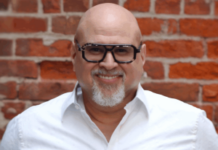
Denis Whelan Podcast Transcript
Denis Whelan joins host Brian Thomas on The Digital Executive Podcast.
Brian Thomas: Welcome to Coruzant Technologies, Home of The Digital Executive Podcast.
Do you work in emerging tech, working on something innovative? Maybe an entrepreneur? Apply to be a guest at www.coruzant.com/brand.
Welcome to The Digital Executive. Today’s guest is Denis Whelan. Denis Whelan is the CEO of Documo, an AI forward healthcare SaaS company building workflow and interoperability infrastructure for unstructured healthcare documents.
Denis is focused on building the AI bridge between the document centric world healthcare operates in today, and the fully interoperable future ahead. With a deep understanding of healthcare workflows and compliance requirements. He helps organizations modernize document processes, reduce administrative burden, and accelerate patient care.
Well, good afternoon, Denis. Welcome to the show.
Denis Whelan: Hey, Brian, thanks for having me.
Brian Thomas: Absolutely, my friend. I appreciate it. And traversing one time zone today. You’re in Boston. I’m in Kansas City, so I really appreciate making the time work. Today. And if you don’t mind, Dennis, jumping into your first question, you’ve led multiple SaaS companies through growth and transformation, including projector, PSA, and now Documo.
What experiences along your journey shaped your leadership approach and brought you to the healthcare AI?
Denis Whelan: It’s a, a really good question. So, first and foremost I’ve actually never worked in the same industry twice. And one of the things that I just personally love doing is jumping into a new industry, a new topic, and kind of have a, a little bit of a beginner’s advantage to.
Have some new perspective on something or look at something slightly differently, but also like deeply, deeply research something and go kind of obsessively down into the core foundation of what the industry is. So, you know, that means I’ve, I’ve moved from education technology to international recruitment to reverse logistics, software consulting, ERP, like projector, PSA you mentioned, and now into the healthcare space.
So, what I always look for overall are problems in broad daylight. And those problems end up becoming really, really interesting solutions to offer to, to customers. And so, the backdrop of my leadership journey is and jump into healthcare really kind of started at projector where.
Ultimately we, we ended up getting acquired by Vista Equity along the path. But during that time, my dad actually got sick. And I actually helped him fax documents to a specific radiation therapy organization. And I was just blown away that’s what was the standard in healthcare.
And like, it, it really frustrated me and him at the time. And it just so happened that my COO, Steve. Was going through a very similar journey on his side, and we just kind of commiserated at like how screwed up this was for the healthcare system. And so after we left Projector Steve and I, Steve lives not far from me, in, in Boston started doing, regular whiteboarding sessions to think about new ideas to really try to innovate on.
And it just so happened that one of the investors from Projector had a portfolio company that they were interested in having someone to lead. And you know, it was kind of this really interesting, culminating series of events where, the whiteboarding sessions that we were jumping into were all around AI and documents.
The portfolio company that the investor brought to us was a fax, cloud, fax business. And we both had this problem of personally experiencing faxing and healthcare. And so like all of these things, kind of like merge together into this. Idea of providing, a better and more interesting solution to the healthcare market than kind of the, the traditional communication rails that that currently exist.
And that really led us to trying to solve problem and broad daylight in healthcare.
Brian Thomas: Thank you. There’s always a good backstory to that. You know, every guest I have on Denis, like yourself, just again, and as you said, I, I like how you said this, finding solutions to problems in broad daylight is you, there’s a gap or a problem you’re trying to solve.
And I, I just love the backstory your journey with your father and that sort of thing. And I’ve been in healthcare IT for 20 years, so I appreciate what you’re doing in this space. Really do, and that’s awesome. So thank you and Denis, at Documo, you’re focused on building an AI bridge between today’s document centric healthcare systems and a more interoperable future.
What problem were you most determined to solve when stepping into this space?
Denis Whelan: Yeah. Well, so I mean, at first, like, I love the idea of like, starting with the problem mo mostly ’cause like, I think that’s where, you know, as you know, it, it is where like the best solutions ultimately come from. The shortest of short answers there is, is the problem.
We were, and continue to be, most determined to solve is administrative complexity that’s driven and ultimately created by unstructured documents in healthcare. But the to really understand that problem and kind of empathize with where that problem is coming from. You need to understand kind of the current state of healthcare today.
So. What’s crazy is 70% of healthcare communications today go through fax, right. Which is like, it’s mind boggling, right? And I’m sure you see this in your day-to-day life. And the first question I always get from people that aren’t in healthcare, like, like us, is like, okay, well why are people still faxing, right?
Like, this is, this is crazy. And the reality is we live in a world of misaligned incentives where the sender of information. Has no incentive to make the receiver of information’s job any easier. And so ultimately what the sender of information is trying to do is optimize for compliance, right? And so, sending something through fax is a HIPAA compliant way to, to send a communication.
But ultimately the tradeoff there is this like downstream administrative complexity by receiving an unstructured document that then needs to be recreated on the opposite side, right? And so. You know, you have you, you have this challenge of administrative complexity, and when you dig into that, on average it takes six to seven minutes to process a document on the other side of the receiving end of that spectrum. And so in, in hospitals and clinics and SNS and long-term care and post-acute care, whatever it is, you could have anything from like a handful of administrators of to hundreds of administrators that are processing unstructured documents on a daily basis, which is wild.
And so that’s problem number one is like. Administrative complexity but it gets deeper than that, which is of those communications that are transiting through unstructured documents, 45% of them are time sensitive. And so that creates this problem of signal to noise ratio issue, that if you’re one of those administrators that’s processing of fax, you’ve got of 10 faxes that just came in.
Four and a half of them are time sensitive for you to manage the other, five and a half are really, they could be spam, they could be just records requests, they could be super administrative in nature. And this signal to noise ratio issue creates like a big prioritization problem for people to get through their work in the right way.
Right. And so, it’s hard to, to think about, you know, someone that has, a time-sensitive referral sitting in their queue that’s sitting next to Joe’s Deli menu, which is a real life example. Like that happens and you have to manage them or the way that it’s been traditionally managed isn’t like a first in for, first in first processed approach.
And so there’s, there should be real prioritization to these documents. And the byproduct of all of this is really two things. Number one, a huge amount of churn of administrative staff on average in healthcare, 25%. Attrition of administrative staff. Because of this huge demand that these unstructured documents create for them.
And that’s not their only job. They’re picking up phones, they’re scheduling people, they are, managing stuff in the EHR. There’s a lot of other stuff that needs to happen, not just, processing a fax. Right. And the second thing is there’s a huge downstream impact of quality of care.
When you think about that signal to noise ratio issue and your pros, you have an administrator that’s looking at Joe’s Deli menu instead of looking at a time sensitive referral. Ultimately what’s happening is the patient that needs care through that referral is getting a delay. And so quality of care is, is ultimately the second byproduct of all of this.
And, kind of the, the misunderstood part about this is. A lot of times people blame the modality of communication here. They say, well, fax, fax this, fax that. You know, why are we faxing in the, 21st century? And, and, and that is true. Like the, there’s, there is annoyances with this.
But ultimately when you ask people what their annoyance is, and their problem is, is that it’s not the actual modality of communication or the rails. Ultimately, the problem that everybody suffers from, is the administrative complexity and the manual work that unstructured document creates, and that is what we solve for and that’s what we’re obsessed with.
At Documo. Our AI platform is built from the ground up. To take any unstructured document, whether it’s a, a physical piece of paper, whether it’s a fax, whether it’s a CCDA structured header document and basically take that document and reconstruct it to be able to contextualize what this document is.
To be able to drive that downstream workflow that’s required. Whether that’s a referral, whether it’s a prior auth, whether it’s, any, any type of document that’s coming in, that’s our focus as an organization.
Brian Thomas: Thank you. Really appreciate that, Denis. And again, as you mentioned starting with the problem is where the best solutions come from which I totally agree.
And being in healthcare IT space for so many years I just so fully embrace and I am inspired by people like you that are trying to. Fix the healthcare system. There’s healthcare system. There’s so many facets that are broken within that space. But I appreciate that and I had no idea that today, 2026, 70% of documents are still sent the effects.
So I appreciate the stats on that. And Denis, Documo is modernizing workflows, reducing administrative burden while navigating strict compliance and security requirements. How do you balance innovation with the regulatory realities of healthcare?
Denis Whelan: Yeah. I mean, I think it’s always a challenge to do that, right?
And, and I think the interesting thing about the regulatory environment is that people immediately start thinking like, innovation can’t be fast and rapid. Which is, there, there’s a bit of a fallacy to that. But, for us. It, it starts with a philosophy around compliance.
And for Documo compliance is table stakes. And it’s n it never is a feature that can be added on or it can’t be like priced and packaged in a non HIPAA compliant version versus a HIPAA compliant version. It has to be foundational. To the operation of our business. And that means the way that we code, the way that we design product the way that we distribute our product.
It is a non-negotiable from our perspective. And on a practical level, especially as you get into developing AI models and agentic solutions for documents in healthcare, it’s really critical to understand that PHI may never be used to train a common model for the benefit of the rest of your customers.
And this is what healthcare demands, right? So providers and payers know that the risks that, that exist, right? A PHI exposure on average is like a $5 million fine, right? And so this creates a massive architectural problem for people that, that want to solve it. But also at the same time, it creates a huge differentiator for those that do lean into the challenge, which is exactly what we do at Documo.
And, for teams to really embrace that. Compliance philosophy ultimately, then it becomes just a part of how you innovate and deploy. And like, I’ll give a huge shout out to our product and engineering teams, we’re, we release new features and functions one and a half times a day, right?
So we are releasing more than once a day. And that comes with foundational HIPAA compliance, right? And so, it’s absolutely possible. But it needs to be started really at the philosophical level.
Brian Thomas: Thank you. And I really do appreciate your focus on this piece, which is around compliance and HIPPA.
It’s a big deal and you talked about foundationally your solution has to be solid, compliant from the ground up, and you don’t use PHI in your, in your tests and that sort of thing. I think that’s great. But really do appreciate your focus in here. That just makes it a, a better space for you, but also your healthcare customers that potentially could be exposed to these fines by inadvertently exposing PHI.
So thank you. And Denis, the last question of the day. As we look ahead to the future, how do you see AI transforming healthcare operations over the next decade? And what will it take to fully move from fragmented document driven systems to truly connected care?
Denis Whelan: Yeah, I mean, I, the first thing I would say is like, I, I see a lot of stuff and people being worried about AI or, kind of concerned about what, what lies ahead to the future.
I, from my perspective, the next decade’s gonna be fun. Like, I am very optimistic mostly because as an organization and personally. We are always trying to learn, advance, innovate and engage with new technology. And so, the past few years has been awesome with innovations in ai and we think the next decade is gonna be, even more fun at the moment.
Where we are from an industry perspective is really in the murky middle of interoperability in healthcare, right? And so you have this huge maturity curve of, structured and unstructured document. Transiting kind of a, a, a wide variety of communication channels. And you could, you can look at, clearing houses from the provider payer side of things, you have Q hins that, that are structuring interesting polls. You have direct, secure message which is a standard space zero trust network. You have fax, you have HIPAA email. You now have standards based connectivity with, with HL seven and fire.
You have EHR to EHR communication. So like your idea of like a truly connected core, it’s messy at the moment, right? And, and very complex at the moment in the way that. The pipes work in healthcare. The way that I think about the next decade is really about organizing some of the messiness.
And I, I don’t know if you remember, do you remember the pneumatic tubes from banks? I’m old enough that like, you know, you take a check and you could put it in these tubes and, as you’re visiting the teller, it would like suck it up. Do you remember those? Yeah.
Brian Thomas: And they’re still on some hospitals, by the way.
Denis Whelan: Exactly, exactly. The interesting thing with that system is that really I, I think it’s a, it’s an interesting analog to where we are in healthcare in that there’s a concept of pipes. The package itself and the payload, right? So, the pipes are the tubes, you know, the package is the cylinder that you put into it, and the payload is the check that you’re depositing, right?
And so, what’s happening today is that from a policy perspective, everybody’s focused on pipes and the pipes are complex. There’s a variety of ways to be able to communicate. That’s creating messiness, it’s creating complexity. But it’s all pipes. Pipes focus. The policy of tomorrow is all around the standardizing of the package.
And you can see this, even recently CMS policy has made big announcements with CMS 0053 and CMS 0057. Which are really for claims attachment and prior authorization respectively. And the idea is that the policy of tomorrow, which will be rolling out through 2027, 2028, is gonna be around.
Structured headers for communications with payers and from payers back to providers. And the interesting thing about that is it’s going to structure the package. So think about the policy as creating an envelope or a package for the document. It doesn’t stop unstructured documents from transiting the pipes or the package.
And so ultimately. Where, the next decade is gonna bring us is, instead of pipes and package, we’re going to be transitioning into being focused on payload. And so regardless of where, the pipes are and what, what rails communications are running on, and irrespective of the package, the payload is going to be started to be unlocked with AG agentic workflow.
And what that means is each of these. Payloads have a downstream workflow that needs to be triggered as a result. And like, you could take, 0053, 0057 and 0053 are claims attachments. So what’s happening in a claim? A, a claim is a provider asking a payer to, to fulfill a payment on a service that’s been provided, right?
And so that, package that’s coming through is gonna be structured. The payload is the workflow that needs to then be triggered downstream for both the payer and the provider. And so, that is ultimately where we’re gonna be going. And while the murky middle kind of continues to be the current state, I continue to be super duper optimistic that we’re gonna continue to work our way.
Through to what’s most important, which is the downstream workflow. And what’s not important is the communication rails, right? It’s, that is not the interesting thing. The interesting thing is unlocking the right workflow for what needs to happen for that document, because each of those documents.
Is a patient, right? And from my perspective, I think back to my dad’s experience, if we can focus on the workflow of the document, you are ultimately solving the patient’s problem in the process. And so ultimately that’s where I think we’re going in the next decade. And you know, I’m excited about what, what can be done.
Brian Thomas: That’s awesome. Thank you again for contributing to this great space of healthcare and fixing it. And I know you talked about people are anxious about AI. A lot of people are, and there’s good reason to be. But as you said you feel it’ll be innovative and fun, and I like that. Very optimistic. But we’re currently, we’re still in the murky middle, as you said.
Healthcare interoperability, connected care. But I loved your analogy of the pneumatic tubes, those vacuum tubes that sent, sent those checks in the, the old banking system. I, that was such a great way to correlate your story here, what you’re trying to do to fix healthcare, because we know that healthcare is only gonna get better with people like you.
So, I appreciate that and Denis, I really appreciate the time today to speak with you, and I’m really looking forward to speaking with you again.
Denis Whelan: Brian, thanks so much for the time. I appreciate you having me on the show.
Brian Thomas: Bye for now.
Denis Whelan Podcast Transcript. Listen to the audio on the guest’s Podcast Page.