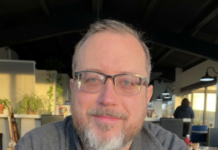
Tim Thomson Podcast Transcript
Tim Thomson joins host Brian Thomas on The Digital Executive Podcast.
Brian Thomas: Welcome to Coruzant Technologies, Home of The Digital Executive Podcast.
Do you work in emerging tech, working on something innovative? Maybe an entrepreneur? Apply to be a guest at www.coruzant.com/brand.
Welcome to The Digital Executive. Today’s guest is Tim Thomson. Tim Thomson is the Founder of Cyber Trends Inc.
Tim built an MSP from zero to 7 million in annual reoccurring revenue. No shortcuts, no silver bullets, just the hard work most owners aren’t prepared for. After 25 years of building and operating MSPs, Tim has seen how the story usually plays out. The business grows, the owner becomes the bottleneck.
Every decision, escalation, and problem flows back to one person. Not because the owner is bad, but because the business was never built to run without them. Today, Tim helps MSP owners in the 1 million to $10 million range move from technician trapped to operate, run by installing real structure, leadership and accountability.
So, the business scales without the founder holding everything together. Well, good afternoon, Tim. Welcome to the show.
Tim Thomson: Thank you very much. I’m excited to be here.
Brian Thomas: Absolutely my friend. I appreciate it. And hailing out of Kelowna, British Columbia, Canada. It’s awesome. When I do an international podcast, I’m in Kansas City, so, I appreciate you making the time today.
Jumping calendars, time zones, et cetera. So, Tim, if you don’t mind, let’s jump into your first question. You’ve spent 25 years building and operating MSPs and scaled one from zero to 7 million in annual reoccurring revenue before founding Cyber Trends. Were the key experiences that shaped your path from operator to advisor or MSP owners?
Tim Thomson: Yeah, that’s a great question. You know, the reality is it people start IT companies to solve its problems and they don’t really have the business acumen to kind scale or learn how to scale. And so I bootstrapped this company from zero to 3.2 million. I ended up losing about $750,000 that year.
I realized that I couldn’t be the smartest person in the room. And so, I figured out right around that time I need to figure how to delegate, how to get outta my own way and don’t be afraid to ask. And so, during that learning process I ended up hiring. I put the right people in the right seat on the right, or the right people in the right seat, on the right bus.
Between accounting, sales, and leadership. And I took it back up to from three point to 3.4, all the way back up to seven. So, you gotta be in you have to be in a position to not be afraid to ask for help and learn to kind of get outta your own way. And once you do that you stay in your own lanes and things kind of continue to grow on scale.
Brian Thomas: I really appreciate that. And sometimes, our egos get in the way. I’m not saying that’s the issue in your case, but you’re right. Once you get the right folks in the right seat on that right bus things do really manifest themselves. And it is important that some things you just gotta delegate and trust in your people.
So that’s awesome. Thank you. And Tim, you often talk about the founder bottleneck, where every decision flows back to the owner. What are the early warning signs that an MSP is heading into that trap?
Tim Thomson: Well, it comes back to the ego again, right? It’s like you have to be involved in every decision. And the reason why we hire people is we need to empower them to make those decisions, right?
And so, the ego is the most expensive line on the, on the p and l or the balance statement is what I kind of talk about quite a bit in my coaching program. And so we don’t hire somebody. To tell ’em what to do. We hire somebody, they tell us what to do, right? And so, when you have the right people in the right seat on the right bus, then it has the ability to let them do the thing that they’re very good at.
And so, if you have to be involved in every decision that the business is in, you’re never going to get to a point of scaling. So, you have to empower your staff. The reason why you hired them is to make those decisions. May, they may not be always the right decision. However, if you have to let them, you have to empower them to do the thing that they need to do.
Brian Thomas: Absolutely. I appreciate that and not heard that before, but I like what you said the ego is the most expensive line item there on your profit and loss statement. I think that’s pretty cool. But you’re absolutely right. You’re gonna break some eggs even when you hire people that are, they’ve gotta make decisions sometimes without you being there.
But it’s okay. We gotta make mistakes, we gotta grow, and you just gotta trust in your people. So, I, I really do appreciate that. And Tim, many businesses, many business owners look for shortcuts, whether it’s frameworks, automation, tools, acquisition, just to scale faster. Why do you believe execution and operational maturity matter more than quick wins?
Tim Thomson: Process. Process is a repeatable task, right? And so when we. My coach and mentor Dan Marel, who actually lives in Kelowna as well, and he sits on the world stage with Tony Robbins. He just, the simple skills and fancy fail. So, when you create simple, repeatable processes, especially now in the world of ai, we have everything automated, right?
So, we gotta be able to implement those. So whether you’re onboarding, whether you’re doing ticketing, whether you are hiring, or whatever the thing is that you’re working on, you know, SOPs and frameworks that are fundamentally sound and repeatable. That other people can actually implement, not just you out of your head.
So, creating those standard operator procedures or those playbooks are simply the key on how MSPs will get from one to three to 5 million. And so, you know, operational maturity, what I talk about quite a bit in my coaching program is, is you’ll only attract the type of client that you can support. Based off the operational maturity level and processes that you have and servicing a $5,000 a month contract is very different than a 10,000, a 50,000 and a hundred thousand dollars a month contract to which I had.
And so, the ability to implement those pro repeatable processes is the key or the framework that will allow you to attract those customers to continue to grow and scale.
Brian Thomas: Thank you. I appreciate that. And you’re absolutely right. In order to scale, you’ve gotta have strong but simple and repeatable processes that is important.
And again, you talked about Dan Martel and of course I follow him as well. And he’s just got a lot of great advice and the companies that he’s scaled and the stuff he teaches. So I really appreciate that. And Tim, the last question of the day. As we look ahead to the future, how do you see the managed services industry evolving over the next decade and what will separate the MSPs that truly scale from those that plateau or disappear?
Tim Thomson: Yeah. I don’t know if, if it’s a decade, I think it’s probably the next two to three years is really gonna weed out the weeds here. Like we’re. We’re involved. I’m involved in AI companies trying to get into the MSP space, and I see MSPs the leaders on, on AI right now that MSPs are leveraging AI are the ones that are really starting to accelerate.
So, we’re in this precarious area of, of the MSP landscape because older individuals like myself that have been in the game for 25 years are trying to get out of it. And they’re running a one, two, $3 million shop with minimal margins or EBITDA, where now you have the PE groups that want to buy those, take them out so they can move on and do whatever they wanna do.
But then we can implement the AI strategies to increase efficiencies, which, and by doing so, that will increase your margins. So we can take a, a 10% EBITDA and turn it into 30 to 35 pretty quick. Right? If you have the fundamentals, so. To the question, it’s going to be leveraging the tools and the technologies that are gonna create, and we always use the word outcomes.
It’s the big buzzword right now, but I say we need MSPs need to leverage AI and technology to create better outcomes, which ultimately create a better experience for their customers. And if their customer has a better experience solving their business problems, then they will become that much more stickier.
And continue to grow and evolve. And when leveraging AI properly, either through a QBR or through a prospect’s mind and solving business outcomes and experiences you’ll have a better chance of either winning that contract or maintaining that contract in a longer term fashion. It’s not about blinky lights and shiny stuff anymore.
It’s about creating those experiences that those customers need. And right now. The big experience that their MSP customers are looking for is how do we create efficiencies while leveraging AI? And so, and I say this all the time, MSPs don’t need to know exactly how the, open claw and cloud co and cloud coding works and all that stuff.
You just have to have a conversation. You have to ask the right questions to uncover opportunities. Then take that away from that prospect or your customer and then figure out how to solve that problem on your own. And we’re not the MSPs that are not necessarily mature enough to think that way are struggling to try and gain traction in the AI space because they think they have to solve that problem in, in itself within a meeting.
And you don’t, you just have to open that question or that conversation up and then take that away. So. The ones that are asking those questions, that are learning ai, that are leveraging it, that are creating partnerships with companies that are delivering AI solutions, those are the ones that are gonna stand tall in the next two to three years. And in 10 years from now, who knows what that’s gonna look like?
Brian Thomas: Absolutely. AI is, it’s just getting, it’s just getting more advanced. Obviously I’ve been playing with Claude Cowork, which is very powerful. They’ve got tools like Open Claude and it’s only gonna get better, but you’re absolutely right.
People that are embracing AI can really provide that customer experience, that value to their customers now are certainly gonna be way ahead of the game. And, MSPs are certainly gonna have to really rethink their process, uh, as AI starts to really proliferate. So, I appreciate the insights.
Tim Thomson: Yeah. And so one last comment on that. Like when we, all MSP owners, most owners in general, it doesn’t matter where they are working 60, 70, 80 hour work weeks, but, you know, bringing them or tell back up. You wrote a book called “Buy Back Your Time”. And so, one of the things that I really preach when I talk to companies is like, you have to start figuring out how to get rid of the $10 tasks.
’cause a $10 task doesn’t build a million dollar company, right? And so. So we have to figure out ways to start working on the business. So we need to buy back five to 10 hours a week so that they can focus on AI and learn with it and understand how it fits into their ecosystem of their customers.
And if they don’t and they’re heads down and they’re building servers and they’re selling Office 365, they’re never gonna get to where they need to go. And so part of the ego is, is like, I gotta do everything and I gotta work 80 hour work weeks, and now you’re asking me to do 10 more hours of working on the business.
It doesn’t work. You have to figure out a way to take that time, whether it’s watching YouTube videos, whether it’s podcasting, whether it’s just reading, it doesn’t matter. They have to figure out a way to start focusing on areas that are going to give them leverage in the future.
Brian Thomas: A hundred percent. I’m with you on that. Just have to get very creative. Get and carve out that time too. To start building. So, Tim, I really appreciate your time today and I look forward to speaking with you real soon.
Tim Thomson: Yeah, great. Thank you very much for having me. I appreciate it.
Brian Thomas: Bye for now.
Tim Thomson Podcast Transcript. Listen to the audio on the guest’s Podcast Page.