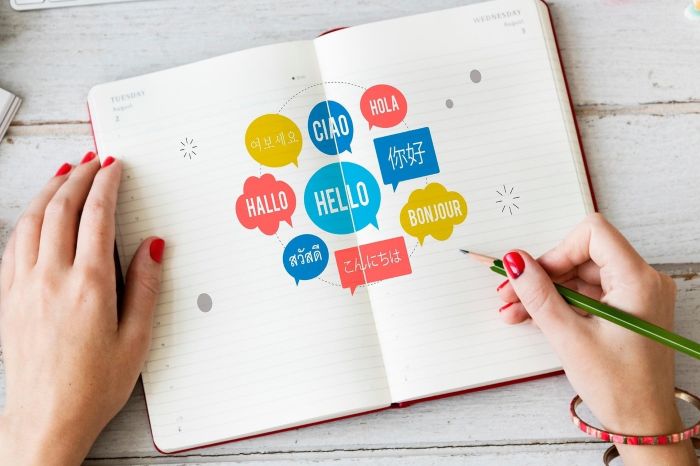
The need for translation operations with multilingual content and language services is a trend that only continues to go up and up. It might be Mr. Beast looking to translate his content for the Spanish market, a German business aiming to sell to Polish customers, or a Latvian tech startup applying for an EU grant.
While more of the world speaks English than ever before, most people still do not, and small businesses are increasingly international. The volume of documentation, marketing collateral, and technical content requiring localization has generally outpaced the capacity of traditional manual workflows.
Automation is needed, and AI has become highly capable. The real question is how to increase speed without sacrificing linguistic nuance, brand consistency, and professional quality control.
Key Takeaways
- The demand for translation operations is soaring as businesses aim for multilingual content.
- AI Translation Platforms enhance efficiency by coordinating various translation technologies and assessing quality automatically.
- A hybrid approach combines AI’s speed with human expertise, ensuring culturally relevant and high-quality translations.
- Multimodal localization expands beyond text, requiring visual and audio content for effective communication across markets.
- Security is crucial in translation operations, as organizations manage sensitive data while benefiting from automated workflows.
Table of contents
The Efficiency of AI Translation Platforms
Modern translation workflows are moving away from isolated tools and towards connected ecosystems. An AI Translation Platform should act as a central hub, orchestrating multiple technologies, from Neural Machine Translation to Large Language Models.
The efficiency of these platforms depends on their ability to choose the most appropriate engine for the subject matter, language pair, and content type. Not all AI models perform equally well. Some are better suited to legal or technical terminology, while others are more effective for creative or customer-facing content.
By coordinating different AI engines within a secure workflow, organizations can improve first-pass translation quality and reduce unnecessary manual effort. Human review may still be required, but the workload becomes more focused and efficient.
A key part of this process is Automatic Quality Estimation. AQE helps assess translation confidence in context, making it easier to identify which segments may require post-editing and which are likely to need less intervention. This allows review effort to be directed where it adds the most value, helping teams streamline quality control without losing oversight.
Balancing Automation with Human Expertise
While AI is unmatched for speed, humans remain essential for judgement. Professional translation services increasingly rely on Human-in-the-Loop workflows, where AI handles repetitive and high-volume tasks while expert linguists focus on post-editing, terminology validation, cultural adaptation, and stylistic decisions.
This hybrid approach reflects where translation operations are today. It helps ensure that the final output is not only grammatically correct, but also contextually appropriate for the intended audience. AI accelerates production, while human experts protect meaning, tone, and brand integrity.
As AI systems become better at handling context, the value of human expertise becomes even clearer: not to repeat what the machine can already do, but to refine what truly matters. With these foundations in place, it becomes easier to see how AI-driven workflows extend beyond text and into broader localization strategies.
Multimodal And Multimedia Localization
Of course, documentation and press release translations are only part of the picture. When speaking to customers, companies increasingly need visual and audio content too. Providers like Seprotec support multilingual communication across a broader range of content formats, helping businesses manage increasingly complex localization needs.
For audiovisual workflows, automation can support tasks such as transcription, subtitle preparation, and other language-related processes that help teams move faster. This is especially useful for internal communications, training materials, and high-volume multilingual content where speed and consistency matter.
One practical example is the rapid adaptation of training materials for international teams. When multilingual content is delivered clearly and consistently, onboarding becomes smoother and business communication remains aligned across markets.
Why Security Is So Important
For global firms, security is one of the biggest concerns around AI. With providers like Seprotec, companies can benefit from secure environments designed to protect sensitive data according to international standards. This is especially important when dealing with confidential documents, regulated sectors, or valuable intellectual property.
In these cases, translation is not just a language task. It is also a matter of control, compliance, and trust. Secure AI workflows help organizations protect proprietary information while still benefiting from the speed and scalability of automation.
Integrating AI into translation operations allows businesses to become more agile and scalable. But the greatest value does not come from automation alone. It comes from combining the right technology, the right human oversight, and the right infrastructure to support multilingual growth over time.