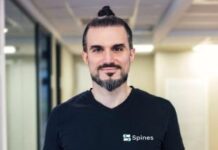
Nicolas Genest Podcast Transcript
Nicolas Genest joins host Brian Thomas on The Digital Executive Podcast.
Brian Thomas: Welcome to Coruzant Technologies, Home of The Digital Executive Podcast.
Do you work in emerging tech, working on something innovative? Maybe an entrepreneur? Apply to be a guest at www.coruzant.com/brand.
Welcome to The Digital Executive. Today’s guest is Nicolas Genest. Nicolas Genest is a technology executive, serial founder and former multi exit CTO, who has built and led companies generating over 1 billion in annual revenue.
He is the founder and CEO of CodeBoxx technology, an AI first education and software company that trains and employees, technologists from all walks of life. Well, good afternoon, Nicholas. Welcome to the show.
Nicolas Genest: Thanks for having me, Brian.
Brian Thomas: Appreciate it. Really do, my friend. I’m glad you’re back on the show again for the second time.
This is awesome. I’d like to talk a little bit about development, especially the stuff you’re doing. As you know, I cut my teeth in technology doing that many years ago, but I appreciate that. Jumping in, Nicolas, if you don’t mind, you’ve built and led technology organizations generating over a billion dollars in annual revenue and served as the chief technology officer at companies like.
Real, real and ModCloth. What key moments shaped your journey from technologists to serial founder and CEO of CodeBoxx?
Nicolas Genest: What really happened for me during those year as a CTO building teams for startups and at Walmart, was really when I came to the realization that you can achieve. A lot of things using technology, no matter the stack, no matter the language, no matter the solutions that you stitch together, what truly makes the difference is the quality of the people operating and building your stack.
I keep that realization, realizing that you can achieve more with dedicated. And mobilize people who share your values and your purpose as a company, no matter where they come from. So, I’ve, I’ve achieved more with Uber drivers and Starbucks baristas and fed up teachers and tired nurses who acquired technology skills afterwards.
I achieved more with them, mobilized and motivated than I did with. Elitist technologists coming outta Stanford and and Berkeley and Harvard, and who had to be managed a certain other way. So, the biggest takeaway from my days as a CTO was, was that, that it’s in spite of the fact that you deal with technology, you actually deal with people and that’s who, that’s why they make the difference.
Brian Thomas: That’s awesome, and I love that we talk a lot about that at the end of the day, even with AI and, and robotics coming down the pike now, is people make the world of difference. In fact, that is the glue that keeps society together. But I like what you heard. Obviously you learned a lot in technology that you can achieve a lot using technology, but at the end of the day, as you talked about the people.
That quality of people that are on your team, and you shared some examples, you achieved a lot more with folks that had the same value whether they were a barista or an Uber driver, versus sometimes maybe a technologist elitist that maybe comes out of, Yale or, or Stanford or something. So, I do appreciate you highlighting that.
And Nicolas, CodeBoxx positions itself as an AI first education and software company, including vibe coding that trains and employees, technologists from all walks of life. What problem in traditional tech education were you determined to solve when launching the company?
Nicolas Genest: Well, at first it’s, it’s the speed. So, we cater to a population who wants to get to their goal of. Knowing AI native tools or getting to technology market fast so they don’t have four years, they don’t wanna have three, they might not even have one. And they, they wanna know what’s the latest, what’s the greatest, and how they can leverage it to achieve results quickly, either because they have an idea.
To materialize or either because they have an idea or already have a clear definition of the impact they want to have. And that’s, so that’s our crowd. That’s, we teach in record time. So like it’s a 16 week program. And when you’re already familiar with the technology and you’ve already developed it’s goes down to eight weeks and we teach the latest and greatest tools. So, and it is AI native, so we don’t, we explain the basics. We go through the foundational elements of software in 2026, and then we build up and we show how to go fast leveraging tools like Codex, CLOUD code cursor and when we’re, we have CEOs and decision makers in front of us.
We teach them tools like lovable dev or AI studio powered by Gemini. And these tool allow these decision makers to remove the risk to get lost in translation in their requirements. And they can truly express the kind of offer and the kind of experience they want to propose to their customers and their stakeholders.
And, it doesn’t get handed over to a product manager, doesn’t get handed over to a project manager, and it goes straight to build. And that build can then scale and be compliant and we can preserve accountability, but that’s what those tools are for. They are to remove or get straight to the signal and prevent the noise from taking the objective away from the decision makers and the sponsor of the software.
Brian Thomas: Thank you. I really appreciate that. And I like how you truly are kidding to those people that are motivated. They wanna get to the goals faster, whether it’s a new idea, they’re switching careers, that sort of thing. I like how you teach the latest and greatest tools, which includes vibe, coding, and ai.
Also covering the foundational basics, and I think that’s really important. Obviously there’s gonna be different levels, but I just love how you do that and you’re very inclusive around that. So I appreciate those insights. And Nicolas, the DeVry, like collaboration within the Vibe coding project aims to modernize how developers are trained and employed in real world environments.
What early lessons have emerged from this experiment?
Nicolas Genest: That innovation that we came up with really came up like very intuitively. So, we started realizing through the use of clot code and Codex that more and more people wanted to do something for their software. They really wanted to own and control their software.
There’s like many, many reshoring movements within companies that are happening where they were taking this away from India. We are taking this away from Pakistan or from Latin America outsourcing that we were we, we used to do. And we, there’s this movement to reshore your software and, and get back into control.
When that happens, some people, sometimes they get stuck and the way it translates. Is they start wasting tokens. So, like you’re on your cloud code, you’re on your Codex interface, and then and then you’re stuck, like you don’t know where to go. Like you try to prompt your way. Then you roll back, and then you try another way, and then you roll back and you see it, it never ends up working the way you want specifically.
And when you’re stuck like that, the amount of tokens wasted can reach like a, a, a high amount. And it can get shocking sometimes. So we put together this DeVry like service where you go on our site, you book a 30 minute session with a live human being and you share screen with them and you will be able to get unstuck or you’ll be able to like identify what’s the right tool for you or identify where to start or where to go next.
And this collaboration happens with a human. So, no shaming, just cheers. It happens with a lot of expertise and the results are guaranteed. So, like you will get what you need out of that half hour. And if you want to continue and keep it going, you can as well. And getting online is instant, so check out, click on your voucher.
Get in a zoom room with a coach and you get started right away and you get to your results. So, it’s that on demand assistance from an empathetic human being was something we believe was missing to this all catching up phase that individuals seems to want online. So, that’s how we came up with that concept.
Brian Thomas: That’s amazing. Thank you. And you talked about that innovation that, that you came up was very intuitive. You learned that through Cloud Code, Codex and other tools that it was just making it easier for companies or developers to kind of bring that work back in and do it themselves more efficiently.
What I really like is if you do get stuck you talked about using these tools and believe me, you can burn through credits. I know I’ve got several subscriptions. But if you get stuck, you can jump on a call with a real human and the results are guaranteed. That’s phenomenal. And I just really appreciate that you’re doing that.
You’re really giving back. Well, helping the world and, and also helping your company. So, I appreciate that. And then Nicolas, last question of the day. As we look ahead to the future, how do you see AI reshaping software development, education, and the global tech workforce over the next decade? And what role do organizations like CodeBoxx play in preparing people for that future?
Nicolas Genest: Well, that. That decade question is a, is a tough one. My horizon is closer to the five years, and I don’t venture making predictions beyond that because it’s just moving plain too fast. Every other week you’ll have this new mature version of, Chat GPT from OpenAI rolling out like it happened to us this week and then it overtakes like the 4.6 version of Anthropic that was released to like a month ago and like every other week, there seems to be the announcement of a breakthrough to be tested and to be made sense of, and the pace is way bigger, like way faster than.
Than what humans can actually absorb. Decision makers, lawmakers, consumers name it. It’s just going too fast. And they need to choose what they wrap their head around and what they leave behind. And I see like the consequence of this frenzy is a chasm that’s forming. And right now if you look at the market and the way software is built.
There’s a portion of them, a portion of the population building software, like we were in 2022, like before, large language models, before thought code and codex. And these people they, they burn the resources of the way we used to do it in 2022. And they run the risk of getting things lost in translation through project requirements and project management and all this stuff.
There’s the other population who actually made it on the other side of that chasm. And they are like, the record time from ideation to transaction at CodeBoxx is three days. Someone came to us saying like, I have, I wanna do this. And three days later they were online doing it. So, this is how fast it’s going on this other side of the chasm.
And we feel like we need to be part of that movement, taking more and more people from one side to the other through individual education, through corporate training to bridge the skills gap of the existing workforce they have. Uh, instead of, laying them off. Maybe they can bridge their skills gap and keep them on staff.
Like they’re, they have the culture, they have the dedication, they have the purpose. Like if all there’s, they’re missing is like a, a few, the mastery of a few tools, let’s give them that. And we also can help companies as a whole through like either like taking the bottom of their backlog and getting rid of it or going faster building.
Software would’ve, would’ve cost millions of dollars to implement getting it done in a, with a few hundred thousands now and get it in compliant and operational in record time. Those are the ways we feel we can help the most in that revolution where this tidal wave is disrupting so much that we.
The next five years are exciting to us because the LLM models the Lang large language models are on, are as dumb as they’re ever gonna get. So they’re only gonna get better. And we are amazed at every breakthrough they make. It’s like a new discovery and it sparks like a brand new wave of ideas and inspiration that we can apply those breakthroughs to.
So, We see ourselves as in the middle of like a, like actors of like a, a very meaningful revolution that happens like in the sheer mass. And the sheer impact is, just mind blowing. So, we really want to be a player that attempts to leave as little people behind as possible in the context of that revolution.
Brian Thomas: Thank you so much. I really appreciate that. You know, I asked you about the next decade and you’re like, well, five years is probably my limit because due to the explosion of this new, these new technology breakthroughs, and I would agree with that right now, just like a leapfrogging effect, especially when you’ve got that much competition.
In the AI space, as but I like that your focus is really to bridge that skills gap to help people stay abreast to new technologies and things that are emerging and helping companies with their dev and project backlog. I think that’s important. And again, Nicolas, you’re making the world a better place by the work that you’re providing for everybody else.
So I really appreciate that. And Nicolas, it was such a pleasure having you on today, and I look forward to speaking with you real soon.
Nicolas Genest: Thank you for seeing us and thank you Brian for having me again.
Brian Thomas: Bye for now.
Nicolas Genest Podcast Transcript. Listen to the audio on the guest’s Podcast Page.