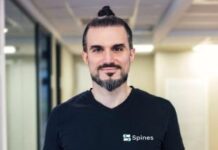
Vikram Chalana Podcast Transcript
Vikram Chalana joins host Brian Thomas on The Digital Executive Podcast.
Brian Thomas: Welcome to the Coruzant Technologies, home of The Digital Executive Podcast.
Do you work in emerging tech, working on something innovative? Maybe an entrepreneur? Apply to be a guest at www.coruzant.com/brand.
Welcome to The Digital Executive. Today’s guest is Vikram Chalana Vikram Chalana is the CEO and Co-founder of PictoryAI, an AI first video platform built to democratize video creation and content repurposing for everyone.
Over the past five years, he has led PictoryAI across product engineering and business scaling in a fast moving startup environment with disciplined execution and clear metrics. As of 2024 Picorty’s, impact includes 3.2 million stories brought to life. 183,000 plus hours of video created and 1.5 million hours saved for creators worldwide.
Well, good afternoon, Vira. Welcome to the show.
Vikram Chalana: Thank you, Brian. It’s a pleasure.
Brian Thomas: Absolutely my friend. I appreciate it. You were on the podcast just a couple years ago maybe less than that, and we had a great time and I’m glad you’re back to share some updates and just gonna jump right in. I know you’re in Seattle.
Appreciate you making the time. I’m in Kansas City, so we got a little bit of a time difference, but again, we made the calendars work. So, Vikram, if I could, I’m gonna jump right in. You founded PictoryAI to demonstrate video creation and content repurposing. What core problems were creators and businesses facing that existing video tools weren’t solving?
Vikram Chalana: I think the main issue that, and I personally face this ’cause I came as a business person trying to make videos. I personally face this challenge, the learning curve for all these tools. It’s just too steep. I tried picking up Camtasia. I tried picking up Adobe Premier and I gave up like, I’m like, this is too much.
I’m not an expert. I do need to create videos because that’s kind of where, what people want. That message sticks, resonates as more engagement with video, but it’s just super hard to create and so. People were either struggling with these tools themselves or they were outsourcing to agencies. And either one of them is a co is very costly and time consuming solution.
And that’s the problem we were trying to solve. But the other thing that I realized is that. A lot of people are good at writing and they’re sitting on a lot of written content, whether in the form of blogs or white papers or PDFs. So the goal was, can we use, can we build ai, can we use AI to help repurpose that content into a video format?
And and that’s what we’ve been on a journey of for the last, you know, now seven years, six years.
Brian Thomas: It’s amazing and stuff that you’ve grown a lot since then. But I do like really the problem you’re trying to solve. Like you, I love to kind of get in and. Generate videos or edit or pictures and, and I’ve used those products like Adobe, et cetera, and they’re very difficult to use.
There’s a steep learning curve if you’ve not been trained in that stuff. So, I appreciate what you’re doing and, and now obviously leveraging ai, which is a big thing, so appreciate the updates. And Vikram, Pictory has helped generate millions of stories and saved creators over a million hours. What product decisions were critical in delivering that kind of measurable real world impact?
Vikram Chalana: Yeah, so it’s really, that’s a really good question, Brian. I think as a product company, you have to have a point of view on product decisions. So, so I think there’s three product decisions that really stand out for us. One, again, from personal experience, I noticed when I picked up Camp Daio or Premier, there was a timeline editor.
I got lost in that. I had no concept of a timeline editor and, and when something appears, so, so I’m a business person. I like PowerPoint. I like. Office types applications. And so, so our, one of our design decisions was we wanted to give users a very easy PowerPoint like experience as opposed to a timeline experience.
And we’ve stuck with it. We’ve stuck really hard with it to. To not give people a timeline, even though we’re every video creation and a video editing tool. But we do it all with a PowerPoint, like, like experience. And we feel that that makes the. It makes it much less hard to use and just, just eases the, the users onboarding into the, into the product.
A second important product decision that we made is, I call it the Cold Start problem. Like when you open Word, or even when you open Premier, there’s nothing in there. Like you’re like, okay, what do I do now? So the Cold Start problem, we were trying to address it by. Always allowing you to start with something, with a piece of content you already have.
Whether you have a PowerPoint presentation, whether you have a Word document or a blog. We just make it easy, like point to that blog or your website. And say, make it do a video. The starting point becomes really easy, even if you don’t have it. Even if all you have is an idea, we just, you just prompt the idea and say, make me a one minute motivational video about why I should make videos today.
It would start and it would give you a video in the next, few minutes. So that cold start problem was another thing that I think as a product decision was important to us. And a third product decision, which I am, it’s almost like a strategy decision. All of these are strategy decisions that you make.
The third one is around, we didn’t wanna be a AI model company. We like, we felt like that’s an expensive proposition. That’s a really hard problem to, to go after, and there’s so many people doing it so well. So we wanted to leverage the best models out there. For any given task. So we, that’s what we’ve done.
Like we use open AI where it makes sense. We use 11 labs where it makes sense. We use Google VO where it makes sense. Uh, we just bring the best models and we, we have a nice agent backend that picks the right model for the right time. And and kind of takes that decision away from the user while we can maintain the fact that, hey, we’ll bring the best models out there state of the art whenever needed.
Brian Thomas: That’s great. Thank you. And I liked your strategies, right? You talked about, and there’s about three things I believe you talked about, and obviously keeping it simple, you use that. As you said, that PowerPoint model, right? Keep it easy. The timeline is confusing, especially for people that don’t work in video.
And you stuck with it. And I believe, and I’ve tried your product. It’s very nice by the way. You talked about again, sticking with the strategies. When you open something up, it’s that cold start, right? You’ve got kinda like the old word, it had the clippy, the little clip. The paperclip there.
You’ve got someone there to hold your hand, be a tutor, to guide you through some of those things, or give you ideas, inspire you, and of course the ai. I like what you’re doing. Kind of similar to open art, right? You can get a subscription open art, and it has basically all the ais put there for image or, video creation, whatever it is. And I like how you really brought that together to bring the best of breed for whatever project that end user’s working on. So that’s awesome. Thank you. And jumping into the next question, Vikram, growth channels can disappear overnight, especially in creator and platform driven ecosystems.
How do you build resilient go-to-market systems that aren’t dependent on a single platform?
Vikram Chalana: I, this is the trillion dollar question, Brian. I bet every company deals with this challenge because once you master the channel, that channel just disappears. It’s happened to us twice now or in, even in the short six years because we thought we’d become really good at affiliate marketing and some of our affiliates left.
We thought we’d become really good at SEO and then Google changed its game. Now they’re showing AI or views. So I am hyper aware of this challenge and and the best answer to your question is you bet on you. You bet on many channels. So that if one kind of slows down, you have others that are working.
Right. So we’re, we’re using three active channels right now. The SEO/ AO/ G, that, that kind of, that’s one big one. That’s all about content and making sure you have enough content both on your website blogs, but also now I’m seeing. YouTube content being referred to in AI overviews. So, we are all in, into YouTube, in fact any of the listeners, if you are thinking about a EO as a channel, make sure you have a YouTube channel.
‘Cause that those videos are gonna be, uh, referenced by Google IO reviews for sure. And by the way, just a small plug for picture there, because we have a easy way to. To convert your blog content into videos that you can then post on YouTube. Easy way to kind of get started with a YouTube YouTube channel.
So anyway, that’s a, that’s an ongoing journey. The second one for us has been affiliates and influencers. So, so we work with a lot of, people who refer our product and, and so on. And that’s an ongoing challenge. Sometimes it works, sometimes it, it doesn’t. And then of course the paid ads channel, various all, all the Google a search and meta and all that stuff.
And then recently we’ve been we’ve been adding the direct B2B. Channel outreach to business leaders, uh, directly. And so I think you, you have to bet in each of them. And, uh, and you, you just have to and then there’s one final thing that I think that’s, so the B2B channel is probably the most repeatable.
And ’cause you, you are directly approaching, you’re building lists, you’re approaching people. But for SaaS products, one of the things that really works well for us as well is the vital loops. So, when people make a video with picky and share it with a picky watermark or a link, it kind of gets that word out.
So that’s probably the, one of the most repeatable durable channels that we have.
Brian Thomas: That’s awesome and thank you for sharing, your experience. Some of the challenges you had. Obviously growth channels can disappear overnight. And I definitely know that as well as a podcast host in the various ways.
But with AEO, GEO, SEO, you gotta have it all. YouTube is still huge. It’s dominating. In fact, that’s my fastest growing platform right now is YouTube. So, I totally agree with you. You just gotta diversify in that stuff and I appreciate what you’re doing to ensure sustainability long term for the business.
So, I appreciate that. And then Vikram, the last question of the day. You’ve said AI is the amplifier, but culture is the signal. As AI becomes more powerful, how should founders think about culture, leadership, and long-term sustainability?
Vikram Chalana: Yeah. I think in any technology, not just AI, right? Technology changes, technology comes, technology goes, right?
It’s just the culture is the thing that, that really stays. And what you built in the company as a founder. So one important part of the culture has to be kind of being open to new technologies, adaptability, everybody. So, so we make it a point to, to share how we are using ai. So we have, like, every other week we have a session through it, everybody joins and we all share our AI learnings.
But just. We’ve set up a set of values for our company. It’s called Credo, and I’ll go through each one of them, but they’re just our values, but I think they’re, they can be models for other companies too. So C is for curiosity. R is for respect, E is for exp, expeditiousness or speed. D is for data orientation, and O is for openness, right?
So, so that’s kind of how we live. Day to day, how we make decisions, how everybody operates. So all of that kind of is beyond AI or technology, right? It’s above any of that. You’re curious about technology. You’re respectful of each other, respectful of customers, respectful of technology. You move fast, adapt things as soon as they come out.
You make data based decisions, data oriented decisions, and you stay open both to your customers and to your team. So that’s what Credo is all about. It works for us and I’m sure pieces of it will work for any business leader.
Brian Thomas: Absolutely. I appreciate that. And what a great acronym to come up with your really, it’s your culture.
It’s the credo you live by in your company. And I think that’s really smart. It’s plan words, but to your point, a lot of leaders especially in the tech world. May not have a lot of that EQ or those soft skills and you highlighted how that helps you embrace that culture and build it so that it’s part of your DNA.
And I think that’s awesome. So, thank you so much for sharing that. It’s something other leaders other companies can certainly use. So appreciate that. And Vikram, as always, it was a pleasure having you on again and I look forward to speaking with you real soon.
Vikram Chalana: Great. Thank you so much, Brian. It was a pleasure. It’s always been a pleasure being with you.
Brian Thomas: Bye for now.
Vikram Chalana Podcast Transcript. Listen to the audio on the guest’s Podcast Page.