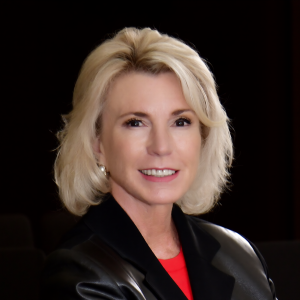
Pamela Eyring Podcast Transcript
Pamela Eyring joins host Brian Thomas on The Digital Executive Podcast.
Brian Thomas: Welcome to Coruzant Technologies, Home of The Digital Executive podcast.
Do you work in emerging tech, working on something innovative? Maybe an entrepreneur? Apply to be a guest at www.coruzant.com/brand.
Welcome to The Digital Executive. Today’s guest is Pamela Eyring. Pamela Eyring is the president and owner of The Protocol School of Washington.
Known as PSOW, an accredited school focusing on international protocol, business etiquette and communication skills training with more than four decades of public and private sector experience in operational protocol and educational development. Pamela has extensive knowledge of US and international practices.
She’s a global thought leader in the etiquette and protocol industry. Currently, she oversees the national and international operations of the PSOW in Washington, DC. Columbia, South Carolina and Dubai, United Arab Emirates. Well, good afternoon, Pamela. Welcome to the show.
Pamela Eyring: Thank you, Brian.
Brian Thomas: It’s awesome that you’re here today. I appreciate it. I know you’re in South Carolina. I’m in Kansas City, so it’s not too bad for traversing time zones today. But regardless, I just appreciate the time and the conversation we’re about to have here. So, Pamela, as I jump into your first question, as president and owner of the Protocol School of Washington, you’ve spent decades teaching international protocol and etiquette. Why do these skills still matter so much in today’s AI driven business world?
Pamela Eyring: Thanks, Brian. I tell you, you know, AI has accelerated how we work. I enjoy using it myself, but it really hasn’t changed how humans decide whom to trust. I think as the faster technology moves, the more valuable human behaviors become in those relationships for our professions.
And you know, it’s not, you know, when we think about protocol and etiquette, it’s not like just about forks and seating charts. We use protocol in etiquette to reduce friction signal respect, you know, build trust in our relationships. And, you know, where AI can draft that email or analyze data, which is awesome.
It can’t read a room, it can’t interpret a diplomatic nuance or even repair a relationship after a misstep. So. I really think that one of our programs, everything Speaks is a popular one because it’s about your posture, your tone, the timing, your behaviors, your body language, basically nonverbal and verbal communication skills like we used to have.
And as long as there’s humans on earth, we’re going to need it.
Brian Thomas: Absolutely. And I really appreciate that. We do a ton of talking about some of the deep dives into technology around AI. You’re absolutely right. AI may have accelerated how we work, but it hasn’t changed how we still communicate. You know, that person to person reading, posture, tone, body language, et cetera.
And I, you put it brilliantly, I think without humans, the world would be nothing. And we, we can’t forget. We can’t forget that for sure. So Pamela, this protocol school recently won the Gold Globee Award as best training provider of the year. What do you think sets PSOW your company apart in preparing professionals for high stakes international environments?
Pamela Eyring: Well, that was a really, a wonderful award to win and you know, it really affirmed what we’ve been building in our school since 1988, you know, is our training that, you know, we transform behaviors, not just give knowledge. So. Not teaching just theory, but application, you know, practical application in our classes.
They don’t just learn. We role play. We have exercises and activities. We actually have a, you know, fun programs. We, nobody wants to be in a boring program or training. But we also listen to our clients. I think that’s one area that we, because we’re protocol, our focus is on people. When we’re focused on people and we listen to our clients and our participants, then we understand their needs in that industry, wherever they’re working.
And, and so with that global credibility we have, we’ve worked for with government officials, corporate executives, ruling families military leaders, delegations, you know, all over the United States. And of course, and beyond, and especially we focus a lot in the Middle East. So you know that integration of our strategy and details matter and you know, when we say everything speaks with our training programs, we have to model that, and that’s what we do.
Brian Thomas: Thank you. I appreciate the high quality that goes into it, and it’s an interesting fact here. You’ve been building this since 1988. Yes. Focusing on the fundamentals. Obviously that’s just amazing. But you [00:05:00] do listen. You focus on the people. Listening is key. Listening to your consumers, listening to your students, and I think that’s really important.
So, thank you for sharing that. And Pamela, we’re seeing more Silicon Valley executives often stereotyped as tech bros. Being pulled into diplomatic, governmental, and ultra high end business settings where protocol and presence really matter. What gaps do you most often see when these leaders arrive? And why is formal etiquette, etiquette training becoming a competitive advantage rather than a nice to have?
Pamela Eyring: Yeah, Brian, the, I mean, there’s many brilliant tech leaders out there. They’re the masters of innovation, and we need them, and they’ve successfully built environments that are rewarded by disruption. Speed and informality. I mean, that’s been generally the conditions they work in. But in diplomatic and governmental environments, they operate much differently.
They reward more the hierarchy awareness, you know, understanding ranks and precedence cultural sensitivity, patience. Precision, and that’s what that environment. So, there’s a clash when they’re trying to transition into that environment. And I think the gaps I often see, and I hear it all the time, is just misreading rank and precedents, especially in the US we’re very egalitarian.
Everyone’s equal. But today, when you’re crossing those lines of, you know, rank and precedents do matter. And the over familiarity in formal settings. You know, they, we wanna be very familiar and just be relaxed and casual and not pay attention to sim symbolism. I think they underestimate symbolism too.
That can be from the body language and reading those signals of the human, or it could be in, in their environment. So the informal communication styles are usually unintentionally signal that disrespect, and I think that’s where they, you know, that’s where the fall is. And it, it also signals immaturity.
In the business world, not everybody is behind a screen all day, every day. You know, that’s where they, they have to interact with humans, you know, interact with people in person, or even when we’re on video, when we’re on Zoom or these other platforms, you know, if you have your video on, you’re, you’re trying to communicate visually, and that’s, that’s an area that they need to strengthen too.
Brian Thomas: Thank you. I really appreciate that. And you know, myself being in tech while I had some formal etiquette training early on and, you know, went to a private school and did all these things, it’s easy to kind of forget those. As you know, it’s a lot. Just to kind of let things go, but today’s tech leaders, they’re super smart.
Yeah. And they, they do really innovative things, but again, that informality is what they’re used to, their comfort zone. Mm-hmm. And so that clash, as you talked about, is trying to make that transition from tech to a formal setting where there’s rank and presence, as you said. So really appreciate you breaking that apart for us.
Pamela Eyring: Brian, let me just add something real quick. You know, you mentioned you had etiquette training early on in your, you know, and that formal etiquette was really more of a polished layer that was giving, but today I really feel it’s risk management. You know, having this etiquette training protects our reputations.
It accelerates that trust and it, it prevents unforced errors in rooms where mistakes are remembered. And so it’s really a competitive advantage now.
Brian Thomas: Thank you. And Pamela. Well, looking ahead, our last question here. What skills and communication, cultural intelligence and protocol will be the most critical for the next generation of tech’s, global leaders?
Pamela Eyrin: You know, I focus on for the next generation, I would say there’s three that come to mind that are, are imperative. One is cultural intelligence, you know, understanding. Power hierarchy, you know, time, you know, negotiations and relationship building vary across cultures. You know, AI can translate language, but sometimes it can’t translate meaning.
And so being sensitive to that and, and now I will tell you, AI will be great about giving information on culture, but of course, check your sources to make sure it’s current. Executive presence under pressure. I think global leaders operate in very you know, visible environments and the ability to remain, you know, composed and intentional especially when we’re challenged, will distinguish true leaders.
So having that executive presence that when you’re dealing under these type of stress and pressure environments, and then strategic diplomacy, I think. The future belongs to the leaders who can collaborate, and that means across sectors, you know, tech, government, military you know, finance global NGOs, you know, those areas require understanding of protocol and those formal structures.
And just to understand that you can switch your communication style. So where you might be very casual and know you’re backstage, but know when you’re on stage to have that, you know, to showcase your technical genius, but also your behavioral mastery. So, I think they need to be more than just innovative.
They gotta be credible. And unlike technology, it cannot be automated. It has to be authentic.
Brian Thomas: Thank you. I think that’s important. And as you said, those non-negotiables or imperatives, I guess, as you said those three things were cultural intelligence, executive presence under pressure and strategic diplomacy.
Yes. And those are so important. And again, getting back to foundationally, really what this world is about. The people, not the technology, not, not the ways that we’ve kind of, again, loosened our discipline as we get into these meetings and we, we kinda lack that self-awareness. It’s important that you’re teaching this to people and keeping that really in our DNA.
So, I appreciate that and Pamela, it was such a pleasure having you on today and I look forward to speaking with you real soon.
Pamela Eyring: Thanks, Brian. It was really good to talk with you. Thank you.
Brian Thomas: Bye for now.
Pamela Eyring Podcast Transcript. Listen to the audio on the guest’s Podcast Page.