It’s pretty amazing—VR simulations can recreate a slip and fall scene with such detail that investigators can literally pause the action, take measurements, and test out different “what if” scenarios to figure out what really happened. This tech brings back the environment, the person’s movement, and the whole chain of events, so you’re not just guessing—you’re evaluating cause, liability, and what could’ve been done differently, all with visual and measurable proof.
In New York, VR reconstructions give attorneys, insurers, and safety pros the chance to check out sightlines, lighting, floor conditions, and even witness perspectives, all without messing with the real site. Linking a legal claim to solid documentation—like when you’re working with New York slip-and-fall lawyers—gets way more convincing when VR shows a clear, repeatable play-by-play of how things went down.
But it’s not just about looking back. VR training lets workers experience dangerous situations in a safe way, so they pick up safer habits and spot risks before anything bad actually happens on the job. This post digs into how VR is used for reconstructions, what investigators actually look for, and how this kind of training—built on real simulations—can help cut down on future falls.
Key Takeaways
- VR simulations allow investigators to recreate slip and fall scenes in detail, helping to analyze cause and liability.
- In New York, VR helps attorneys and safety professionals visualize accident scenes without disrupting real locations.
- VR training prepares workers for potential hazards by simulating dangerous scenarios safely, enhancing their response skills.
- Key steps in VR reconstruction include gathering evidence, modeling scenes, and calibrating material properties for accuracy.
- VR training integrates OSHA standards, ensuring workers learn to use personal protective equipment correctly and recognize hazards.
Table of contents
VR Simulations for Slip and Fall Accident Reconstruction in New York
Here’s where we get into how these immersive models rebuild specific fall events, how investigators actually go step by step, and what that means for attorneys, safety managers, and insurers in the real world. We’ll talk about where the data comes from, how scenes are recreated, how motion gets replayed, and how these digital environments help with both liability and prevention.
How VR Technology Recreates Accident Scenarios
Investigators pull together site photos, surveillance footage, incident reports, and measurements to piece together a virtual scene that’s as close to real as possible. They’ll model floor surfaces, lighting, obstacles, and even how shoes interact with the ground, so the simulated friction and walking patterns actually match what was recorded.
With VR headsets and controllers in hand, reviewers can walk through the scene at eye level, replay the person’s path, and check out what happened from all sorts of angles. Motion paths usually tap into biomechanical data from witness accounts or gait analysis, so they can get a pretty close approximation of body position at the moment of the slip or trip.
The physics of the scene are tweaked to match what you’d expect—like wet tiles, greasy concrete, or bumpy thresholds—so the way someone stalls, slips, or hits the ground lines up with what we know about those materials. That means attorneys and safety teams can compare reenactments directly to the evidence, not just guesswork.
Key Steps in Virtual Reconstruction of Slip and Fall Incidents
- Gathering evidence: photo timestamps, CCTV footage, maintenance logs, environmental readings (like temp and humidity).
- Scene modeling: build a 3D map of the place, including elevation changes, signs, and whatever else might’ve been in the way.
- Material calibration: set up surface friction and hardness using lab tests or manufacturer specs.
- Trajectory scripting: plot the victim’s route, speed, and posture, often frame by frame from video.
After that, analysts run the simulation a bunch of times, testing different ideas—maybe a foot lands here instead of there, or the lighting’s just a bit dimmer, or someone’s distracted. Every run gets marked with time codes and version notes, so reviewers can zero in on exact moments if they need to during a deposition or safety review.
The final package usually comes with rendered video clips, interactive files that work with most VR headsets, still images with measurements, and a technical report that ties every simulation detail back to the original evidence.
Benefits of Using VR for Legal and Safety Investigations
VR simulations don’t just look cool—they make things a whole lot clearer for juries and insurance adjusters. Instead of staring at abstract diagrams, people can actually see the scene from the injured person’s point of view or from above, which just makes more sense.
For safety teams and facility managers, these simulations highlight hazard patterns—maybe it’s sloppy housekeeping, bad lighting, or a threshold that’s just off—that played a role in the incident. That info can drive targeted fixes, like better signs, new floor treatments, or changes to cleaning routines, and hopefully cut down on future accidents.
For legal counsel, having versioned simulations means you’ve got exhibits that are defensible and tied to real data. That can make settlement talks smoother and speed up the whole dispute process, since there’s less room to argue about what the environment was like or how the fall actually happened.
Role of VR Safety Training in Fall Prevention
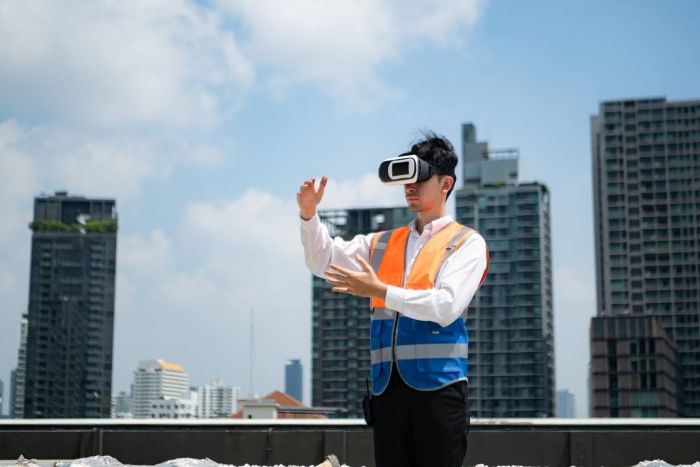
VR safety training drops workers into realistic scenarios, so they can practice spotting hazards, using PPE properly, and following OSHA-approved steps. It recreates ladder, scaffold, and rooftop work, letting trainees try out correct procedures, get instant feedback, and build muscle memory—all without the risk of getting hurt.
Immersive Training Modules for Hazard Recognition
These modules set up lifelike construction sites—think scaffolds, roofs, ladders, uneven floors—where trainees have to spot fall hazards as conditions change. They’re asked to do specific tasks: check a ladder’s angle and base, make sure scaffolds have guardrails, or look at roof edge protection. Weather, lighting, and clutter all change to mimic the real-world stuff that leads to slips and trips, but without any actual danger.
Interactive prompts and scoring call out missed hazards right away. With hand-tracked controls, trainees can move guardrails, secure tie-offs, and fix ladders, so they’re really practicing the steps. The more they repeat these actions safely, the more those habits stick when they’re actually on the job.
Integration of PPE and OSHA Standards in VR Training
VR setups make sure workers use personal protective gear correctly—harnesses, lanyards, anchors—and link every task to OSHA rules for working at heights. If someone doesn’t put on their virtual gear the right way, the simulation won’t let them move forward until they fix it.
Built-in checklists mirror OSHA fall protection standards for ladders, scaffolds, and roof work. Instructors can tweak scenarios to match their company’s processes or unique sites but still keep things in line with regulations. This way, people learn not just the individual steps but also how to work safely as a team when it comes to fall prevention.
Measuring Training Effectiveness and Safety Protocol Compliance
Most programs lean on concrete metrics—things like hazard detection rates, how well folks put on their PPE, how fast they get through safety checks, or even how often someone slips up. There are those pre- and post-training quizzes that try to pin down what people actually learned, and whether their behavior shifts at all. When you look at the data in bulk, you start spotting patterns—some tasks just trip people up more than others, which is honestly pretty useful for figuring out what needs an extra round of drills.
Out in the field, audits try to connect the dots between simulation scores and what’s really happening on the ground. Observational checklists and tracking incident rates give a clearer picture, though it’s never perfect. Over time, you can see whether running these simulations again and again actually cuts down on near-misses or compliance slip-ups. Trainers take all this feedback, tweak the training modules, and try to keep everything lined up with what actually matters for safety. The hope, of course, is to foster a culture where people are looking out for risks before something goes wrong.