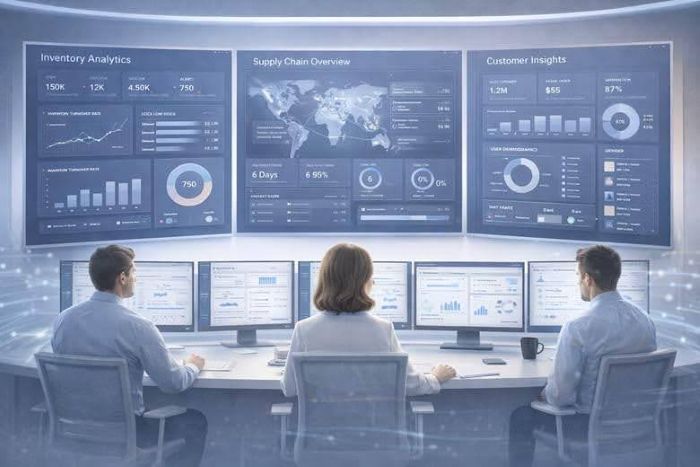
Retail innovation rarely begins with flashy storefronts, interactive mirrors, or viral marketing campaigns. It starts somewhere quieter in data centers, dashboards, operations rooms, and system integrations. The customer sees the sparkle; the business sees the structure.
The unperceived foundation of a store enables customers to experience smooth checkout processes, receive immediate stock updates, and get customized product suggestions. The retail sector develops its most innovative solutions through that foundational system.
We will examine how retail development occurs through unseen processes that have gained increased significance during this time.
Key Takeaways
- Retail innovation starts with data, system integrations, and operational processes rather than flashy storefronts.
- A seamless customer experience relies on backend systems like inventory management and real-time data synchronization.
- Smarter inventory systems can reduce ‘out of stock’ frustrations, leading to better customer satisfaction.
- Omnichannel success depends on integrating e-commerce with backend architecture, enhancing customer interactions across platforms.
- Investing in operational analytics and automation drives retail growth and improves efficiencies, ultimately leading to better customer experiences.
Table of contents
- The Customer Experience Is the Final Output, Not the Starting Point
- Inventory Intelligence: The Hidden Powerhouse
- Omnichannel is a Systems Challenge, not a Marketing One
- Data: The Real Innovation Engine
- Supply Chain Optimization: The Silent Differentiator
- Automation Reduces Human Error and Increases Speed
- Scalability Starts with Architecture
- Security and Compliance: Invisible but Critical
- Personalization Requires Infrastructure
- Innovation Culture Starts in Operations
- The Competitive Advantage of Invisible Excellence
- Conclusion: Innovation Is Built Before It’s Seen
- FAQs
The Customer Experience Is the Final Output, Not the Starting Point
When shoppers walk into a store or browse online, they experience:
- Fast product search
- Accurate stock availability
- Personalised offers
- Smooth checkout
- Easy returns
But none of these experiences begin at the front counter or homepage.
The process starts with these systems:
- Integrated inventory systems
- Real-time data synchronisation
- Intelligent supply chain tools
- Automated pricing engines
- Connected CRM platforms
Retail innovation requires businesses to remove operational difficulties, which often exist inside their operational processes instead of their product design.
When backend systems operate without errors, customers can navigate their journey through the system without any difficulties.
Inventory Intelligence: The Hidden Powerhouse
One of the biggest retail frustrations is seeing “out of stock” after falling in love with a product. Fixing that problem doesn’t require a prettier website. It requires smarter inventory systems.
Behind-the-scenes retail innovation focuses on:
- Demand forecasting using historical data
- Automated stock replenishment
- Real-time stock visibility across locations
- Warehouse optimization
- Vendor coordination
When inventory systems talk to each other seamlessly, retailers reduce stockouts and overstocking simultaneously. That balance improves margins and customer trust.
Customers don’t notice predictive inventory algorithms, but they notice when products are available exactly when they need them.
Omnichannel is a Systems Challenge, not a Marketing One
Many retailers believe omnichannel is about branding consistency. In reality, omnichannel is about system integration.
True omnichannel means:
- Buy online, pick up in store
- Return to the store after an online purchase
- Unified loyalty points across channels
- Real-time order tracking
- Shared customer profiles
None of this works without a backend architecture that connects e-commerce, POS systems, ERP platforms, and supply chains.
This is where strategic collaboration with Retail Software Development Companies becomes essential. They build the infrastructure that connects these moving parts into one unified ecosystem without the customer ever seeing the complexity.
When omnichannel works smoothly, it feels natural. When backend systems fail, the customer experience breaks instantly.
Data: The Real Innovation Engine
Retailers today sit on enormous volumes of data. But raw data alone does not create innovation. Structured, analysed, and actionable data does.
Behind-the-scenes innovation uses:
- Customer purchase patterns
- Behavioral analytics
- Seasonal trend analysis
- Regional performance insights
- Pricing elasticity modelling
This intelligence drives decisions such as:
- Which products to promote
- When to discount
- Where to expand
- How to personalise recommendations
Customers may see a “Recommended for You” section. What they don’t see is the advanced analytics model powering that suggestion.
Retail innovation thrives when data becomes a strategic asset, not just a reporting tool.
Supply Chain Optimization: The Silent Differentiator
Retail margins are thin. A small improvement in logistics efficiency can significantly increase profitability.
Innovation behind the scenes improves:
- Route optimization
- Warehouse automation
- Supplier performance tracking
- Lead time reduction
- Shipment visibility
When supply chains operate with precision, customers receive faster deliveries and accurate timelines.
Retailers that invest in backend supply chain intelligence often outperform competitors not because they market better, but because they operate smarter.
In modern retail, operational excellence is a competitive advantage.
Automation Reduces Human Error and Increases Speed
The retail industry experiences growth delays because manual processes create operational problems, which result in errors that cost money to correct.
The Hidden operations of the business develop three main functions, which include:
- Automated invoice processing
- AI-driven fraud detection
- Smart pricing engines
- Workforce scheduling tools
- Automated customer support routing
Automation lets teams dedicate their time to important business growth activities instead of doing repetitive work.
The process of retail innovation requires businesses to use new technology while they create efficient operational systems that minimise work disruptions between different business units.
Scalability Starts with Architecture
Retail brands aiming for growth need to establish their scalable systems before they start their expansion process.
The company can expand into new markets and open new locations because:
- Cloud-based systems
- Centralised data systems
- API integration technology
- Standardized security procedures
- Platforms that allow modular system development
Business expansion costs become unmanageable when backend systems operate with inflexible components. The organisation can establish its strategic growth path through flexible systems.
Behind-the-scenes retail innovation ensures that expansion does not disrupt operations.

Security and Compliance: Invisible but Critical
Customers need their personal information to remain secure throughout the purchasing process. Retailers cannot afford data breaches or compliance failures.
The innovation process protects multiple systems through its hidden development work, which strengthens
- Payment security systems
- Encryption protocols
- Access controls
- Data privacy frameworks
- Regulatory compliance mechanisms
Security systems operate in the background of customer-facing marketing efforts because they establish fundamental trust relationships with customers.
The retail sector requires secure systems to support its innovative activities.
Personalization Requires Infrastructure
Modern customers expect personalized experiences, not generic promotions.
Delivering personalization requires:
- Unified customer data platforms
- Real-time behavior tracking
- Segmentation engines
- AI-driven recommendation systems
- Marketing automation tools
- Dynamic QR codes for personalized in-store and offline engagement
Without backend data integration, personalization becomes fragmented.
True retail innovation ensures that every customer interaction is informed by complete, up-to-date information across all channels.
When personalisation feels intuitive, it’s because systems are intelligently connected.
Innovation Culture Starts in Operations
The transformation of retail according to technology requires a matching transformation of its cultural aspects.
Organizations that prioritize backend innovation usually achieve their goals through:
- Invest in operational analytics
- Encourage cross-department collaboration
- Align IT and business strategy
- Continuously test system improvements
- Measure operational KPIs rigorously
The leadership team achieves sustainable growth for their organization when they realize that innovation begins with processes and not just employee promotions.
The most successful retail brands innovate internally before they innovate externally.
The Competitive Advantage of Invisible Excellence
The retailers winning today are not necessarily the loudest. They are the most operationally refined.
Their advantages include:
- Faster restocking cycles
- Lower fulfillment costs
- Higher inventory accuracy
- Consistent omnichannel experiences
- Predictive customer insights
All of these strengths originate behind the scenes.
Customers remember smooth experiences. They rarely ask how those experiences were engineered. But in the retail world, engineering matters more than aesthetics.
Retail innovation is fundamentally about building systems that empower seamless experiences.
Conclusion: Innovation Is Built Before It’s Seen
Retail innovation starts its process from architectural diagrams, system integrations, analytics dashboards, and operational workflows. The future of retail belongs to businesses that understand this truth: customer delight is the outcome that follows customer experience. The integrated backend systems, with intelligent, scalable capabilities, create better customer experiences. Businesses experience increased profitability when their operational processes reach optimal efficiency. Complete data integration enables businesses to deliver personalized experiences.
The actual transformation of retail innovation begins from its operational base because that location serves as the essential transformation point.
The brands that make initial technological investments will establish themselves as the most trustworthy companies according to customer perception, even when customers do not witness the background systems operating.
FAQs
1. Why is backend technology important in retail innovation?
Backend systems handle multiple functions, including inventory management, data processing, payment processing, and logistics operations. Customer-facing features need a strong infrastructure to operate at their full potential.
2. How does data drive retail innovation?
Retailers use data analysis to predict customer demand, which enables them to create personalized marketing campaigns, establish optimal pricing strategies, and enhance their supply chain operations.
3. What role does automation play in retail growth?
Automation technology enables organizations to decrease their manual processing mistakes while simultaneously speeding up their business operations and permitting their personnel to concentrate on crucial organizational decisions.
4. Why is omnichannel retail dependent on backend systems?
Omnichannel systems need backend architecture to create a unified experience that links online platforms with physical stores and logistics systems.
5. How can retailers prepare for future scalability?
Retailers need to invest in cloud-based modular systems that maintain operational integrity while enabling their business growth.