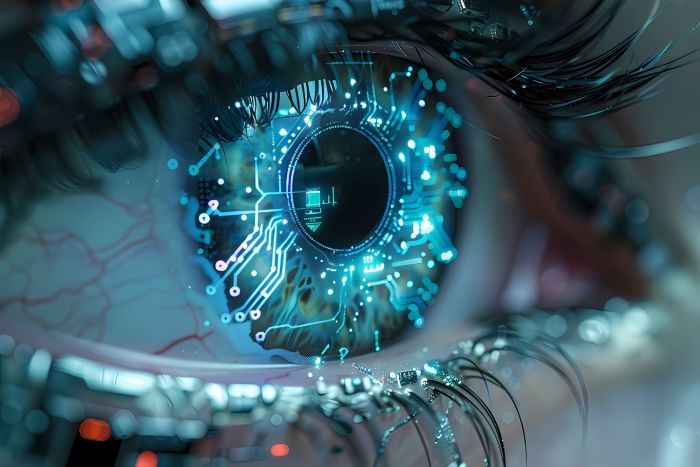
Digital transformation in finance, government, and commercial IT sectors has created a vital need for secure, accurate, and trusted identity verification. In the current state of biometric authentication, iris recognition wins on accuracy, identity persistence, and impersonation resistance. As such, any advancement in iris recognition development is not only for technical researchers. Digital trust leaders in FinTech and many other industries will greatly benefit from them.
Even when seen genetically, the iris of the eye is one of the most complex and intricate structures of the human body. Its patterns, formed in the tissue surrounding the pupil and differentiating person to person, are unique to each person and remain unchanged in the course of one’s life. This creates a relative stability of iris patterns over time and makes iris recognition an exceptionally reliable biometric. Plus, an iris is an ideal characteristic for use in identity verification in meeting the demanding needs of the demanding environments. Traditional authentication methods that can change over one’s lifetime and be affected by environmental and behavioral factors can become ineffective. It is more common to refer to iris-based systems to deliver the confidence of accurate identity authentication.
Key Takeaways
- Digital transformation in various sectors demands secure identity verification, making iris recognition a popular choice due to its accuracy and resistance to impersonation.
- Iris recognition captures images under near-infrared light, ensuring clear contrasts and encoding unique patterns into non-reversible digital signatures.
- This technology helps governments, healthcare, and financial sectors ensure accurate identification and secure transactions, especially in digital-first environments.
- Independent evaluations of iris recognition algorithms provide essential performance benchmarks, enhancing transparency and trust in the technology.
- Ongoing improvements in algorithms and system design are crucial for the future of iris recognition, emphasizing compliance and multi-modal security solutions.
Table of contents
How Iris Recognition Systems Operate
An iris recognition system typically starts with a camera that acquires images of the eye. The image acquisition is usually done under near-infrared (NIR) illumination in order to enable the iris to be imaged with sufficient contrast. This eliminates the problems of ambient light reflection while reducing the effect of pupil size and eye color on system performance. After the image is acquired, either the whole eye region is segmented: the iris, „the stuff that surrounds the iris” (i.e, the sclera), and the eyelids, eyelashes, etc.
The iris (or the segmented area of the iris) is then encoded into a carefully constructed digital template. Neither the template nor any reversible biometric is stored in the computer or in databases, as this is commonly said to be unfeasible. Instead, a non-reversible transformation is used to convert the biometric input into a digital code or “signature”.
Expanding Industry Applications
Iris recognition technology is already in use in the markets and industries where establishing an individual’s identity with certainty is paramount. Governments rely on it for border control, ID programs, and secure access. Healthcare institutions employ the technology to guarantee accurate patient identification and minimize administrative mistakes, as well as to protect medical records.
Iris recognition technology is employed in FinTech for secure digital onboarding, account access, and transaction verification as well. As financial services go further digital-first, companies require user-friendly but anti-spoofing methods of biometric authentication. Here, iris recognition shines, as it ticks all the boxes: strong security, without passwords or physical credentials.
The Role of Independent Algorithm Evaluation
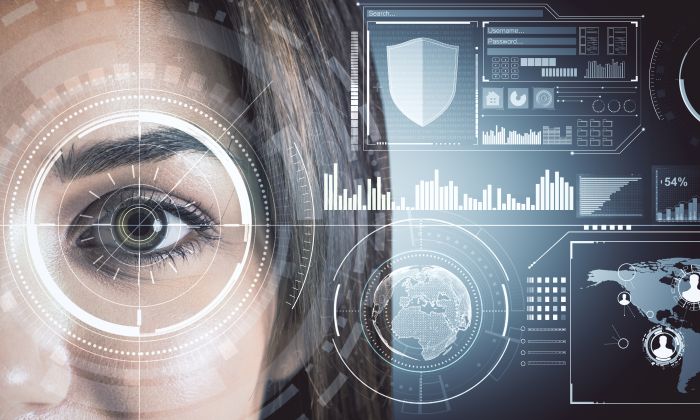
One of the key components to enabling the maturation of algorithmic iris recognition performance is conducting formal evaluations and testing of algorithms by third parties. Independent testing can provide performance scores on large datasets and under varied conditions that can be used as benchmarks in the industry. NIST is an example of an organization that focuses on conducting standardized biometric evaluations.
They collect iris images and produce empirical results measuring accuracy, false match rates, and demographic differentials, which help identify areas where performance needs to improve and enhance transparency to purchasers or policy makers that performance can meet their criteria.
Industry award recognition and community program analytics provide further feedback loops to this ecosystem. Developers and other stakeholders can learn further, in terms of the evaluation metrics, biometric approach, and where the accuracy levels of their particular algorithms place relative to the broader community though established evaluation programs. For those interested in what types of innovation are occurring in the biometrics space or further comparative test frameworks, visit here.
Strengthening Algorithms and System Design
While ongoing innovation in algorithm design will certainly help improve the onboarding process, a lot of work must also be done to unsilo systems and processes. Improved pattern matching and data manipulation have made iris recognition solutions significantly more robust, even in non-ideal conditions like off-angle images and images with partial occlusion. But to maintain and amplify the algorithmic advances that have been made, organizations must also maintain transparency and compliance, especially for highly-regulated enterprises.
Additionally, there are multiple system-level benefits to implementing iris recognition solutions. Complementing iris with alternate biometric modalities can enhance the robustness of the system, and developing a secure template storage solution with encryption is vital to protecting this biometric identifier. Moreover, exercising strong governance practices and complying with data protection laws will only increase consumer trust as our world becomes more biometrically-enabled.
Looking Ahead
The future of iris recognition depends on continued development, assessment, and implementation. As digital ID is increasingly expected for secure commerce and public services, higher accuracy and performance expectations should be met.
Transparency, independent testing, and practical verification must be prioritized to maintain credibility and viability of iris recognition in next-generation security use-cases.