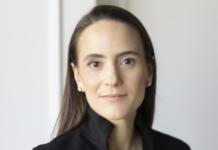
Paul Neyman Podcast Transcript
Paul Neyman joins host Brian Thomas on The Digital Executive Podcast.
Brian Thomas: Welcome to Coruzant Technologies Home of The Digital Executive Podcast.
Do you work in emerging tech, working on something innovative? Maybe an entrepreneur? Apply to be a guest at www.coruzant.com/brand.
Welcome to The Digital Executive. Today’s guest is Paul Neyman. Paul Neyman is a Silicon Valley sales leader and AI entrepreneur with over 18 years of experience scaling enterprise technology platforms and driving digital transformation across multiple industries.
He is the Co-Founder and Chief Revenue Officer of Areti Health, a venture backed company using generative AI to revolutionize patient engagement and clinical trial recruitment for Fortune 100 pharmaceutical companies. Paul’s unique background combines deep technical expertise with proven sales leadership.
He began his career as a software engineer, building enterprise platforms at companies, including Ariba, Good Technology, which was acquired by Motorola, then Blackberry and Coral8. His engineering expertise, developing real-time data processing systems, AI powered analytics platforms, and enterprise SDKs provides authentic technical credibility when engaging with CTOs and engineering teams well.
Well good afternoon, Paul. Welcome to the show.
Paul Neyman: Hi, Brian. Excited to be here. Thanks for having me.
Brian Thomas: You bet my friend. I appreciate it. You’re hailing out of that Bay area, Silicon Valley area in California. I’m in Kansas City. Freezing my, you know what off, but I just, it is cold. It’s very cold. But this is typical for Kansas City in January, February.
So, without further ado, Paul, let’s jump right into your first question. You started your career as a software engineer before moving into sales leadership. How has that technical foundation shaped the way you sell? Build credibility and differentiate in competitive enterprise deals.
Paul Neyman: A great question and it is a bit of an unusual path.
Usually once you start as an engineer, you kind of continue down that path. I discovered I really wanted to talk to people and solve the problems that they have rather than just work on code all day long. And I think that transition gave me the ability to articulate how the product is built, what it does, what it delivers with much greater authority.
When you are in complex enterprise deals, when you have multiple stakeholders involving it and compliance and the business, you can understand their pain point and pivot a lot quicker than a standalone sales guy would. A, a BD or an exec. Normally you would have a sales engineer on the call, and now you are your own sales engineer.
You understand the customer’s environment. You can dive as deep as they need to into the tech stack. You speak with much better credibility and you’re able to create effective pilots on the fly. You can discuss everything from integrations that they run to the stack, their own answer, and their questions. I think that leads to much higher rate of, steel closure than just a standard sales approach.
Brian Thomas: That’s awesome. I really appreciate that. Love the story. Started out as an engineer but you’d rather talk to humans and solve problems, which I think is amazing. That’s awesome. The advantage was, and you mentioned this, is being, having that engineering background, you’re able to speak the technical, talk to other engineers and clients, but also interact and speak the business language. So, you’re precise. Bring the best of both worlds, and I really appreciate that.
Paul Neyman: Yes.
Brian Thomas: Yeah. So, thank you. And Paul, at Already Health, you’re using generative AI to transform patient engagement and clinical trial recruitment. What’s broken in the traditional clinical trial model, and how does AI fundamentally change the equation?
Paul Neyman: Yeah, so we if you think about it, patient recruitment. Is the number one pain point that is cited by sponsors, by CROs, by sites that the clinics, they actually do the research and statistics. Just something that you can go ahead and look at, but it’s everywhere. Statistics are pretty dire. Something like 80% of clinical trials do not meet their targets on enrollment, and unless you have that enrollment, the studies can go forward and the studies don’t go forward.
You don’t deliver your drug or medical device to the market. The reason is that it’s currently a very manual process with several bottlenecks. So with AI, we’re bringing automation where none existed for many years. It is still a process that is heavily dependent on call centers, on professionals reviewing medical charts, doing it manually.
They have to allocate the time. It is incredibly time and labor consuming. And with ai we resolve several bottlenecks and we’ll start with the first one is ability to find. High fidelity patients. The trials today are getting increasingly complex. There are a lot of a ton of inclusion, exclusion criteria.
The drugs are getting more precise. The medical devices are getting more complex, and so you need to understand where are my patients coming from? Do they fit into a trial or not? And one of the existing ways to do it is to review their. Medical record. Now, there’s a couple problems connected to it.
Some of these medical records could be extremely long and complex, 300 pages long. A qualified medical professional, it can take anywhere from 20, 30 minutes. To an hour and a half to two hours to analyze just one medical record to understand whether the patient is a fit. Now, understand you have to sift through thousands and thousands of patients to get to the, those needles in the haystack to complete the enrollment and make sure these people stay, in the trial throughout, which is another problem by itself.
And so, you start with the very large funnel that takes an incredible amount of time and labor to just through. And now that we’re bringing ai, we’re able to one, analyze those records in minutes, pull them in minutes, analyze everything that’s in the record. We’re talking not just all style old fashioned index keyword search for a particular indication.
No. With AI, we’re able to look at unstructured data. And analyze everything from doctor notes to lab results, to prescriptions, to your image scans holistically within one record until definitively. We’re 99% confident this patient is a mesh For this particular trial, this patient is maybe 75%.
This one is 50. This is, don’t bother with the rest. Right. Don’t waste your time on it. Don’t try to cast a net super wide and burn a lot of resources trying to bring in people that will screen fail altogether in the end because they’re not a fit to begin with. Okay. That’s great. That’s step one. Now, step two, let sponsor says fantastic.
You’ve identified who’s a potential fit. How are you gonna bring them in through the door? Because unless these people show up, it doesn’t really matter that they exist. You gotta interest them, you gotta engage them. You gotta still prescreen them and schedule them with a site, with a clinic that runs the clinical trial.
Okay, great. This is, again, this is where AA comes in and removes the obsoletes, rather obviates the need for large call centers because it can operate 20 for seven. It can speak your language. It doesn’t take breaks. There are no holidays. We immediately engage anyone we identified. We pulled your medical record.
We found that you’re a match. You’re getting a call, you’re getting a text. Everything is customized to you based on what we already know about you to increase that engagement, to get your interest high in the study. You came into social media, you saw an ad on Facebook, you’re potentially interested about losing a beat.
We are immediately texting, calling you, depending on the time of the day. Again, based on what we know about you, you came in, you were interested in a high blood pressure study. Let’s see if you can prescreen. And while we do that we’re able to. Anonymously talk to you, educate to you about the study, talk to you compassionately, empathetically spend as much time with you as needed to make sure you got your commission answers so you’re an educated, willing, interested participant.
And then step three will build automations to deliver this patient profiles to the people that I will actually be interacting with them to the sites directly into their clinical trial management systems. Schedule that appointment. Allow the patients to pick a good time and stay in touch with them.
Nurture them all the way through the visit to make sure that their interest in the study stays high, that they don’t just forget about the visit. This is yet another place for AI to come in, whether that consistent cadence of touch points to make sure you are aware your visit is coming up. You’re still interested.
Maybe there is a concern that we could address. You don’t like needles. We’ll talk to you about why the blood draws are important for the study and so on and so forth, but really keep you engaged all the way through the, through that visit to the clinic.
Brian Thomas: Wow. A lot to unpack there, but that’s amazing the fact that.
You’re leveraging AI to do everything from doing the research. You know, you talked about patient and clinical trials, one of the hardest industries to recruit for. Very bottleneck, very manual time and labor intensive. But AI is bringing that faster, smarter level of reviewing medical charts to do the matching of the, for the enrollment trial.
But that level of accuracy, the matching it goes as far from basically from beginning to end. Right. Cradle to grave, you talked about. Successfully engaging, enrolling with the patient handling the marketing, the ads, speaking with the patient their language. There’s just so much that AI can do, but you’ve really harnessed the power of AI and bringing this all together to streamline this and make the process more engaging for the patient, but more accurate in the end for the trial. So, I appreciate that, Paul.
Paul Neyman: Yeah, absolutely.
Brian Thomas: Many AI startups struggle to translate technical capability into clear business value. What messaging or proof points resonate most with Fortune 100 executives when evaluating AI driven platforms?
Paul Neyman: Yeah I don’t think I have any super truths here. I think everyone who’s in the business of sales should intuitively understand this. It is of course, what is the value, right? What is the value that I’m bringing? Why would a Fortune 100 onboard this technology? When I’m speaking to a C-level exec, what is it that I am delivering for them? What kind of pain point am I solving for them? So, you go from, we can do features X, Y, Z to, we can effectively solve a problem X, Y, Z for you. Now of course, they’re interested in, being a Fortune 100. How much are they betting on it? Are they betting a farm or is this a de-risked the decision? Are there case studies? By now, everyone understands it’s not a metric bullet, right?
So, we’re over the, the hype of AI. Everyone understands there’s 80 to 80 20 conditions of it’s working. Yes, there’s 80% of cases we can resolve. 20% what is gonna be escalated to a human, or we need a human in the loop, or this is simply not a good fit. We’re not gonna move the needle there. They want to understand if it’s gonna be safe for the business or healthcare.
This industry is notoriously conservative. Clinical trials are regulated by review boards. And so, they gotta have their say, is this something that can be used when interacting with patients? Is it not gonna, say something that’s not ethically approved out of bounds. Are there guardrails around this?
We did a lot of work on compliance and on these guardrails to make sure that we talk study only, that we detect what’s called an adverse event that we can resolve this or quickly escalate to someone responsible for working with the patient in all these cases. And of course there’s still humans present, but we remove that.
If you can show. They can remove the the labor and repetitive tasks. The minutia the administrative portion of it nobody likes. And this is where you kind of get stuck. I think that helps a ton. And of course, it’s really the bottom line for the business. What are we resolving? For healthcare in particular here we are compressing the recruitment timelines.
We are improving operational efficiency. We’re saving them a ton of money because a day of delay for a large sponsor is an incredible, incredible numbers just in terms of resources and the money that they spend.
Brian Thomas: Thank you. I really appreciate that. And there’s a lot there. You talked about, what is, what are those executives or board members looking for as far as what’s the value you’re bringing for them? Are what problem you’re trying to solve? What is at risk for them? Is it safe for their business, for their customers? What about compliance? You talked about guardrails. Ensuring there’s no adverse events. At the end of the day, you need to provide them a successful use case so that they can actually.
Digest some of those that have been proven in the market. And that’s one way to obviously, again, getting that message across to Fortune 100 executives and board members are sometimes pretty tough. So, I appreciate the insights. And then Paul, the last question of the day as we look ahead, how do you see generative AI reshaping enterprise sales and healthcare innovation over the next, let’s say, three to five years? And what skills will future CROs need to succeed in that environment?
Paul Neyman: Yeah. Well, there’s already a ton of AI helpers ranging all the way from the sales process, from SDR replacement to sales enablement. As a CRO, you just kinda have to decide where is the value. Your BD rep is bringing, are you going for overall numbers with the shotgun approach and you can do mass email generated by AI and you don’t care?
There’s a little bit of AI slop that slips through? Or are you working, operating in a very tight industry, a conservative industry? Were. The existing sponsors already get absolutely demolished by pitches. And so you gotta send out above the noise. So this is the approach you decide on, then you use the right tools.
Do you need AI to better polish your pitch? Do you need AI to monitor your SDRs performing? Do you need AI to take over your call center or initial outbound calling? This is a, a decision that is totally dependent on the business you’re in and where you go from there. Again, what the future CROs need to succeed, I think it’s ability to stay current in the market.
Every single tool from the CRM to your sequencers to your, data enrichment tools, they try to squeeze AI in there. So, you gotta decide on the overlap. What are you paying for? Does this really make your workforce effective or is it slowing them down? It’s just ability to filter out the noise from the true, truly enabling features within the stack, the sales enablement stack that you use.
Brian Thomas: Thank you, and I think that’s important. The big thing I took outta that was obviously staying current, but really, it, it all depends on the business and, and what you’re doing. But you talked about, what is your strategy and what value are you bringing? There’s a whole process in that. You talked about sales process, sales enablement, but again, going back to what CROs need to be successful is being able to stay current in the market using.
Things from data enrichment tools to CRMs, and I think that’s important. So, I appreciate your insights. Yeah, and Paul, it was such a pleasure having you on today, and I look forward to speaking with you real soon.
Paul Neyman: Wonderful. Thanks for having me, Brian. Appreciate it.
Brian Thomas: Bye for now.
Paul Neyman Podcast Transcript. Listen to the audio on the guest’s Podcast Page.