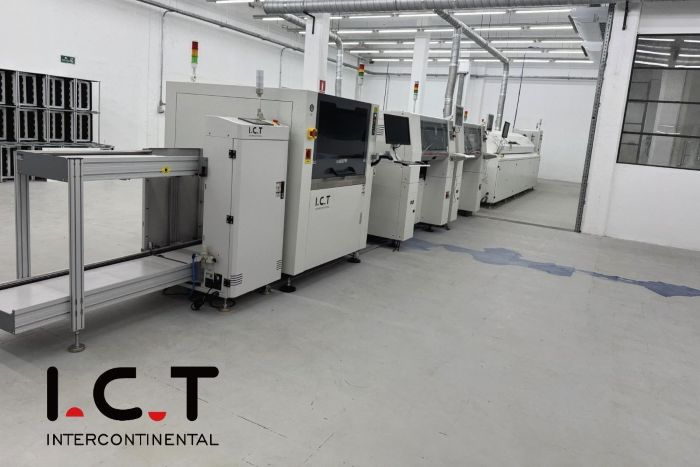
The Heart of Electronics Production
When most people think about electronics manufacturing, they imagine tiny robots placing components on boards at lightning speed. While that’s partly true, the reality is far more fascinating. Modern SMT (Surface Mount Technology) production lines are intricate, carefully orchestrated systems where human expertise, engineering principles, and advanced technology come together to create the devices we use every day.
Understanding how these lines operate is not only valuable for engineers and managers but also for anyone curious about how the electronics in our lives are actually made.
Table of contents
- The Heart of Electronics Production
- How Solder Paste Sets the Stage
- Placing Components with Care
- The Magic of Reflow Soldering
- Inspection and the Human Eye
- Learning From Data
- Technologies That Complement Human Skill
- Why Surface Mount Technology Lines Matter Beyond Production
- Bringing It All Together
- Conclusion
How Solder Paste Sets the Stage
At its core, a surface mount technology production line is about connecting components to printed circuit boards with precision and efficiency. Unlike older methods that required inserting leads through holes, SMT allows tiny components to be mounted directly on the surface. This means devices can be smaller, lighter, and more complex without sacrificing reliability.
But it’s not just about machines doing the work. Every stage of an SMT line is designed to minimize mistakes, maintain consistent quality, and maximize throughput. And behind these machines, humans are constantly monitoring, tweaking, and improving the process.
Placing Components with Care
One of the most critical early steps is applying solder paste to the PCB. This paste, a mix of flux and metal powder, acts like glue and an electrical conductor in one. It might seem simple—spread paste, place components—but in practice, it requires precision.
Engineers carefully align stencils over each board, ensuring the paste lands exactly where each component pad is. Too little paste and a component may fail to adhere. Too much, and the risk of short circuits rises. Experienced operators watch for subtle signs—a slight smudge here, uneven distribution there—that automated systems might initially miss. Modern factories also employ cameras and sensors to double-check the paste volume and alignment, but human judgment remains essential.
The Magic of Reflow Soldering
Once the paste is ready, the board moves to the component placement stage. This is where pick-and-place machines handle the tiny resistors, capacitors, and integrated circuits. Robots are fast, but the process is carefully monitored by engineers to ensure quality.
Inspection and the Human Eye
After placement, boards enter the reflow oven. Here, the solder paste melts and solidifies, forming permanent connections between components and the board. While the machines control temperature zones, engineers monitor thermal profiles, knowing that slight variations can affect joint quality.
Learning From Data
Quality assurance doesn’t stop at machines. Automated Optical Inspection systems scan each board for alignment issues, missing components, and soldering defects. Yet even with AI-powered systems, humans play a crucial role. Experienced engineers interpret results, compare patterns, and make nuanced adjustments that machines alone might not handle.
Modern surface mount technology lines are incredibly data-driven. Sensors collect information about placement accuracy, solder paste application, oven temperatures, and inspection results. Engineers use this data to identify trends, optimize processes, and predict maintenance needs before problems occur.
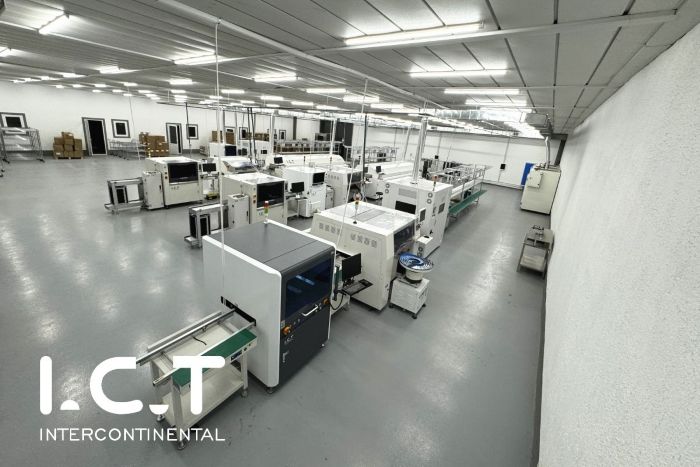
Technologies That Complement Human Skill
While human insight is vital, several technologies enhance efficiency:
- Machine Vision – Ensures components are correctly oriented and placed.
- Robotics – Handles repetitive, precise tasks while reducing human fatigue.
- Digital Twins – Virtual models allow engineers to test changes before touching the physical line.
- Predictive Maintenance – Sensors alert operators to potential issues before they become costly downtime.
The key is balance: machines do what humans cannot do consistently at high speed, but human judgment and experience direct and refine the process.
Why Surface Mount Technology Lines Matter Beyond Production
Understanding SMT lines isn’t just about machinery. It’s about efficiency, quality, and reliability in devices we use every day. A smartphone, a medical sensor, or an automotive control unit might have hundreds of components packed tightly into a tiny board. Without careful planning, monitoring, and optimization, producing these devices reliably at scale would be nearly impossible.
For anyone managing or studying electronics manufacturing, resources like how an SMT production line works provide invaluable insights into system integration and process optimization.
Bringing It All Together
Watching an SMT production line in action is like observing a complex symphony. Machines move with precision, sensors collect massive amounts of data, and human engineers constantly refine, monitor, and guide the operation. Each stage—solder paste, placement, reflow, inspection, data analysis—relies on both technology and human oversight.
This combination ensures that the electronics powering our devices are reliable, high-performing, and produced efficiently.
Conclusion
The complete surface mount technology production process is a structured, high-precision workflow that blends human expertise with advanced technology. By carefully managing solder paste application, component placement, reflow soldering, inspection, and data-driven optimization, manufacturers create efficient, reliable, and scalable production lines.
For detailed guidance on aligning electronics equipment, layout, and process optimization, operations teams can refer to I.C.T.