Financial markets, relying solely on gut feeling or traditional charts is no longer enough. Data-driven strategies are dominating the scene, and at the heart of these systems are trading indicators. These tools have evolved from simple lines on a chart to sophisticated algorithms that guide decisions, manage risk, and enhance returns. Let’s explore what makes modern trading indicators powerful, and what traders need to know to use them effectively.
Key Takeaways
- Financial markets now rely on modern trading indicators, which leverage data-driven strategies rather than just gut feeling.
- These indicators utilize machine learning to identify complex patterns, adjust strategies dynamically, and enhance risk-adjusted returns.
- Modern trading indicators integrate real-time data for timely signals, including price, volume, and alternative data like news sentiment.
- Adaptive indicators automatically adjust to market conditions, while composite systems combine multiple indicators for more reliable signals.
- Traders embrace modern trading indicators for their speed, accuracy, customizability, and data-driven confidence in decision-making.
Table of contents
From Classical Tools to Algorithmic Intelligence
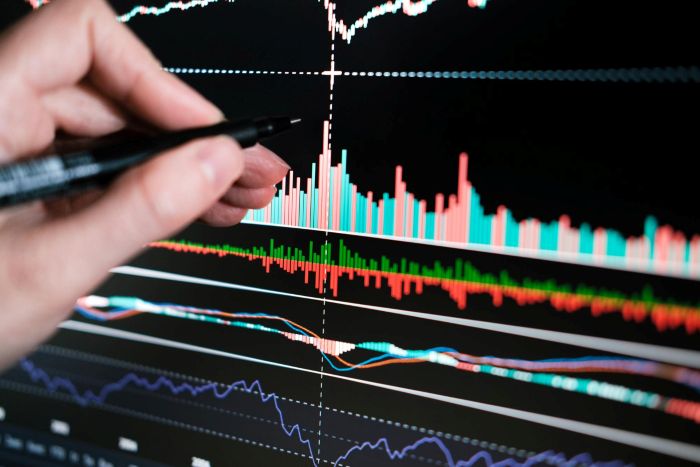
For decades, traders relied on classical indicators such as moving averages, MACD, and RSI. These tools were effective in their time but had clear limitations:
- Lagging signals: By the time an indicator confirms a trend, the optimal entry point might already be missed.
- Static parameters: Fixed thresholds can fail in volatile or unusual market conditions.
- Limited context: Most classical indicators focus solely on price, ignoring volume, sentiment, and macro factors.
Modern trading indicators address these shortcomings by combining multiple data streams and leveraging computational intelligence.
Why Machine Learning Matters
The biggest game-changer in trading is machine learning (ML). By feeding indicators into ML models, traders can:
- Identify complex patterns invisible to human eyes
- Adjust strategies dynamically as market regimes change
- Reduce false signals and improve risk-adjusted returns under certain conditions
For example, a system might combine momentum indicators with volatility metrics and AI-based sentiment analysis. The result? A more robust signal that adapts to market behavior in real-time. This is where modern trading indicators, they integrate multiple layers of data to provide actionable insights.
Real-Time Data Integration
One of the key differences between old-school indicators and modern systems is the integration of real-time data. Trading is no longer about static historical charts; it’s about live, high-fidelity data streams.

Modern indicators can process:
- Price and volume ticks instantly
- Market depth and order-flow data
- Alternative data, like news sentiment or macroeconomic releases
Integrating these streams ensures signals are timely and relevant, which is critical when milliseconds can make or break profitability.
Adaptive Indicators: Learning from the Market
Static indicators are out. Today, adaptive or dynamic indicators are leading the way. These indicators adjust their parameters automatically based on market conditions.
For instance:
- Trend detection thresholds might widen during high volatility
- Momentum filters can become more sensitive during low-liquidity periods
- Composite indicators combine multiple metrics to provide a single, clear signal
Adaptive indicators are particularly useful in algorithmic trading, where speed and accuracy are paramount.
The Power of Composite Systems
Modern trading doesn’t rely on a single indicator. Instead, composite systems combine multiple indicators to generate a more reliable signal. Consider a framework that merges:
- Trend strength (via moving averages or ADX)
- Momentum (via RSI or stochastic oscillators)
- Volatility (via ATR or Bollinger Bands)
- Market sentiment (via AI sentiment analysis)
All these inputs, traders can see a clearer picture of risk, potential reversals, and optimal entry points.
Quantitative Strategy Integration
For serious data-driven traders, indicators are more than visual tools; they’re features for quantitative models. These indicators feed into machine learning models, reinforcement learning strategies, or even neural networks, providing:
- Signals intended to anticipate or respond to market trends
- Risk-adjusted trade recommendations
- Automated decision-making frameworks
When combined with AI, trading indicators move from reactive tools to proactive decision drivers, helping traders respond more quickly to emerging patterns.
Risks and Best Practices
While modern trading indicators offer tremendous advantages, they are not magic bullets. Common pitfalls include:
- Overfitting: Designing indicators too specifically to past data can fail in live markets.
- Ignoring context: Even adaptive systems need human oversight for unusual market events.
- Over-reliance: Relying solely on indicators without a risk management plan can amplify losses.
Best practices include combining multiple indicators, validating signals across different timeframes, and using dynamic risk controls.
Why Traders Are Embracing Modern Indicators
The appeal of modern trading indicators is clear:
- Speed: Real-time calculations help traders respond faster than ever.
- Accuracy: Advanced algorithms reduce noise and false signals.
- Customizability: Indicators adapt to individual strategies and risk tolerance.
- Data-driven confidence: Traders can make decisions backed by quantitative analysis rather than intuition.
For retail traders, platforms offering such indicators democratize access to tools once reserved for institutional teams.
Final Thoughts
Modern trading indicators have transformed from simple chart overlays to powerful, adaptive, data-driven tools. They are integral for traders who want to make informed decisions in increasingly complex markets.