For years, manufacturers have faced a persistent challenge: selling complex, customizable products digitally without sacrificing accuracy, speed, or control. Traditional product pages, PDFs, and static catalogs fail to reflect how manufacturing sales works. Buyers no longer want generic offerings—they expect solutions tailored to their exact requirements by product configurators.
This is where the 3D configurator has become a turning point. By combining interactive 3D visualization with structured product logic, manufacturers can present complex products clearly, guide buyers through valid options, and deliver confidence at every step of the buying process. The result is configuration-driven selling that scales personalization without increasing operational complexity.
Key Takeaways
- Manufacturers face challenges in selling complex products online; traditional methods often fail to meet buyer expectations.
- 3D product configurators revolutionize selling by combining interactive visualization with product logic, ensuring clarity and accuracy.
- These configurators streamline processes, reduce errors, and improve alignment between sales and production teams.
- Visualization enhances buyer confidence, making complex decisions easier and fostering a better purchasing experience.
- Adopting product configurators allows manufacturers to create seamless, efficient sales workflows, thus future-proofing their operations.
Table of contents
- Understanding Configuration-Driven Selling in Manufacturing
- Why Visualization Makes Product Configurators More Effective
- Managing Complexity Without Slowing Sales
- Delivering A Modern Buying Experience
- Real Business Impact for Manufacturers
- How Manufacturers Use Product Configurators Today
- The Future of Digital Manufacturing Sales
Understanding Configuration-Driven Selling in Manufacturing
At its foundation, product configuration is about logic and control. A configurator guides buyers through valid options while enforcing engineering, pricing, and production rules in real time. Every choice is checked instantly, ensuring that what’s configured can actually be produced.
Whether applied to modular machinery, configurable components, or made-to-order furniture, this product configurator approach replaces manual quoting, endless email exchanges, and error-prone spreadsheets with a single guided workflow. Instead of interpreting technical documentation, buyers interact directly with the product’s constraints and possibilities.
For manufacturers, this results in fewer errors, faster sales cycles, and a stronger alignment between sales and production.
Why Visualization Makes Product Configurators More Effective
While configuration logic ensures accuracy, visual configuration ensures understanding.
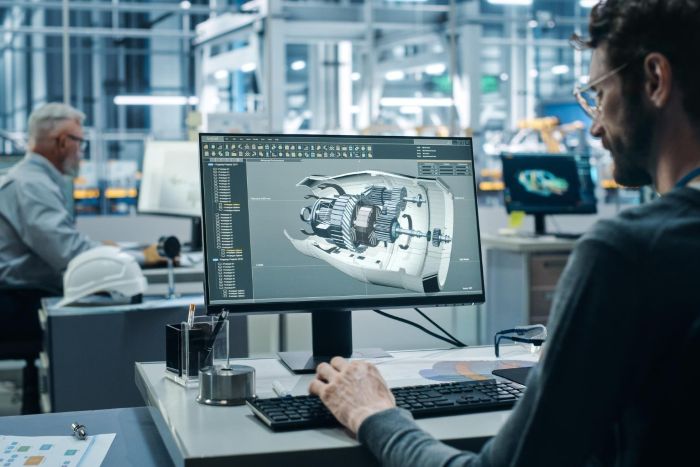
Seeing a product update instantly as options change removes guesswork. Buyers no longer must imagine how a different size, material, or component will affect the final product—they see it immediately. In manufacturing, where complexity often causes hesitation, this clarity is critical.
Visualization transforms configuration from a technical process into an intuitive experience. Buyers can rotate, zoom, and explore the product, gaining confidence that their selections match both functional and aesthetic expectations. The result is fewer misunderstandings and a stronger emotional connection to the purchase.
Managing Complexity Without Slowing Sales
Manufactured products rarely fit into a one-size-fits-all model. Dependencies, constraints, and technical rules are unavoidable—but they don’t need to be visible to the buyer.
A well-designed configuration system manages this complexity behind the scenes. Instead of overwhelming users with technical decisions, it guides them step by step. Invalid combinations are automatically prevented, while compatible options are suggested naturally. Engineering teams are protected from rework, and customers can self-serve with confidence.
The payoff is immediate: sales teams spend less time fixing orders and more time focusing on value-driven conversations.
Delivering A Modern Buying Experience
Today’s B2B buyers expect the same ease of use they experience in B2C—regardless of product complexity. Visual configuration delivers that experience without oversimplifying the product.
Buyers can explore options on their own schedule, compare alternatives, and instantly understand trade-offs in price, appearance, or performance. This level of transparency builds trust, especially for high-value or long-term investments.
When customers feel informed and in control, decisions happen faster and objections decrease.
Real Business Impact for Manufacturers
The value of product configurators extends well beyond user experience.
Leading manufacturing-focused platforms include:
- VividWorks – Known for enterprise-grade Visual CPQ, complex rule-based configuration, and high-fidelity 3D visualization built for real manufacturing use cases.
- Configure One – Focused on CPQ-driven configuration and pricing workflows for industrial manufacturers.
- Tacton – A strong CPQ provider for highly engineered, modular products.
- KBMax – Combines 3D visualization with CPQ logic, often used in dealer-driven sales environments.
- Salesforce CPQ (with 3D extensions) – Common in large enterprises where configuration is tightly integrated with CRM processes.
Manufacturers increasingly rely on mature 3D configurator platforms—such as those provided by VividWorks—that connect configuration logic with pricing, sales workflows, and production constraints. The strongest solutions go far beyond visuals, supporting real operational requirements rather than serving as marketing-only tools.
Key outcomes include:
- Higher conversion rates through interactive, engaging buying journeys
- Larger order values as upgrades and premium options become easier to understand
- Fewer production errors due to built-in validation rules
- Shorter sales cycles with instant pricing and specifications
- Improved operational efficiency through a single source of truth
In manufacturing, even small reductions in errors or cycle time can generate significant cost savings.
How Manufacturers Use Product Configurators Today
Adoption varies by industry, but the role remains consistent: bridging technical reality with customer expectations.
- Industrial equipment manufacturers use configuration systems to manage performance, compliance, and technical dependencies.
- Furniture and interior manufacturers rely on visualization to communicate dimensions, finishes, and materials with realism.
- Component and electronics manufacturers use configuration logic to ensure compatibility while simplifying complex assemblies.
In each case, the configurator becomes a critical link between engineering rules and the buying experience.
The Future of Digital Manufacturing Sales
As mass customization becomes standard, configuration-driven sales are no longer optional—they are foundational. Buyers expect speed, transparency, and personalization, and modern configurators deliver all three without increasing internal strain.
For manufacturers, this shift is about more than selling online. It’s about unifying sales, engineering, and production into a connected digital workflow. Companies that invest in configurators today aren’t just improving their websites—they’re future-proofing their entire sales process.
In an industry where complexity is unavoidable, product configurators turn that complexity into a lasting competitive advantage.