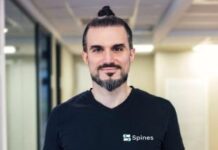
Don Weber Podcast Transcript
Don Weber joins host Brian Thomas on The Digital Executive Podcast.
Brian Thomas: Welcome to Coruzant Technologies Home of The Digital Executive Podcast.
Do you work in emerging tech, working on something innovative? Maybe an entrepreneur? Apply to be a guest at www.coruzant.com/brand.
Welcome to The Digital Executive. Today’s guest is Don Weber. Don Weber is a global communication strategist, human intelligence, or human expert, and executive coach whose life tells a story of survival, reinvention, and mastery.
For over 15 years, he worked in international intelligence operations across 90 plus countries, operating under multiple identities and navigating environments where one wrong move could have cost his life. During his years as a US government field operative under George Bush administration, Don gathered intelligence across South America, Africa, and Europe, working with organized crime figures, foreign agents, and volatile political networks.
Well, good afternoon, Don. Welcome to the show.
Don Weber: Hey, thanks for having me on.
Brian Thomas: Absolutely, my friend. I appreciate it and making the time. I know traversing time zones. I’m in Kansas City; you’re in San Luis Obispo can be quite challenging and I just appreciate that. Really, really do. So, thank you. If you don’t mind, I’m gonna jump right into your first question.
You spent more than 15 years operating in international intelligence across the Ninety plus countries under multiple identities. How did those high risk environments shape the way you understand human behavior and trust?
Don Weber: In a lot of ways. I mean, one of the big things I learned is, trust but verify.
And initially I was always very paranoid with people, but not in a bad way. Just to make sure one, I’m not gonna get hurt, the obvious kind of thing. The other thing is whatever information I’m getting. Real and always trying to verify that information. One of the weird things about me was that in that work, I became such a good liar.
It was amazing. It was just, it just became like automatic. I don’t know how I pulled it off, to be honest, for over the years, but I didn’t do like operations in 90 countries. I just traveled over 90 countries during those years. Because maybe I had to get, meet with somebody in a particular country that had some, knew something that I wanted to know for that was going on in another country.
I guess I could share something with you that wouldn’t be too, uh, touchy. But for example I was very busy or had a lot of things going on in Columbia, south America and the drug dealers. Used to launder their money a lot through Antwerp, through diamonds. It’s not a secret, and that markets started drying up.
So, what they would do is they’d have their drug money in Europe, they’d send it to Antwerp, buy diamonds and smuggle the diamonds from Antwerp to back to Columbia to South America. Sell those diamonds at the small discount, get their Colombian pesos or, or whatever. Invest that money back into drug pick up, pack up another shipment back to Europe.
And that was a cycle after a few years. That became more and more difficult for them because of the Kimberly process which was a process they put in place to stop blood diamonds, supposedly. But there’s other things that went along with that. And it didn’t have to do with money laundering, it had to do with monopolies.
But it got, that business became more difficult for the Colombian drug dealers and things. So, what they started doing is sending the money to China. So I became very interested in. What was going on with the money. And I wasn’t really interested in the Chinese; I was in China. I actually could care less about the Chinese, but I was interested what the Colombians were doing in in China.
And we’ve discovered this in the early two thousands. It was quite new. There have been a few other people, maybe in other agencies, other parts of the government that we were aware of it, but very few. So that
Brian Thomas: would give you a real, real life example. That’s amazing. Thank you so much for sharing that.
I think it’s important what I took away is, trust but verify or trust and verify. And that sounds very similar or kinda synonymous what I do in technology. Not as a podcast was necessarily, but been a lot of years in technology and, that trust verify is really big in cybersecurity as you know.
But I appreciate you explaining what you have to go through to track, criminals down in that criminal network. I know that’s very very daunting work and I appreciate what you did for our country and also sharing. So I’m gonna jump right into your next question, Don, you emphasize authentic communication rather than scripted leadership.
What does authenticity matter, or why does authenticity matter more now than ever in a world of constant pressure, performance, and perception management?
Don Weber: Genuine. Being genuine with people. What’s happening now, especially with all social media and everybody can pretend to be what they’re not. And you see a lot of that going on.
So, there’s a lack of authenticity. There’s lack of, uh, genuineness. Also curiosity about your other fellow human being. Uh, I don’t know if you remember Dale Carnegie, but he had a, you know, being curious about other people, but for not just out of a self from a selfish standpoint, but actually being interested in other people.
If you’re gonna be a leader, you’re gonna, you’re going to manage people. You want people to feel important, significant that they’re part of a team, but for real. Not that you’re just using them as a, a cog in a ach, in a machinery or something like that. So people feel that you actually value them, that you’re actually interested in them maybe in their personal life or, or their hobbies or whatever it is or in the challenges that they’re facing within that project and that you had take a genuine interest in them.
You’re gonna get a far better response most of the time. Than you are. If you’re just trying to fake it and you’re just, oh, this is what we’re supposed to do. This is the playbook. I went to a leadership class and they told me I have to do this, and then this, and then this, and then this, and all that stuff is great, but knowing when to do it, when to apply those skills or those techniques, and doing it in a real way, a genuine.
Brian Thomas: Thank you, I appreciate that. Sure. And absolutely I would agree with you working with many people over the years, leadership. I like how you talked about being genuine, authentic being empathetic, really caring about the other person in a conversation, I think goes a thousand miles.
And again, I do appreciate that. Dawn in intelligence work, reading people correctly can be the difference between success and disaster. What signals verbal or nonverbal do most executives consistently miss in high stakes conversations?
Don Weber: Well, they may not be aware that people there are, they’re gonna be around some people that are very, that observe.
And they observe the little things, right? When we talk about like nonverbal communication, people come out with this thing, oh well, they touch your nose or lying, or they do this, that means that. Or they do the other thing. It means the other thing, depending the context, the person, there’s a thing called baselining.
That’s the normal behavior of that person. Each person has their own. The normal behavior, and then you’re looking for deviations. We could go into a whole course here on nonverbal communication that takes a few hours, but I’ll try to keep it really simple. So, the idea is basically comfort, discomfort, nonverbal communication can.
Will, you can identify it pretty easily. So if I am an executive and I’m communicating a message to my team, right, and I don’t, let’s say really particularly like the message I have to communicate, but my higher ups told me have to do it, it as part of the strategy from the CEO or whatever the situation is, and that leaks through.
Some people will pick up on it some more than others. Usually this is a little ca uh, little thing to be aware of. Typically women, because they’re bio biology and, and millennia, uh, of. Development. Right? They’re much more apt at picking up those little nuances and those little details. And these things can be simply the way the eyes move.
It could be tick in the bottom eyelid. It could be hand gesture, an odd hand gesture, facial expression. It could breathing, it could be the pulse rate. Up here go. You start seeing the pulse going quicker. Depends on the person. Again, it’s, it is baselining how the person normally behaves and if they’re behaving differently.
I’m trying to think of, go into more, something more on that, but, so I think it’s important that if you be, believe what you’re communicating. When I worked in the intelligence world and I lied a lot in that work, I used to psychologically put myself that I believed that I was who I said I was, that I lived the life.
I said I lived thinking the way and even doing things that that person would do. It’s kinda like being an actor and method acting in a way, but really like living it.
Brian Thomas: Great. Okay, we’re gonna continue. So the last question of the day, Don, as we look ahead, what skills will define the next generation of effective leaders, especially as geopolitical tension, uncertainty, and human complexity continue to rise?
Don Weber: That’s a great question and I find it a little bit humorous because we think that we’re living in some like super strange period of history. And if we crack some history books and we look through history in the past, I mean, there’s been a lot of excitement over the last. 6,000. I mean, Romans, the Greeks, Babylonians, the, the Persian, Nazi Germany Napoleon uh, William of Orange when he went into the U.K.
There’s been a lot of excitement over the years, right? The thing that makes it different is technology, right? So, information flies a lot faster, disinformation goes a lot quicker, and that’s kind of the, the element there. That’s the wild card. But for make, for people in the future if they wanna be successful, I think the fundamentals don’t really change that much.
And it comes down to being able to communicate with other people, treating other people with respect, with dignity. There’s the old thing, you know, treat others the way you’d like to be treated. It’s the golden rule and it’s a lot, things are a lot more simple than coming up with all kinds of rules and regulations, and we’ve gotta follow this ESG concept and this other DEI thing and blah, blah, blah, blah, blah.
Just treat other people the way you’d like to be treated. If you just did that, it’s that simple. Life would be almost like paradise on earth. Unfortunately, it’s too simple for most people, a lot of people to follow. Shouldn’t say most, but for a lot of people to follow. But I think future leaders, they need to work on their communication skills.
People are too tied up, their phones, texting, all that kind of stuff. These are great tools, but I think people are far too reliant on those tools and that not enough of interpersonal contact interacting with people, especially we’re social creatures. Unless you change our DNA, that’s gonna stay that way.
Brian Thomas: No, I totally agree and I appreciate that. And it’s funny, we talk a lot about emerging technologies on the podcast here along with entrepreneurs and. Different guests like yourself. But at the end of the day, it’s those soft skills. And this is really what we like to highlight, especially we have a lot of leaders that come on, founders, et cetera, and the soft skills are so important in this world of ai.
The last, gosh, two years, it’s just been, everything’s been, we’re inundated with AI and those conversations, but we need to get back to the basics. The tools are great, as you mentioned. They’re, they’re there as a convenience, sometimes a crutch. But we do need to get back to communicating, interacting, treating people with respect and getting back to the basics.
Then we wouldn’t have to have all these new things that come up. We have to follow nowadays in our country. So I really do appreciate that, Don. It was such a pleasure having you on today, and I look forward to speaking with you real soon.
Don Weber: Righty. Well, thank you so much for your time, Brian, and look forward to seeing you and speaking with you in the near future as well.
Brian Thomas: Thank you. Bye for now.
Don Weber Podcast Transcript. Listen to the audio on the guest’s Podcast Page.