
In the past, the customer journey used to be linear and simple.
Customers seamlessly moved from the awareness stage to consideration, purchase, and retention. The journey was predictable and manageable.
Not anymore.
The average customer journey today is fragmented, multi-channel, and happening 24/7 across devices, time zones, and touchpoints.
That’s not something your team can manually keep up with.
The good news? AI agents put you back in control.
In the next few paragraphs, we break down how AI agents are improving outcomes at every stage of the customer journey—from first contact to long-term advocacy. You’ll also see how they’re helping early adopters pull ahead.
Key Takeaways
- The customer journey has shifted from linear to fragmented, requiring innovative solutions to manage complexity.
- AI agents transform the customer journey by enhancing speed, continuity, and control across all touchpoints.
- At each stage—from awareness to advocacy—AI agents provide instant responses, personalized information, and proactive support.
- By removing friction and engaging customers, AI agents improve conversion rates, retention, and long-term loyalty.
- Implementing AI agents allows businesses to scale efficiently without increasing workforce demands.
Table of contents
The Five Stages of the Customer Journey
Every customer follows a journey—from the moment they discover your brand to the point they become a vocal advocate. While the path is no longer linear, the core stages remain consistent.
Stage One: Awareness
This is where first impressions happen.
A prospect finds you through an ad, search result, referral, or social media content—and reaches out with questions.
Attention during this stage is brief and competition is high. Speed, clarity, and relevance determine whether curiosity turns into interest—or disappears entirely. This is the first place where AI agents transform the customer journey by responding instantly when interest appears.

Stage Two: Consideration
Here, prospects are comparing you to alternatives.
They want fast answers, personalized information, and reassurance that you understand their problem before they commit.
This means that slow responses or generic messaging can quietly push them toward a competitor.
Stage Three: Purchase
This is the decision moment.
Unfortunately, this stage is also where friction often kills deals.
Here, clear communication, timely follow-up, and confidence-building interactions make the difference between a closed deal and an abandoned one. AI agents help remove this friction by keeping buyers engaged and informed in real time.
Stage Four: Retention
Assuming a successful sale, the customer lifecycle doesn’t end there.
Post-purchase support, proactive outreach, and consistent engagement helps keep customers satisfied, reduces churn, and drives repeat business.
This stage is where lifetime value is truly built—or lost.
Stage Five: Advocacy

Happy customers are one of your best marketing assets—but only if they spread the word.
When customers feel supported, valued, and understood, they become your strongest growth channel.
Advocacy turns satisfaction into referrals, reviews, and repeat business, which fuels awareness all over again and this time with trust baked in.
Keep reading as we explore how conversational AI agents support all five stages.
How AI Agents Improve Each Stage of the Customer Lifecycle
Every stage of the customer lifecycle presents an opportunity—or a risk. Slow responses lose leads. Forgotten follow-ups kill retention.
Here’s how AI agents drive customers through each stage and the business impact companies see when they deploy them strategically under expert guidance.
Stage 1: Awareness — Capturing Attention Instantly
The manual problem
When customers reach out with questions after discovering your brand, they want answers fast. If they don’t get it, they move on to your competitor instead.
Unfortunately, manual teams can’t be everywhere at once.
Inquiries may come in after hours or during peak times when your team is slammed. And if follow up takes too long, interest cools, or worse—prospects convert with the competition.
How AI agents power the awareness stage
AI agents respond the second interest shows up. They answer questions instantly 24/7, while qualifying intent in real time.
And instead of just collecting contact info, they ask the right questions, deliver useful answers, and move the conversation forward immediately.
Conversational AI agents in sales do not just acknowledge interest. They act on it.
The result
- More first-touch conversions
- Zero leads lost to slow response times
- Instant brand credibility from the first interaction
Stage 2: Consideration — Nurturing at Scale
The manual problem
Once prospects are interested, they need clarifications that boost their confidence to buy.
Yet, your sales reps can’t personally educate every prospect who’s “just looking.” And while your team is focused on active deals, warm prospects may stall quietly.
How AI agents power the consideration stage
Voice AI agents step in as always-on product experts. They explain features, compare options, and walk prospects through real use cases in natural conversation.
They also handle objections in real time (whether it’s pricing, timelines, or competitor offers), booking trials or demos for qualified prospects without waiting on a rep.
In addition, AI agents follow up consistently without procrastinating or burning out.
The result
- Shorter sales cycles
- Higher demo and trial show-up rates
- Sales teams spending time on buyers—not tire-kickers
Stage 3: Purchase — Removing Friction
The manual problem
Deals don’t die because of lack of interest. They die because of friction.
Unanswered questions. Second thoughts that never get addressed. Inconsistent follow-up on abandoned purchases.
How AI agents power the purchase stage
AI sales agents stay with the buyer through the finish line. They guide customers through the purchase, clarify terms, confirm details, and answer last-minute questions in real time.
And when a transaction stalls, they follow up immediately. Not days later. They also suggest relevant upsells or add-ons naturally, without disrupting momentum.
The result
- More completed purchases
- Fewer abandoned carts and stalled deals
- Higher average order value
Stage 4: Retention — Sustaining Engagement
The manual problem
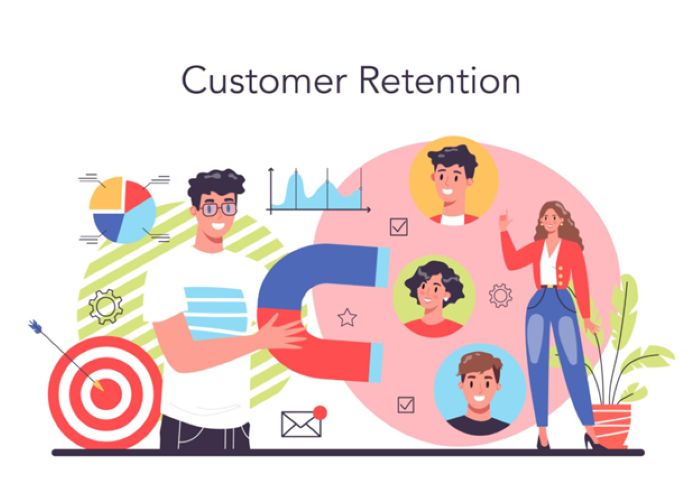
After the sale, engagement often drops off. Teams chase new leads, while existing customers are left feeling forgotten.
With manual check-ins, renewals, and follow-ups almost impossible to scale, churn builds quietly while no one’s watching.
How AI agents power the retention stage
AI agents maintain ongoing, proactive engagement. They check in after purchase, monitor satisfaction, and surface support needs early.
They also handle renewal reminders, address objections before churn happens, and re-engage dormant customers with personalized outreach.
This means potential issues get spotted before customers disengage, not after they’re gone.
The result
- Lower churn
- Higher renewal rates
Stronger customer relationships without added workload
Stage 5: Advocacy — Turning Customers into Promoters
The manual problem
Most happy customers never get asked to advocate. Not because they wouldn’t—but because teams forget, or don’t have time.
Reviews, referrals, and testimonials slip through the cracks. And word-of-mouth growth goes untapped.
How AI agents power the advocacy stage
AI agents ask at the right moment—after wins, renewals, or successful outcomes.
They run satisfaction surveys, NPS calls, and feedback collection automatically and at scale. And of course, natural brand promoters get identified and routed into referral programs or case study opportunities.
The result
- Improved brand visibility
- Increased conversions
- Revenue growth driven by customers who already believe in you
The Big Picture
he customer journey isn’t broken into neat stages anymore, and optimizing one step at a time is no longer enough.
Thankfully, AI agents don’t just improve individual moments. They stitch the entire journey together.
From first touch to long-term loyalty, AI agents deliver a consistent, personalized experience 24/7—adapting to each customer’s history, behavior, and intent in real time. This automated continuity ensures customers keep moving through lifecycle journeys, while freeing your team to work on higher value tasks.
Why wait?
Businesses deploying AI agents move faster, retain more customers, and scale without proportional headcount increases.
Ready to supercharge your customer journey? Deploy Pete & Gabi today.
FAQs
What are AI agents and how do they improve the customer journey?
AI agents are conversational AI tools that handle customer interactions across voice and chat—automating responses and personalizing experiences at scale. They improve the customer journey by eliminating gaps manual teams create, such as slow response times, inconsistent follow-up, and missed opportunities.
Can AI agents really handle complex customer interactions?
Yes—when they’re built for it. Advanced AI agents use natural language processing and contextual awareness to handle nuanced conversations, address objections, and adapt based on customer tone and behavior.
What happens when an AI agent can’t answer a customer’s question?
Good AI agents know when to escalate. When a conversation requires human expertise, complex pricing negotiations, technical troubleshooting, or emotionally sensitive issues, the AI hands off to your team with full context.
How do AI agents handle customer data and privacy?
Reputable AI platforms comply with GDPR, CCPA, and industry-standard data protection regulations. Customer data is encrypted, access is controlled, and conversations are logged for transparency and compliance auditing.