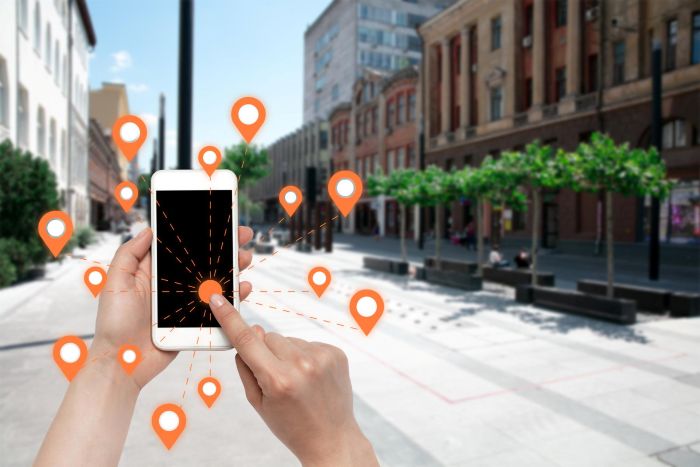
Why Local Information Is Broken and Why Tech Can Help
Sirens wail somewhere nearby. A resident in Somerset looks out the window, sees nothing obvious, and, leveraging technology, reaches for their phone. One neighborhood app hints at “something big” a few blocks away. A social feed resurfaces an old photo from a completely different incident. The city website still leads with last month’s construction notice. Ten minutes and five apps later, they know more opinions than facts-and the only solid takeaway is that local information is a mess.
This article follows that path. It maps the fractured local news ecosystem residents live in today, distills the principles behind trustworthy local information, introduces the core technologies that can connect communities more intelligently, and ends with concrete steps any organization can take to launch or upgrade a tech‑enabled local information platform.
Key Takeaways
- Local information is currently messy due to reliance on various apps, outdated data, and uncoordinated systems.
- Residents often create their own unofficial channels, leading to a reliance on mixed sources that can cause confusion.
- Trustworthy local information should emphasize accuracy, timeliness, context, transparency, and accountability.
- Effective local platforms require multi-channel delivery, real-time data integration, and clear ownership of updates.
- By addressing community needs and prioritizing critical updates, organizations can transform local information systems into reliable civic resources.
Table of contents
- Why Local Information Is Broken and Why Tech Can Help
- The New Local Information Ecosystem
- Principles of Accurate, Trustworthy Local Information
- Leveraging Technologies for Connecting Communities
- Designing Local Platforms Around Real Community Needs
- Use Cases – Leveraging Technology from Safety Alerts to Everyday Services
- Conclusion – Building Resilient, Well-Informed Communities with Technology
The New Local Information Ecosystem
Local information has escaped the confines of town‑hall notice boards and local newspapers. It now lives in a loose network of feeds, apps, and informal conversations. For anyone trying to improve how a community shares critical updates, understanding that network is the first real job.
Across different regions and demographics, the analyst keeps seeing the same behavior: residents assemble their own unofficial “stack” of channels, switching between them depending on the topic and the urgency. It kind of works on quiet days. Under pressure, the gaps and contradictions reveal themselves very quickly.
Channels Residents Rely On
Most people patch together their picture of “what’s happening around me” from a mix of:
- Neighborhood apps and forums, where posts about lost pets, suspicious activity, road closures, and school fundraisers pile up.
- Social media groups that act as part community notice board, part rumor engine.
- Messaging threads on SMS, WhatsApp, and similar tools that spread hyper‑local information between families, co‑workers, and building residents.
Alongside these sit more formal channels:
- City and county websites posting official notices, agendas, and service alerts.
- Local news outlets trying to cover civic stories and breaking events.
- Physical touchpoints-posters in lobbies, flyers in shop windows, printed newsletters from schools or associations.
- One‑way alerts like robocalls, email blasts, and text notifications.
From the company’s analytics standpoint, moments of stress-storms, elections, safety scares-light up this entire ecosystem. Traffic spikes hit different channels in different orders. That pattern exposes not only what people follow, but also which tools they instinctively trust when leveraging technology really matters.
Pain Points: Noise, Gaps, and Outdated Data
The cracks in this ecosystem are easy to spot once you look for them.
A community meeting time is listed as 6 p.m. on one app, 7 p.m. on another, and doesn’t appear at all on the official calendar. A restaurant that closed six months ago still shows as “open now” in multiple directories. A single unverified post about a possible threat is shared dozens of times before any official statement appears, leaving half the neighborhood anxious and the other half rolling their eyes.
These failures rarely come from bad faith. They come from:
- Uncoordinated systems that never talk to each other,
- Manual updates made by over‑stretched staff,
- No shared standards for how local information should be structured or updated.
Everyone is publishing; almost no one is syncing. Residents are forced to become their own fact‑checkers, cross‑referencing four or five sources for even simple questions like “Is the road actually closed?” That constant uncertainty slowly drains confidence from every channel in the mix.

Principles of Accurate, Trustworthy Local Information
Before anyone chooses an app, builds a dashboard, or signs a vendor contract, there’s a simpler question worth asking: if local information were “working,” what would that look like to an ordinary resident?
The answers tend to come back to the same five ideas: accuracy, timeliness, context, transparency, and accountability. Leveraging technology for communities that ignores these will look slick for a while, then quietly lose its audience.
Accuracy, Timeliness, and Context
Accuracy is more than “generally correct.” For local data, it means:
- Clear boundaries-exact streets, buildings, or routes affected.
- Concrete timings-start and end dates or “until further notice,” not vague “soon.”
- Verified sources-information anchored in identifiable departments or organizations.
Timeliness sits right next to that. An update about a water outage that arrives three hours after the taps run dry is less useful, even if every detail is technically accurate. Routine information-like library hours, park closures, and event times-should be refreshed frequently enough that residents stop bumping into stale listings.
Context is the piece that often gets skipped. Residents don’t just want to know what is happening; they want to understand:
- Why it’s happening,
- Whether they personally need to do anything,
- When they can expect the next review or update.
A short explanation and a simple “here’s what this means for you” turns raw facts into something people can actually act on.
Transparency and Accountability
Trust grows when people can tell where information comes from and what happens when it changes.
Transparency shows up in small design choices:
- Every update clearly labels its source: city agency, utility, school, nonprofit, local business, or community member.
- Timestamps distinguish between “posted at” and “last confirmed at.”
- Major edits or corrections are visible, not quietly buried.
Accountability is about what happens when things go wrong. Even the best systems will occasionally share outdated or incomplete information. Projects that succeed long term don’t pretend otherwise. They:
- Acknowledge errors,
- Correct them in public,
- Explain, briefly, how issues will be avoided next time.
The analyst has seen again and again that residents are surprisingly forgiving if they see a clear trail of corrections and communication. Silent edits and disappearing posts, on the other hand, train people to screenshot everything and believe very little.
Leveraging Technologies for Connecting Communities
With principles in place, technology choices become less about buzzwords and more about fit. The question shifts from “What’s the newest platform?” to “Which tools help us keep information accurate, timely, contextual, and transparent?”
In practice, robust local information systems tend to stack three layers:
- Delivery channels (how updates actually reach people),
- Data plumbing (how information stays current),
- People and place intelligence (who is involved and where).
Mobile, Messaging, and Push Infrastructure
For residents, “the system” is whatever lights up their screen.
Some will install a dedicated neighborhood or city app and happily receive push notifications. Others will never download anything but are very reachable by SMS. Plenty rely on email, or follow local pages on social platforms without thinking of it as a “channel” at all.
Relying on one delivery method guarantees blind spots. A more resilient approach to leveraging technology:
- Sends the same core update through multiple rails (push, SMS, email, web, social),
- Tailors the presentation to each format,
- Keeps content consistent so there’s a single factual backbone behind it all.
This “multi‑channel, single message” model means a resident who loves apps and a resident who only reads texts can both receive a road‑closure notice in ways that fit their habits.
Data Pipes: Open Data, APIs, and Integration
Behind the user interface, the hard work is data movement.
Instead of manually copying updates from spreadsheets or email chains into different apps, mature local information platforms pull straight from:
- Open data feeds published by cities, transit agencies, and utilities,
- APIs for weather, hazard alerts, and service status,
- Business and facility registries that keep track of openings, closures, and contact details.
These machine‑readable feeds act like arteries. They carry fresh information into the platform automatically, so that changes in one authoritative source cascade quickly into resident‑facing channels.
Humans still play a crucial role-curating, prioritizing, adding plain‑language explanations-but they’re working with live data rather than trying to update everything by hand.
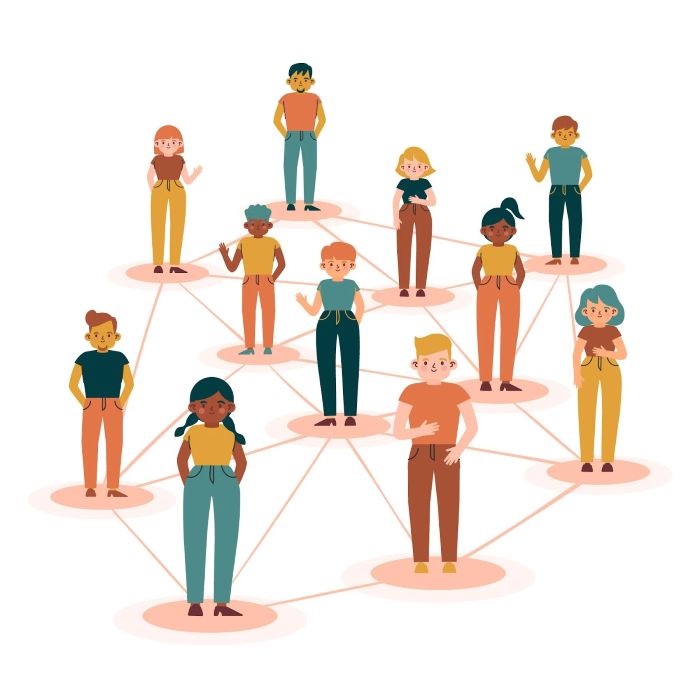
People and Place Intelligence
The final piece links updates to real people and real locations.
People search and ownership data can answer questions like:
- Which landlord or company is actually responsible for this building?
- Which department owns this project or closure?
- Is this business listing connected to a verified owner, or is it an orphan entry?
Place intelligence-clean address data, parcel information, reliable geocoding-ensures that when an alert says “your block,” it really means your block, not the next one over.
For residents, seeing that an update is tied to a specific owner, department, or verified business increases confidence. For organizations that are leveraging technology, having accurate people and place data before publishing a notice reduces misdirected blame and helps route questions to the right contacts from the start.
Designing Local Platforms Around Real Community Needs
Even the best technical stack can fall flat if it’s not built around the way people actually live and communicate. A platform that tries to drag everyone into a single new app or assumes all residents behave the same will struggle.
The analyst’s rule of thumb in leveraging technology is simple: start with lived experience, not features. Who needs what, when, and how do they already talk to one another?
Mapping Personas and Journeys
Inside any city block, there are multiple “local information personas”:
- Parents juggling school calendars, childcare, and activities,
- Seniors who may prefer print or simple phone‑based updates,
- Commuters focused on roads, parking, and transit,
- Shift workers with off‑peak schedules,
- Small business owners watching foot traffic, permits, and inspections,
- New arrivals trying to figure out basic services and rights.
Each group has its own rhythms and preferred channels. One person checks a neighborhood app three times a day; another trusts only emails from the city; a third mainly hears about changes via a church group or community association.
Designing with these journeys in mind means:
- Offering multiple ways into the same information (apps, web, SMS, print),
- Making sure critical updates reach everyone, even if they never download anything new,
- Avoiding “app‑only” thinking that accidentally leaves entire segments in the dark.
Prioritizing Use Cases, Not Features
It’s tempting to build an all‑singing, all‑dancing platform from day one: chat, polls, social feeds, badges, classifieds, leaderboards. In reality, the local systems that earn trust usually do a few high‑value jobs extremely well first.
Common starting use cases include:
- Service disruptions: water, power, transit, waste collection.
- Safety alerts: severe weather, road closures, major incidents.
- Facility and hours information: clinics, schools, libraries, parks.
For each use case, the design focuses on:
- Where the data comes from,
- Who approves it,
- How quickly it flows to residents,
- What the experience looks like on different channels.
Once residents see that the platform nails those basics-“When something important happens, I hear about it fast and clearly”-it becomes much easier to layer on additional services without overwhelming anyone.
Use Cases – Leveraging Technology from Safety Alerts to Everyday Services
Principles and architecture become real when viewed through everyday scenarios. In almost every community, a familiar set of “local information moments” repeats itself. Getting that right is where technology for communities proves its worth.
The analyst typically groups them into three clusters: public safety, city services and infrastructure, and local commerce and support.
Public Safety and Emergency Communication
Safety is where trust is either built or broken fastest.
In a good system, an emergency alert doesn’t start as a rumor in a group chat. It starts as a verified update, formatted clearly, and pushed quickly to the people who need it. That might involve:
- Geo‑targeted notifications within a certain radius,
- Plain‑language descriptions of what is happening,
- Very specific guidance on what residents should do-or not do.
For example: “There is a gas leak at [exact intersection]. Fire crews are on scene. Residents on [list of streets] should stay indoors and close windows until 4:00 p.m. No evacuation is currently required.”
Even in high‑stress situations, that combination of clarity and restraint reduces panic, limits the spread of misinformation, and gives people a sense that someone competent is in charge of communication, not just the incident itself.
City Services, Infrastructure, and Events
Most local information is less dramatic but still matters to daily life. Trash pickup shifts by a day because of a holiday. A bridge closes overnight for maintenance. A block party reroutes traffic. A school board meeting moves online at the last minute.
When these updates are scattered across PDFs, social posts, and taped signs, people understandably miss them. By leveraging technology, a unified system can:
- Pull service changes from official feeds,
- Overlay them on maps and calendars,
- Send targeted reminders to affected streets or user groups.
The payoff shows up in small, human ways: fewer missed bins on collection day, fewer frustrated commuters stuck at surprise closures, more residents showing up to meetings that affect them.
Local Commerce and Social Support
Finally, there’s the web of businesses and community resources that keep neighborhoods running.
Accurate listings-opening hours, accessibility, payment options, ownership-help residents choose local options with confidence. For small businesses, being right or wrong in those listings has a very real impact on revenue. For residents, an up‑to‑date directory of clinics, food banks, childcare centers, shelters, and social services can be life‑changing, especially in difficult times.
When a local information platform treats these as core data, not an afterthought, it becomes more than a notification system. It turns into a living guide to the community’s economic and social infrastructure.
Conclusion – Building Resilient, Well-Informed Communities with Technology
Local information will probably always be a bit messy. Cities change, people move, and unexpected events never fit neatly into predefined boxes. But the gulf between today’s fragmented, rumor‑driven experience and a more coherent, trustworthy system is wide-and bridgeable.
By understanding the current ecosystem of channels, grounding efforts in clear principles of accuracy and trust, leveraging technology that reinforce those principles, and designing around real community needs, organizations can turn local information from a constant frustration into shared civic infrastructure. Governance, measurement, and a thoughtful rollout plan keep that infrastructure strong over time.