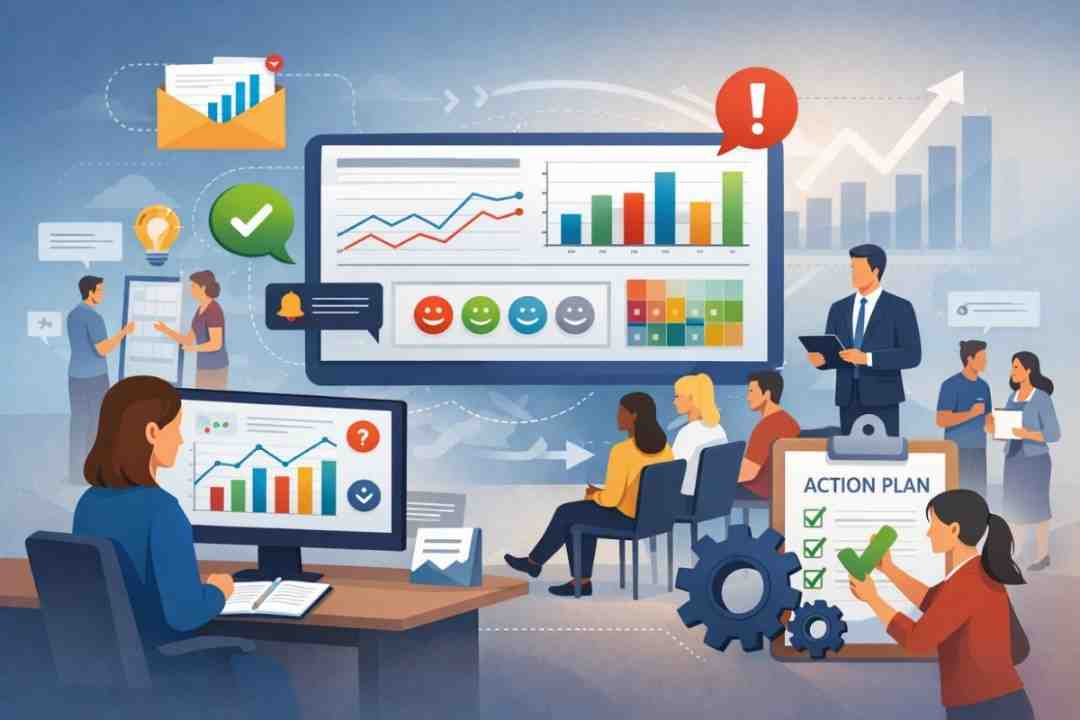
Organizations today are swimming in feedback. Employee surveys, check-in meetings, performance reviews, and suggestion boxes all offer pieces of the puzzle. Yet despite this steady flow of input, only 23% of employees globally are engaged at work, according to Gallup. This gap highlights a common challenge. Many businesses collect feedback regularly but struggle to turn it into meaningful change.
Real-time data, collected and interpreted through an employee experience management platform, offers a more straightforward path forward. It transforms employee input from a backlog of to-dos into a continuous flow of insights that guide smart, timely action.
Table of contents
Moving Beyond the Annual Survey
Annual engagement surveys have long been the standard tool for gathering employee sentiment. More recently, researchers at The Engagement Institute found that over 80% of global organizations regularly survey their employees, with a growing number administering pulse surveys throughout the year. While this shift reflects a more substantial commitment to listening, many organizations still struggle to translate frequent feedback into timely, meaningful action.
Real-time data closes that gap. Instead of waiting for an annual pulse check, organizations can gather quick insights weekly or even daily. Short, focused questions delivered through digital tools provide immediate snapshots of how people feel, what they need, and what might be getting in the way of their success. Leaders can then make informed decisions that match the current moment, not those from months ago.
With timely feedback, leaders are better equipped to act early. A dip in morale, rising stress levels, or confusion around priorities can be identified and addressed before they become larger problems, such as disengagement or turnover. Over time, this responsiveness also reinforces trust. Employees see that their input leads to prompt attention, not delayed reactions months later. In practice, real-time insight enables organizations to stay aligned with their workforce, adapt faster, and make decisions that reflect what is actually happening on the ground.
Seeing the Story in the Signals
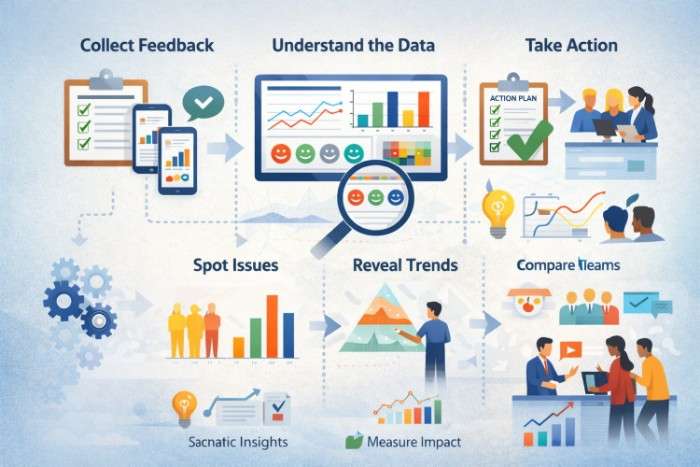
Collecting data is only the beginning. The key to unlocking its value lies in identifying patterns and understanding their meanings. A modern employee experience management platform uses dashboards and visual summaries to help managers interpret results without requiring advanced analytics skills. It becomes easier to spot trends across departments, track changes over time, and compare experiences across different roles or regions.
For example, if one team consistently reports uncertainty about goals or expectations, it may indicate gaps in communication, alignment, or coaching. If feedback from across the organization shows a gradual decline in motivation, it could indicate broader cultural, leadership, or operational challenges. When these signals are identified early, leaders can move beyond assumptions and focus on the right conversations and interventions. Over time, this data-driven understanding helps organizations address root causes rather than symptoms, leading to more sustainable improvements in engagement and performance.
Acting on What Matters
Real-time feedback makes it easier to take action, not by adding pressure, but by offering clarity. When organizations know what their people are experiencing, they can prioritize the most critical issues. More importantly, they can tailor their responses to what actually works for their team.
In many cases, the right response is relatively simple. Repeated comments about long or unfocused meetings may prompt a new approach to team check-ins or clearer agendas. In other situations, patterns in feedback can point to more structural needs, such as improving onboarding processes, strengthening manager training, or rethinking how recognition is delivered. Whether the change is small or organization-wide, its impact comes from responding in ways employees can clearly see and experience in their day-to-day work.
Closed-loop feedback systems play a critical role in sustaining this momentum. When organizations share what they have learned and explain the actions they plan to take, feedback becomes a two-way exchange rather than a one-sided request. This transparency reinforces trust, demonstrates that employees’ input leads to meaningful outcomes, and encourages ongoing participation. Over time, it helps build a culture where listening and acting on feedback becomes part of how the organization operates, not an occasional initiative.
Empowering Managers with the Right Tools
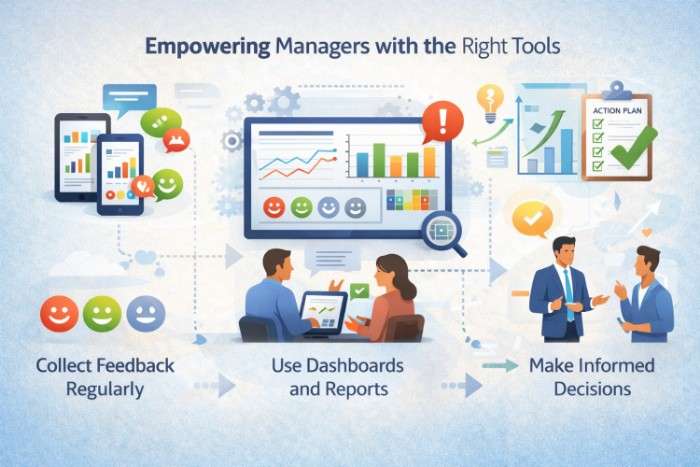
People leaders play a critical role in turning data into action. Yet many managers lack the tools or confidence to interpret feedback effectively. Employee experience platforms are designed to address this challenge. They provide actionable recommendations, highlight emerging issues, and often include templates or best practices for responding.
By making insights easier to understand and apply, these tools reduce the burden on individual managers. They also help ensure consistency across the organization. Instead of a few teams making changes while others remain stagnant, the entire company moves forward together.
Training managers to act on feedback is equally important. When leaders know how to have constructive follow-up conversations and model openness to input, they create a culture of responsiveness. Real-time data supports this process by giving managers the information they need to act quickly and appropriately.
Building a Culture of Continuous Improvement
At its best, employee feedback is not a one-time initiative. It is part of an ongoing conversation between employees and leadership, a loop of listening, responding, and learning. Organizations that embrace this mindset foster cultures that are both resilient and adaptable.
Continuous improvement does not mean constantly making significant changes. It means staying aware, staying responsive, and being willing to adjust in small, meaningful ways. Real-time data enables this by making it easier to track work and where attention is needed.
Over time, this approach builds a sense of shared ownership. Employees feel empowered to speak up, and leaders feel equipped to respond. The result is a more connected, informed, and effective organization.
From Feedback to Forward Momentum
Turning feedback into action is no longer a matter of intention. It is a matter of systems. Without structure, even the most honest feedback risks being overlooked or forgotten. With the right tools in place, organizations can consistently transform insights into outcomes, support their people more effectively, and navigate change with greater confidence and precision.
Employee experience platforms help bring this vision to life by creating a structured, repeatable process for listening, analyzing, and responding. They centralize feedback from multiple touchpoints, such as surveys, pulse checks, onboarding experiences, and exit interviews, and translate it into clear signals leaders can act on. By making data timely, accessible, and actionable, these platforms reduce guesswork and replace assumptions with evidence-based decision-making.
More importantly, they enable a closed-loop approach to feedback. Managers can identify issues, take targeted action, and then measure whether those actions have made a real difference. Over time, this builds accountability and trust. Employees are more likely to share honest input when they see that their voices lead to visible improvements rather than static reports.
In a workplace where expectations are shifting, and people want to feel heard, valued, and supported, this foundation becomes critical. It strengthens alignment between leadership and teams, promotes continuous improvement, and helps organizations adapt before minor issues become larger problems. In that sense, employee experience systems are not just operational tools. They are a core part of how modern organizations build resilient cultures and stronger teams.