The world of video content is changing faster than ever. Brands, creators, educators, and studios are no longer limited by language barriers thanks to AI dubbing. This technology uses machine learning to translate and voice-over videos in multiple languages with remarkable accuracy. What used to take days of recording sessions and expensive voice actors can now be accomplished in minutes.
If you’ve been exploring ways to make your content multilingual, tools like the Free AI Video Dubbing Tool have made professional-quality dubbing accessible to absolutely anyone. And when combined with creative add-ons, such as an AI sound effect generator, creators can now produce studio-level audio without complex equipment. It’s no surprise that Forbes expects AI video tools to help fuel more than 1.1 billion creators by 2032, a clear sign that multilingual, AI-powered content is becoming the new standard.
In this article, we’ll break down how AI dubbing works, why it’s becoming a global necessity, provide real-world examples, and offer practical tips to help you get started.
Key Takeaways
- AI Dubbing uses machine learning to translate and voice-over videos in multiple languages quickly and accurately.
- This technology lowers costs and shortens the time needed for dubbing, making it accessible to all creators.
- AI Dubbing ensures consistency across videos and enables creators to reach global audiences effectively.
- Various industries, such as e-learning and corporate training, are already leveraging AI Dubbing for better engagement and inclusivity.
- With tools like the Free AI Video Dubbing Tool, users can easily produce multilingual content, enhancing its reach and impact.
Table of Contents
- What Exactly Is AI Dubbing?
- Why AI Dubbing Matters in 2025
- How AI Dubbing Tools Actually Work
- Where AI Dubbing Is Being Used Today
- Benefits of AI Dubbing You Should Know
- Real-World Example: Turning a Single Video Into 12 Versions
- Actionable Tips for Using AI Dubbing Effectively
- AI Dubbing vs. Traditional Dubbing: What’s Better?
- Will AI Replace Human Voice Actors?
- Conclusion: The Future of Content Is Multilingual, and AI Dubbing Makes It Possible
What Exactly Is AI Dubbing?
AI dubbing uses artificial intelligence, specifically deep learning, speech synthesis, and natural language processing, to translate spoken dialogue into another language and deliver it with lifelike voice output. With a Free AI Video Dubbing Tool, you can easily transform your videos without the need for traditional dubbing, which requires human actors to re-record every line. AI systems can:
- Identify speech in the original video.
- Translate it into the target language
- Generate a natural-sounding voiceover.
- Match the timing, tone, and emotional delivery.
The result? Multilingual videos are created in a fraction of the time and at a fraction of the cost.
Why AI Dubbing Matters in 2025
We’re living in a global content economy. A single short-form video can reach audiences in 20+ countries within hours but only if they understand it.
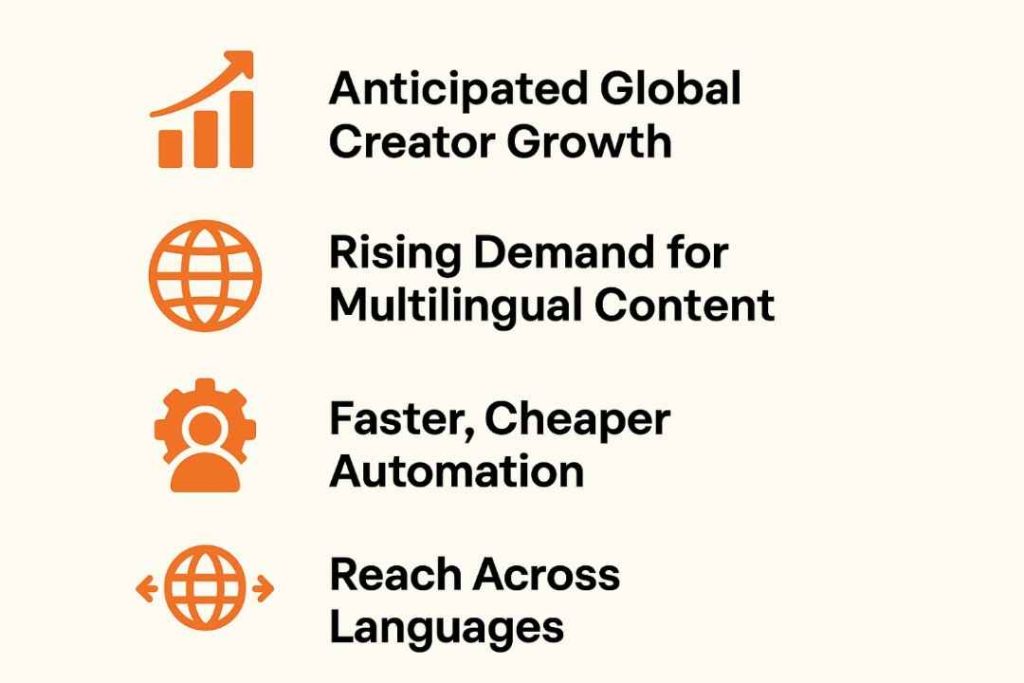
Here’s why AI dubbing has become indispensable:
1. Global Reach for Every Creator
A fitness coach in Egypt, a teacher in India, or a beauty influencer in Mexico can now share content across markets without hiring translators or voice actors. AI breaks the language barrier for small creators and global brands alike.
2. Cost-Effective Production
Traditional dubbing involves script adaptation, hiring talent, studio time, editing, and mixing.
AI reduces this process from thousands of dollars to near-zero cost.
3. Fast Turnaround for Time-Sensitive Media
News videos, product launches, tutorials, and trend-based content need rapid distribution. AI dubbing can create multiple language tracks in minutes.
4. Consistency Across All Videos
Human voice actors can vary between projects. AI maintains consistent tone, pitch, and quality across episodes, series, and campaigns.
How AI Dubbing Tools Actually Work
Understanding the process helps you use it more effectively.
Step 1: Speech Recognition
The system listens to the original audio and converts the spoken dialogue into text. Advanced tools accurately interpret accents, background noise, and speech pace.
Step 2: Smart Translation
The text is translated into the target language using AI language models that understand context, tone, and meaning, not just literal keywords.
Step 3: Voice Synthesis
AI generates a natural-sounding voice track. Today’s models can replicate emotions such as excitement, calm, and urgency.
Step 4: Automatic Syncing
The dubbed audio is aligned with the video’s lip movements and timing, making it feel far more natural.
Tools like the Free AI Video Dubbing Tool simplify this entire workflow into a single upload-and-export process.
Where AI Dubbing Is Being Used Today
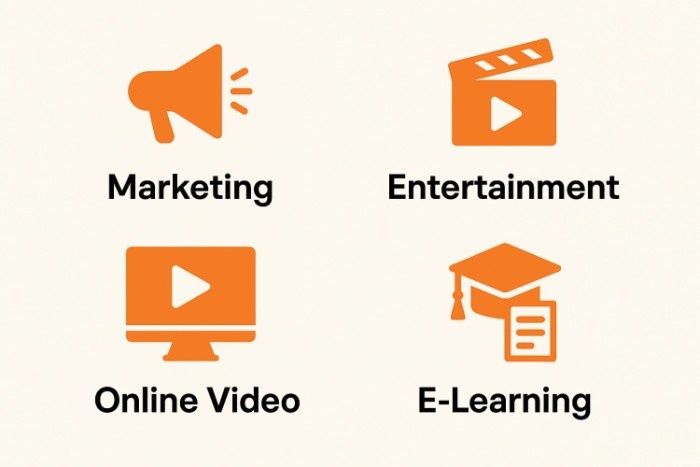
AI dubbing isn’t just a tech trend; it’s already transforming many industries.
1. YouTube & Social Media Creators
Influencers are using AI to dub content into Spanish, French, Arabic, and Japanese, 10Xing their audience reach. Some creators saw subscriber growth skyrocket after adding multilingual versions of their videos.
2. E-Learning & Online Courses
Instructors can turn a single-language tutorial into a global course. AI dubbing ensures educational content is more inclusive and accessible.
3. Corporate Training
Companies use AI dubbing for onboarding videos, safety training, product demos, and HR announcements across multinational teams.
4. Film & Short Documentaries
Independent filmmakers now use AI to dub their work in multiple languages without massive budgets.
5. Marketing & Advertising
Brands can dub product videos, landing-page videos, and testimonials to run ads in different regions.
Benefits of AI Dubbing You Should Know
✔ Faster Than Manual Dubbing
Hours of studio work can be done in minutes.
✔ Significantly Lower Costs
Especially for small creators or startups.
✔ Multilingual at Scale
Produce dozens of language versions at once.
✔ Emotionally Rich Voices
AI voices are no longer robotic; they sound human, expressive, and tailored to content style.
✔ Accessibility Boost
Translated, dubbed content supports viewers with language limitations or reading difficulties.
Real-World Example: Turning a Single Video Into 12 Versions
Imagine you post a product review in English. Using AI dubbing, you can create:
- Spanish
- Arabic
- Hindi
- French
- Indonesian
- Portuguese
- German
- Italian
- Japanese
- Turkish
- Korean
- Vietnamese
Within minutes, your content now speaks to billions of new potential viewers. Creators who adopted this strategy saw:
- 4–10X growth in impressions
- Higher watch time
- More engagement from global audiences
- Increased monetization
Actionable Tips for Using AI Dubbing Effectively
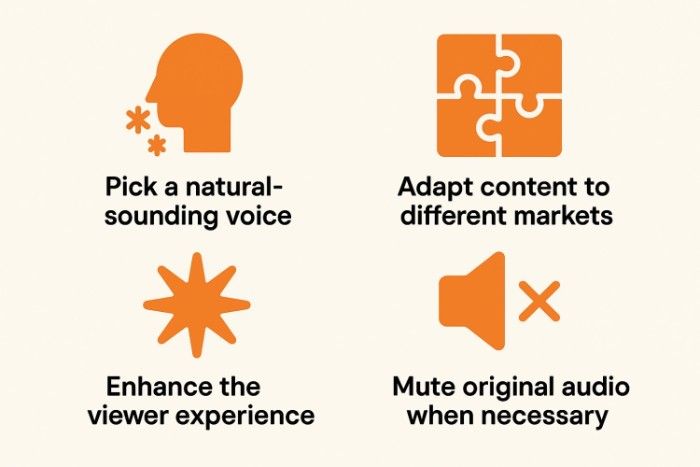
1. Keep Your Original Audio Clean
The AI performs best when your input audio is clear. Use a quiet room or a basic microphone.
2. Speak at a Moderate Pace
Speaking too fast can affect translation accuracy. A steady pace ensures better lip-syncing in the final version.
3. Choose the Right Voice Style
Different tools offer voices that sound cheerful, formal, deep, or conversational. Choose a tone that matches your brand.
4. Use AI Sound Effects for Creative Projects
If your videos need ambiance or audio design, pair your dubbing with an AI sound effect generator.
It helps enhance scenes with:
- Nature sounds
- Transitions
- UI beeps
- Footsteps
- Background ambience
This makes your content feel polished and cinematic.
5. Test Multiple Languages
Even if you’re targeting one region, experiment with others. You never know where your content might go viral.
6. Always Review Before Publishing
AI is powerful, but a quick human check ensures everything sounds smooth, culturally appropriate, and emotionally accurate.
AI Dubbing vs. Traditional Dubbing: What’s Better?
| Feature | AI Dubbing | Traditional Dubbing |
|---|---|---|
| Speed | Minutes | Days/Weeks |
| Cost | Very Low | High |
| Consistency | Extremely consistent | Varies |
| Emotion & Nuance | Improving rapidly | Excellent |
| Scalability | Unlimited | Limited by budget |
AI dubbing wins for most everyday use cases. Traditional dubbing still excels in high-budget movies where nuanced acting is essential. But for online content, AI is becoming the industry standard.
Will AI Replace Human Voice Actors?
Not entirely.
AI dubbing is ideal for:
- Short videos
- Educational content
- Product demos
- Marketing
- Social media
But emotional storytelling, animated movies, and character-driven scripts still benefit from human performance. In reality, AI is giving voice actors new tools and expanding the industry rather than eliminating it.
Conclusion: The Future of Content Is Multilingual, and AI Dubbing Makes It Possible
AI dubbing is no longer a futuristic idea; it’s a present-day superpower for creators, brands, educators, and businesses. With intuitive tools like the Free AI Video Dubbing Tool, anyone can turn a single-language video into a global asset. And when combined with enhancements from an AI sound effect generator, your content gains a new level of polish and realism.
Whether you’re a YouTuber trying to grow, a company training employees worldwide, or a filmmaker sharing your vision, AI dubbing opens the door to audiences you could never reach before.
The sooner you embrace it, the faster your content can go global.