Many people today are trying to make eco-conscious choices that fit into their everyday lives rather than forcing dramatic lifestyle changes. Recycling, conserving energy, and reducing waste are important first steps, but they only go so far on their own. Building an eco-friendly future requires deeper, systemic shifts driven by innovation, smarter production methods, and long-term thinking. Without meaningful progress in eco-centric technology, even the most well-intentioned individual efforts can only make a limited impact.
That’s where modern innovation comes in. Across industries such as construction, transportation, manufacturing, and energy, new solutions are emerging that challenge how resources are used and wasted. These developments are not theoretical concepts anymore—they are practical tools shaping how societies function. Below are several major innovations that play a critical role in moving us toward an eco-friendly future.
Key Takeaways
- An eco-friendly future requires systemic shifts through innovation and smarter production methods.
- 3D printing minimizes waste and enables localized production, reducing emissions and resource use.
- Electric vehicles are becoming mainstream, lowering air pollution and dependence on fossil fuels when charged with renewable energy.
- Pee power demonstrates how everyday waste can generate usable energy, contributing to sustainability.
- Collaboration among policymakers, consumers, and innovators is essential for achieving a truly eco-friendly future.
Table of contents
3D Printing and Sustainable Advanced Manufacturing
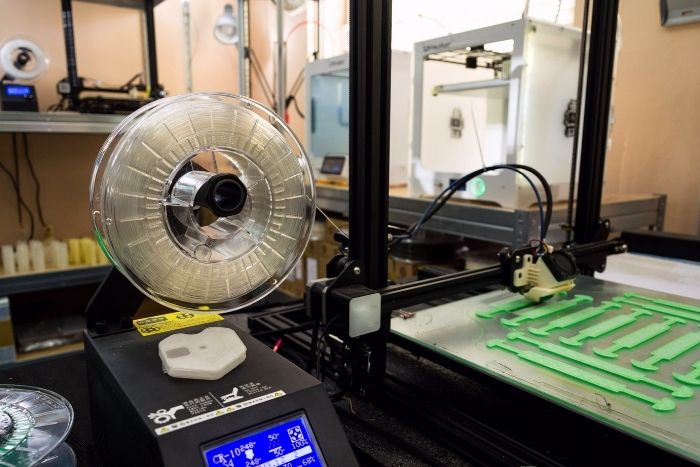
3D printing has evolved far beyond hobbyist projects and prototypes. Today, it plays a growing role in sustainable advanced manufacturing, offering a fundamentally different approach to how products are designed and built. 3D printing is especially notable for an eco-friendly future because it minimizes waste in the production of goods. This precision alone significantly reduces waste.
In construction, 3D printing is being used to create structural components and even entire homes with minimal leftover material. Some systems rely on recycled inputs, biodegradable composites, or low-emission concrete alternatives. These methods align well with the goals of any sustainable electronics manufacturer or industrial producer looking to reduce their environmental footprint without sacrificing performance.
Beyond efficiency, 3D printing enables localized production. Manufacturing closer to where products are used cuts down on shipping emissions and supply chain waste, further supporting an eco-friendly future. As materials science continues to advance, this technology is expected to play an even larger role in eco-friendly and resource-conscious production systems.
Electric Vehicles and Cleaner Mobility
Electric vehicles have moved from niche to mainstream faster than many predicted. While gas-powered vehicles still dominate, electric alternatives are becoming more accessible and more practical each year. Improvements in battery range, charging speed, and durability are making EVs a realistic option for everyday drivers rather than just early adopters.
From an environmental perspective, electric vehicles help reduce air pollution, especially in dense urban areas. They also lower dependence on fossil fuels, which is essential for an eco-friendly future. That said, EVs are only as clean as the energy that powers them. When charged using renewable sources such as solar or wind, their environmental benefits increase dramatically.
As infrastructure improves and renewable energy adoption grows, electric vehicles are likely to become a standard part of eco-friendly technologies for sustainable living, rather than a transitional solution.
Pee Power and Alternative Energy Thinking
Some of the most effective sustainability solutions don’t come from high-tech labs alone but from rethinking everyday systems. Pee power is a good example. While unconventional, this technology highlights how solid and liquid waste can be transformed into a usable resource.
Using microbial fuel cells, pee power systems extract energy from the organic compounds found in urine. The microbes generate electrons during this process, producing small but useful amounts of electricity. These systems have already been tested in public restrooms and temporary installations, where they power lighting or charging stations.
Although pee power won’t replace large-scale energy grids, it supports an eco-friendly future by reducing waste, lowering energy demand, and offering practical solutions in off-grid or resource-limited areas. It also reinforces a broader shift toward circular systems where nothing is automatically discarded.
The Bigger Picture
An eco-friendly future will not be achieved through a single invention or industry. It requires collaboration between policymakers, consumers, and innovators across sectors—from construction and transportation to energy and manufacturing. Whether it’s a sustainable electronics manufacturer reducing material waste or cities investing in eco-friendly technologies for sustainable living, progress depends on both innovation and adoption.
What makes these advancements encouraging is that they don’t ask people to abandon modern convenience. Instead, they offer smarter, cleaner ways to maintain it. By supporting sustainable advanced manufacturing, cleaner transportation, alternative energy sources, and living architecture, society moves closer to a future where environmental responsibility is built into everyday life—not treated as an afterthought.
The path forward is already taking shape, and each of these innovations brings us one step closer to a resilient, practical, and truly eco-friendly future. 🌱