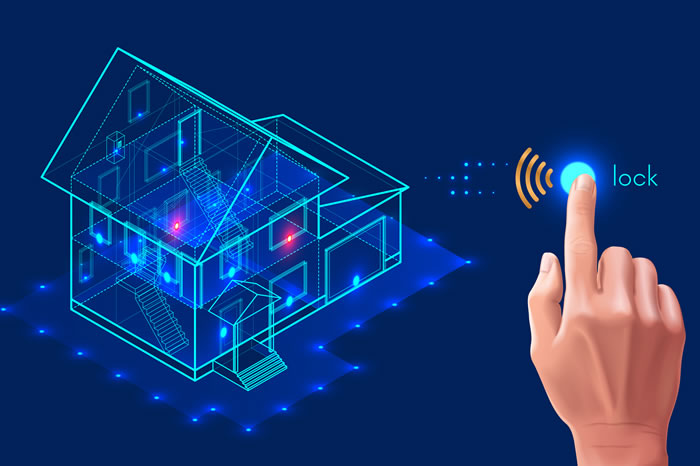
The year of the global pandemic has no doubt had its fair share of accelerated trends. Don’t expect the disruption to slow down even once the health crisis is behind us. Especially with smart home devices assisting the elderly and their families.
Key Takeaways
- The smart home healthcare market is set to grow significantly, driven by an aging population and the need for continuous health monitoring.
- Smart home devices must minimize latency and protect privacy by relying more on AI and edge processing.
- Edge processing enhances data security and response speed, crucial for emergencies involving seniors.
- Connected devices must prioritize security to protect sensitive medical information, particularly for vulnerable populations.
- AI-powered smart home devices will play a key role in future healthcare by improving efficiency and ensuring timely responses.
Smart Home Devices
Case in point: The smart home healthcare market will reshape the healthcare experience for millions. It is on pace to surge from $8.7 billion in 2019 to $96.2 billion by 2030, according to a forecast by P&S Intelligence. A key driver of the market’s growth will be the aging global population. Today’s over-65 population of 727 million people is set to swell to 1.5 billion by mid-century.
As the population grays and copes with an array of chronic health conditions, traditional means of healthcare delivery simply won’t suffice to meet demand. Hence, there is a need for technologies and connected devices. These can continuously monitor users’ health and enable seniors to age in place.
To fulfill their promise, these smart home devices and solutions must be able to quickly detect medical emergencies and signs of trouble with minimal latency. Given mounting cybersecurity threats, smart home devices must also protect individuals’ data and privacy.
Eliminating latency and preserving privacy will require smart home devices to rely even more heavily on Artificial Intelligence (AI). This ensures faster response times; however, it’s more than just AI. These devices must also be able to process data at the edge, rather than sending it to the cloud. From smart security systems to connected plumbing solutions like sewer cleanout monitoring, edge AI processing will make the growing number of assistive smart home technologies more powerful, versatile, responsive, and secure.
Protecting Privacy
As our world grows increasingly connected, it also grows increasingly vulnerable to data breaches and privacy violations. Smart home devices are no exception.
Researchers at the Florida Institute of Technology recently exposed how hackers with only modest skills could exploit vulnerabilities in home security cameras. This enables them to spy on owners, listen in on audio, and delete files. The researchers’ findings came a few months after Google was compelled to require two-factor authentication for its Google Nest smart home devices. This followed a series of automated attacks.
While robust security protection should be a priority for all connected devices, it’s especially urgent for the devices seniors use to monitor their health. Given their unique vulnerability and the sensitivity of personal medical information, it’s crucial. Although the Health Insurance Portability and Accountability Act (HIPAA) imposes data privacy restrictions on healthcare workers and others with access to patients’ medical data, user data generated by wearables and apps isn’t governed by HIPAA rules.
Edge processing will enable better data protection without having to sacrifice the computing power that the cloud would otherwise provide. If a user experiences a health emergency, such as a fall, for instance, the private health data must generate an appropriate emergency response. Notably, without taking on the risk data often engenders while in transit.
Improving Efficiency
Another advantage of migrating to the edge: When data doesn’t have to be sent to the cloud, it can be processed far more swiftly. This is a significant advantage in any case. Particularly when it comes to scenarios like a heart attack or fall, when every second counts.
Someone in three adults over age 65 and living at home will experience at least one fall per year. There simply aren’t enough care workers to monitor each of these individuals in their homes around the clock. However, if their homes include smart devices that can rapidly transmit information to emergency authorities when needed, they and their families will enjoy the peace of mind that comes with knowing they’ll receive a prompt response and treatment.
More and more people are set to experience the benefits of this approach in the coming years. The city of London, for example, is currently running a trial among vulnerable public housing residents. Their homes are being outfitted with sensors that will send caregivers an automated alert whenever there’s a sharp drop in detected activity. For more information on residential aged care in Melbourne, you can find out more at Medical & Aged Care Group.
AI is the Future
Localized processing, as opposed to the centralized cloud, translates into swifter response times and stronger privacy protections. From providing safe, socially distanced monitoring services during the COVID-19 pandemic to empowering seniors to maintain their independence for years to come, AI-powered smart home devices stand to play a vital role in the future of healthcare. Moving exclusively from the cloud to a more hybrid version combining the best of edge and cloud computing can give these devices the edge they need.